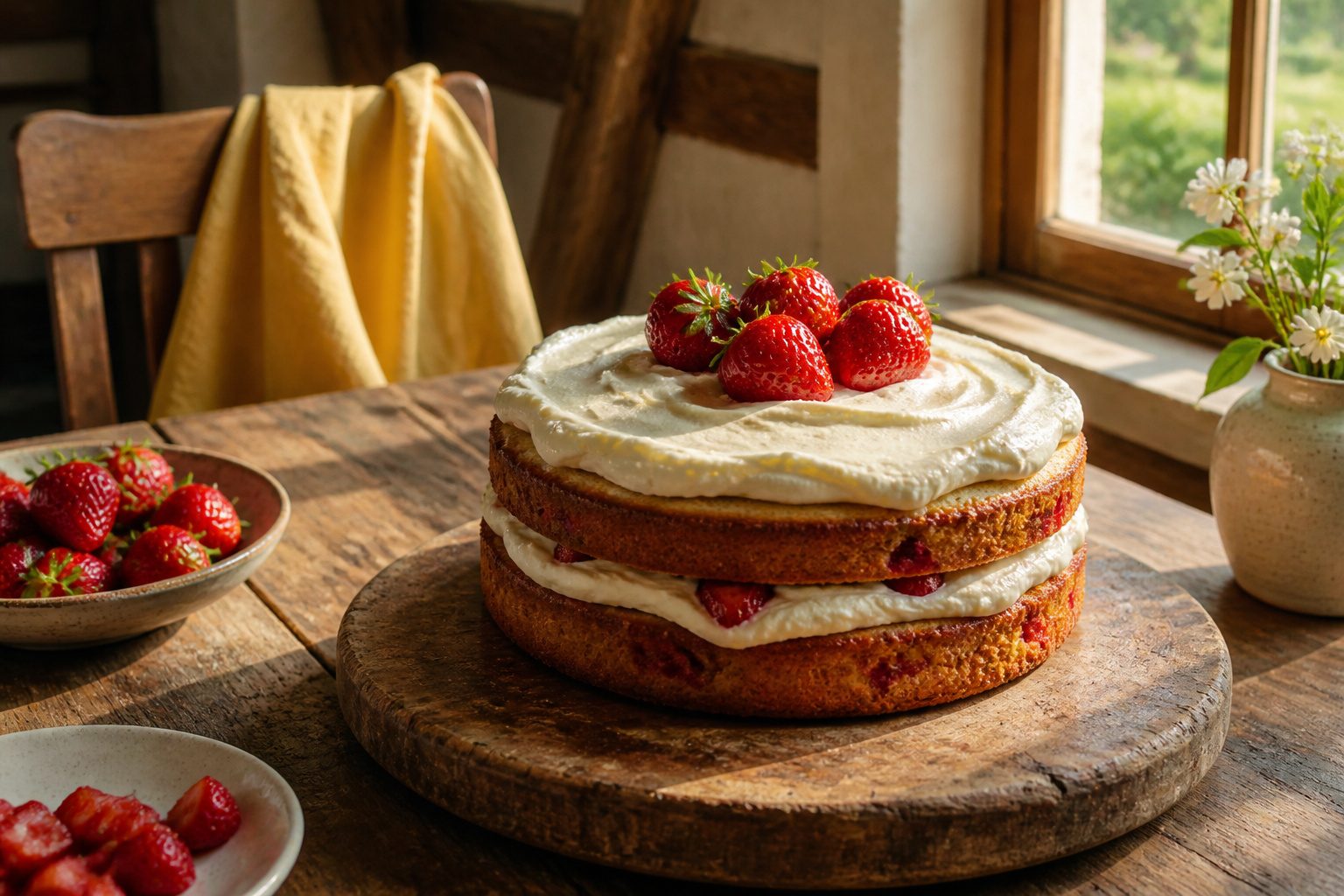
A strawberry cake with fresh fruit folded into butter cake batter tastes like late spring itself, bright and barely sweet, finished with cream cheese frosting that holds its shape even in a warm kitchen.
The honest time is 2 hours 15 minutes, most of it waiting.
The condition that changes everything: frozen strawberries will sink your cake. They carry extra water that turns batter gummy without warning, so this version insists on fresh berries diced to a quarter inch and tossed in flour before folding.
What This Cake Is and When to Make It

A 9-inch layer cake serving 12 to 15 is the right size for most home celebrations, not so tall it wobbles on a standard plate.
Fresh strawberries fold into a butter cake batter, the kind of simple, sturdy base that carries fruit without turning gummy, and cream cheese frosting finishes it.
The total time runs about 2 hours 15 minutes including cooling, which is honest bookkeeping: you are waiting more than working.
Spring and summer birthdays are the obvious occasion, or potlucks where the dessert table needs something that slices cleanly.
I reach for this recipe on weekends when strawberries are at their peak, the ones that smell before you see them, because that is when the fruit does the work and the baker mostly stays out of the way.
Ingredients

A good strawberry cake starts with ingredients you can find at any grocery store. No freeze-dried powders, no specialty extracts.
For the cake:
- 2 1/4 cups all-purpose flour
- 2 1/2 teaspoons baking powder
- 1/2 teaspoon salt
- 3/4 cup unsalted butter, softened
- 1 1/2 cups granulated sugar
- 2 teaspoons vanilla extract
- 3 large eggs
- 1 cup whole milk
- 1 1/2 cups diced fresh strawberries
For the frosting:
- 8 oz cream cheese, softened
- 1/2 cup unsalted butter, softened
- 4 1/2 to 5 cups confectioners’ sugar
- 2 tablespoons heavy cream
Optional for layering:
- 1 cup sliced fresh strawberries
The range on the confectioners’ sugar matters. Four and a half cups gives a softer frosting that barely holds its shape; five cups pipes clean and stands up to a warm kitchen.
I start at the lower end and add the last half cup only if the day is humid or I need the frosting to travel.
Method
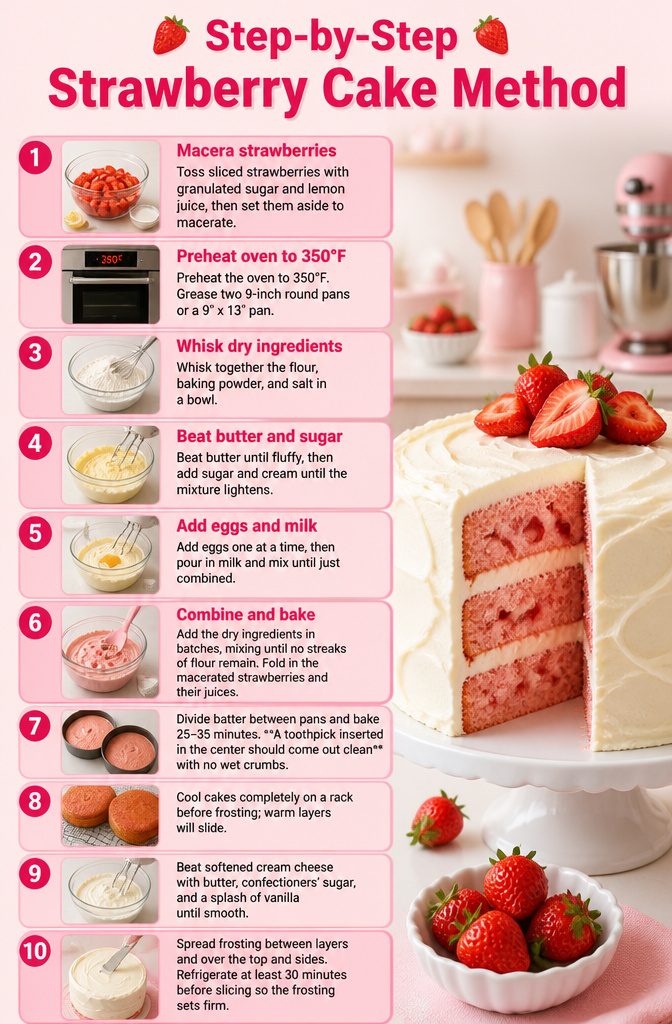
- Toss sliced strawberries with granulated sugar and lemon juice, then set them aside to macerate.
- Preheat the oven to 350°F. Grease two 9-inch round pans or a 9" x 13" pan.
- Whisk together the flour, baking powder, and salt in a bowl.
- Beat butter until fluffy, then add sugar and cream until the mixture lightens.
- Add eggs one at a time, then pour in milk and mix until just combined.
- Add the dry ingredients in batches, mixing until no streaks of flour remain. Fold in the macerated strawberries and their juices.
- Divide batter between pans and bake 25–35 minutes. A toothpick inserted in the center should come out clean with no wet crumbs.
- Cool cakes completely on a rack before frosting; warm layers will slide.
- Beat softened cream cheese with butter, confectioners’ sugar, and a splash of vanilla until smooth.
- Spread frosting between layers and over the top and sides. Refrigerate at least 30 minutes before slicing so the frosting sets firm.
Why Fresh Strawberries Beat Frozen

Fresh strawberries carry about 92% water, which is already plenty to manage. Frozen strawberries release even more as they thaw, and that extra liquid can turn a batter wet and dense without warning.
If frozen is what you have, thaw them completely, then pat very, very dry before they go anywhere near the flour.
The standard one to two cups most recipes call for should be diced small, about a quarter inch, so they distribute through the crumb instead of sinking to the bottom in a single layer.
A light toss in flour helps too, especially with frozen fruit that has already softened. The coating keeps juice from bleeding into the surrounding batter as the cake bakes and buys the pieces enough buoyancy to stay suspended.
Toss the fruit with a little bit of flour before folding it gently into the batter. The flour coating will keep the fruit from leaking into the cake and help prevent the fruit from sinking to the bottom of the pan.
That flour step takes maybe thirty seconds and saves a cake with streaked, soggy layers.
Frozen sliced strawberries, thawed and drained, work in a pinch if you are using a naturally flavored and colored gelatin base or a boxed mix that can handle more liquid.
For a from-scratch cake, though, fresh berries diced small are the safer bet, and the flavor is brighter for it.
Baking Time and Temperature
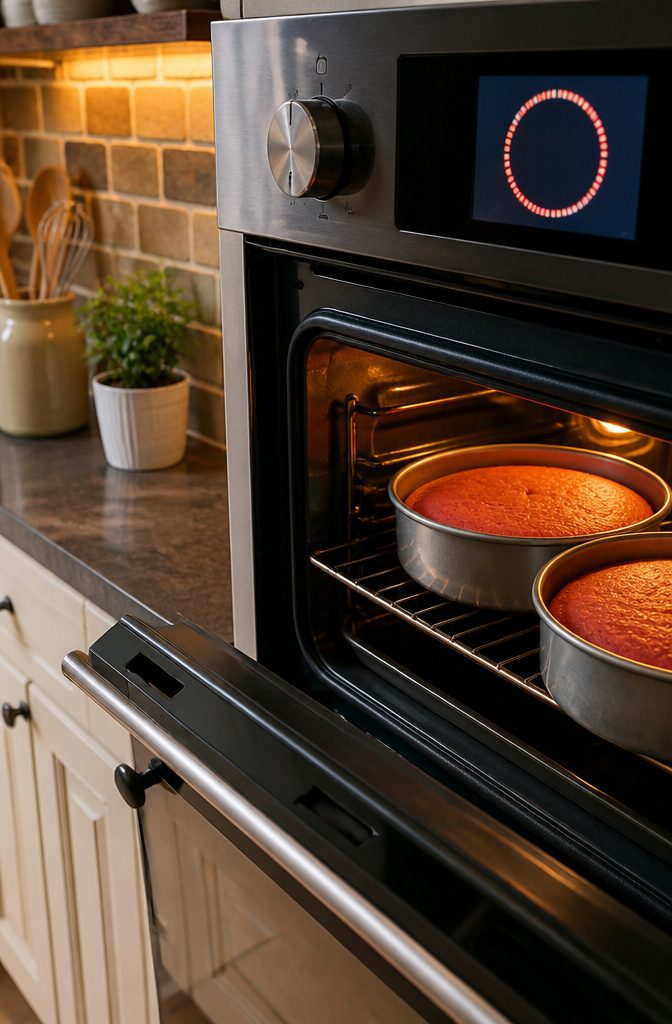
350°F is the standard across every version of this cake, and two 9-inch rounds will need 25 to 30 minutes in the oven.
A 9 by 13-inch sheet pan runs longer, about 35 to 40 minutes, while a Bundt shape pushes to 50 to 55. Those brackets matter more than the clock itself.
I set the timer for 25 minutes even when the recipe says 30, because the toothpick test is the only reliable judge.
Slide it into the center; wet batter means more time, but a few moist crumbs clinging clean are what I pull at.
The edges tell their own story first, turning a deeper pink and pulling slightly from the pan sides while the center still looks soft and pale.
That contrast is your cue to start testing. Wait until the middle matches the edge in color and spring, and you have already baked past the moist, tender crumb strawberry cake is after.
Frosting Options

Cream cheese frosting is the pairing most strawberry cakes wear, and for a reason that matters in a home kitchen: it holds its shape at room temperature far better than whipped cream alone. The basic method is straightforward.
Beat cream cheese with confectioners’ sugar until fluffy, add vanilla, and the icing is ready. That base tastes sharp and tangy against sweet berry layers.
For a lighter texture that still carries some stability, fold 1 cup whipped cream into that cream cheese base. Some frost with buttercream, others with cream cheese; both work.
One approach whips cream separately to stiff peaks first, then folds it in with a spatula so the mixture stays airy. The other streams heavy cream straight into the beating cream cheese and whips everything together until stiff peaks form.
The separate-bowl route gives a more mousse-like frosting with visible loft; the single-bowl method is faster and yields something closer to a thick whipped cream cheese.
Buttercream is an option if you prefer a sweeter, more structured finish.
On a strawberry cake, it tends to smother the berry flavor rather than lift it. I would skip it unless the cake itself is very tart and needs the balance.
The plain cream cheese version wins for decorating. The whipped variation wins for eating, especially on a warm day.
Storage and Make-Ahead

Any cake with cream cheese frosting needs to go in the refrigerator, covered, and will keep for up to 4 days.
The cake layers themselves can be baked a day ahead, wrapped well, and left at room temperature until you are ready to assemble.
I find frosted cake actually improves after 2 to 4 hours of chilling. That time firms the crumb and lets the strawberry flavor settle into the cake rather than sitting on top of it.
If you want to freeze, skip the cream cheese frosting and use a Swiss meringue buttercream or American buttercream instead. Cream cheese does not freeze and thaw cleanly, and it cannot sit at room temperature longer than a day.
Strawberry Reduction for More Flavor

Fresh strawberry cakes often taste milder than they look. Reducing 2 cups sliced strawberries with 2 tablespoons sugar over medium heat until the mixture is half its volume, about 15 minutes, fixes that.
The berries break down and the liquid evaporates, so you get concentrated flavor without the excess water that turns cake batter gummy.
I let the reduction cool completely before folding it into batter or spreading it between layers. It thickens as it sits, which helps it stay put rather than seeping into the crumb.
This takes longer than most strawberry cake recipes allow, since it is an extra step most skip. Only a couple of the versions I compared even mention it, and the flavor difference is real.
A cooled reduction also keeps its color better than raw fruit baked into the batter, so the pink you see is the pink you get.
For a smoother filling, you can blend the cooked berries and strain out the seeds. I leave them in for texture, but the sieve is worth the effort if you want something closer to jam between your layers.
Yogurt for Moisture
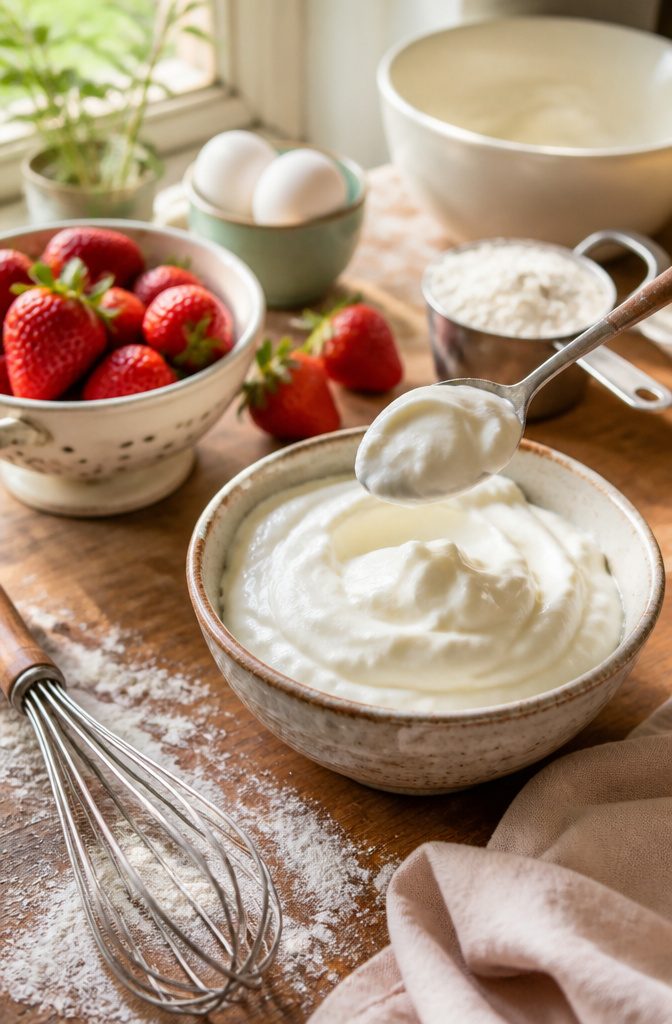
Plain Greek yogurt does a specific job in strawberry cake batter. Replace a quarter cup of the milk with it and you get a crumb that carries more moisture and holds up an extra day without drying to sawdust.
I swap this in when I know the cake will sit out between the baking and the serving, or when I am feeding people who tend to leave slices half-finished on the plate.
The yogurt tightens the crumb slightly, so the cake reads as denser and less airy than an all-milk version. That is not a downgrade if you want something that slices cleanly and does not crumble apart under frosting.
It also forgives a few minutes of overbaking. The acid in the yogurt keeps proteins tender even when the timer gets away from you.
If your oven runs hot or your attention gets pulled to a kid’s homework, this is the kind of small insurance that costs nothing extra and does not change the shopping list.
Variations
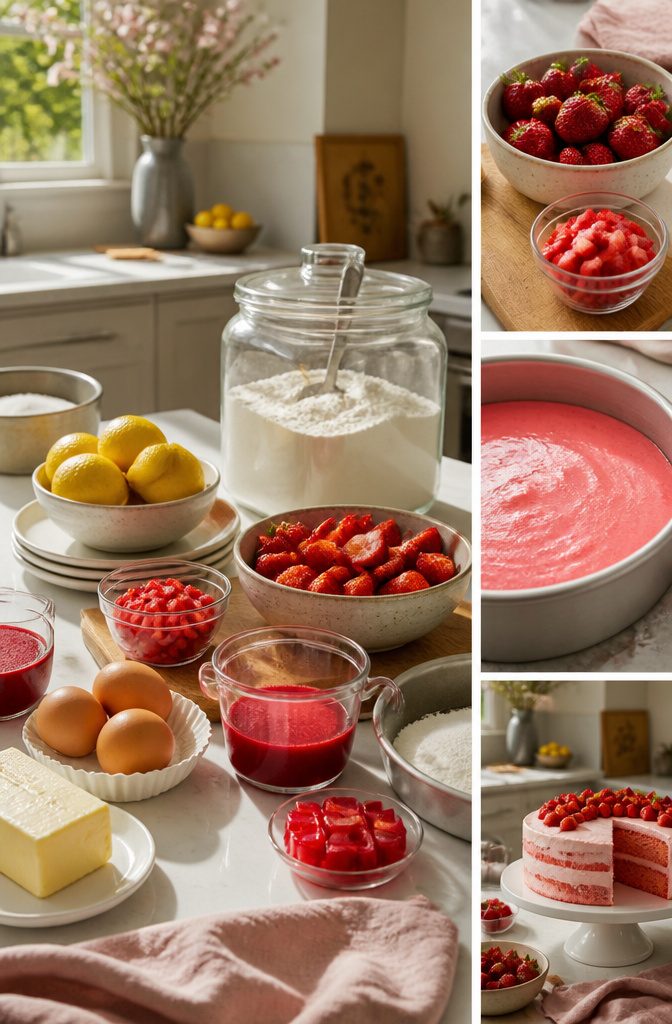
A teaspoon of lemon zest stirred into the batter lifts the strawberry flavor without turning the cake citrusy.
The oils in the zest work at a low threshold, so one teaspoon is the useful limit; more than that and you risk perfume over fruit.
For a lighter crumb, swap half a cup of cake flour in for all-purpose. The lower protein count means less gluten structure, which sounds like a problem until you remember that a tender strawberry cake is the point.
The trade is a slightly more delicate slice that wants a sharp knife and a patient hand.
The strawberry gelatin variation replaces a quarter cup of milk with liquid from your strawberry reduction and folds one box of strawberry gelatin into the dry ingredients.
The gelatin blooms in the oven’s heat and sets as the cake cools, giving you that dense, nostalgic texture you see in potluck cakes.
I find it too synthetic-tasting for a special occasion, but it holds up well in summer heat and slices cleanly for a crowd.
Frequently Asked Questions
How do I make a cake more moist?
Don’t overbake and measure ingredients carefully.
For this strawberry cake, replacing a quarter cup of milk with plain Greek yogurt adds moisture and forgives a few minutes of overbaking. Swapping half a cup of cake flour for all-purpose also gives a more tender crumb.
Can I put fresh fruit in a cake mix?
Yes, but cut the fruit small and pat it dry first. Toss diced strawberries with a little flour before folding them gently into the batter so they don’t sink or bleed juice into the surrounding cake.
What can I do with strawberries that are getting old?
Slightly soft strawberries are still fine for baking. Dice them small for cake batter, or cook them down into a reduction to concentrate flavor without adding excess water to the crumb.
How do you put fresh strawberries between cake layers?
Slice them and macerate with sugar and lemon juice first, or use a cooled strawberry reduction so the filling stays put rather than seeping into the crumb.
Refrigerate the assembled cake at least 30 minutes before slicing so the cream cheese frosting sets firm and holds everything in place.
How long can fresh strawberries stay in a cake?
A frosted strawberry cake keeps up to 4 days in the refrigerator, covered. The cake layers themselves can be baked a day ahead and left at room temperature until assembly.
Can I add strawberries to my cake mix?
A box mix handles fresh fruit better than a scratch cake because it is more tolerant of extra liquid. Dice the berries small, pat them dry, and toss with flour before folding in.
How do you make strawberry icing from scratch for cake?
Beat 8 ounces softened cream cheese with half a cup softened butter, 4 1/2 to 5 cups confectioners’ sugar, and 2 tablespoons heavy cream until smooth. For a lighter texture, fold in 1 cup whipped cream beaten separately to stiff peaks.