
This vanilla naked cake tastes clean and straightforward, with buttercream that stays soft enough to eat rather than peel off.
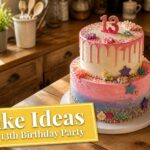
What makes it current is the stack of three tinted layers—vanilla, chocolate, and matcha—finished with a white chocolate ganache drip and pressed edible flowers. Total active time is about 90 minutes, plus chilling.
The hard part is the matcha. Sift it twice or you will hit bitter green pockets in an otherwise smooth bite.
Ingredients

A vanilla naked cake with floral buttercream comes together from standard grocery-store staples, with a few extras for the finish. Here is what to gather before you start:
- All-purpose flour, 2 ½ cups
- Granulated sugar, 2 cups
- Unsalted butter, 1 cup (2 sticks), softened, plus another 1 cup for the buttercream
- Large eggs, 4
- Whole milk, 1 cup
- Vanilla extract, 2 tablespoons; this is the flavor base, so a decent bottle matters
- Baking powder, 2 ½ teaspoons
- Salt, ½ teaspoon
For the color layers and ganache that turn this into a trend piece rather than a plain sponge:
- Cocoa powder, 3 tablespoons, for one chocolate-tinted layer
- Matcha powder, 2 tablespoons, for a green layer; sift it well or you will get streaks
- White chocolate, 8 ounces, chopped fine
- Heavy cream, ½ cup, for the ganache
For finishing, both are optional but they are what makes this read as current rather than rustic:
- Edible gold leaf, a few sheets
- Pressed edible flowers, a small packet; verify they are food-safe, not just decorative, before anyone eats them
Standard equipment: two 9-inch round pans, an offset spatula, and a cooling rack. No turntable, no acetate strips, no specialty scrapers required.
Method
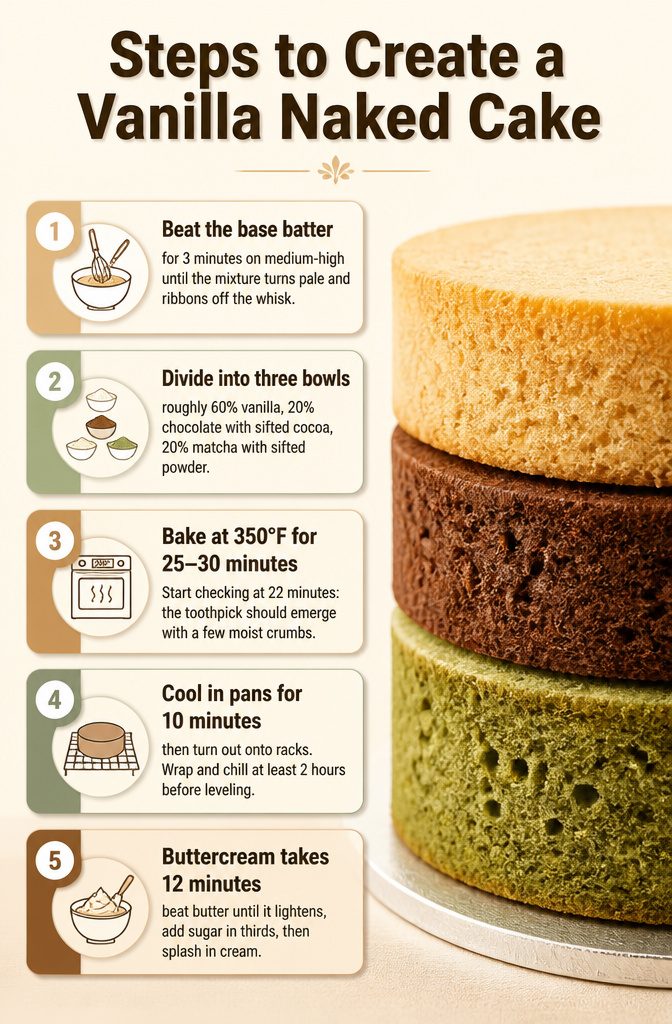
- Beat the base batter for 3 minutes on medium-high until the mixture turns pale and ribbons off the whisk. The sugar should be nearly dissolved, not gritty against your tongue. This takes about 8 minutes total, including scraping the bowl twice.
- Divide into three bowls: roughly 60% vanilla, 20% chocolate with sifted cocoa, 20% matcha with sifted powder. The matcha clumps stubbornly, so sift it twice or you’ll bite into bitter green pockets.
- Bake at 350°F for 25–30 minutes. Start checking at 22 minutes: the toothpick should emerge with a few moist crumbs, and an instant-read thermometer at the center should read 210°F. The chocolate layer often needs the full 30; the vanilla sometimes finishes at 24.
- Cool in pans 10 minutes, then turn out onto racks. Wrap and chill at least 2 hours before leveling; a cold cake slices cleanly where a warm one crumbles. Use a serrated knife and rotate the layer as you go.
- Buttercream takes 12 minutes: beat butter until it lightens, add sugar in thirds, then splash in cream until it spreads like soft-serve. For the ganache drip, heat cream to steaming, pour over chopped white chocolate, and let sit 2 minutes before stirring smooth. Cool to 90°F or it runs straight off the cake.
- Stack the ombre: vanilla on bottom, chocolate on top, with matcha between. Tint three portions of buttercream in graded shades from pale green to deep chocolate, and apply each band with an offset spatula, blending where colors meet.
- Pour the ganache at the edge, nudging with a spoon so it falls in controlled drips rather than floods. Let set 20 minutes before touching.
- Finish with edible flowers or gold leaf. Flowers go on last; their moisture weeps into soft buttercream if left too long. Gold leaf sticks to a fingertip first, then transfers to the cake.
Decorating Techniques
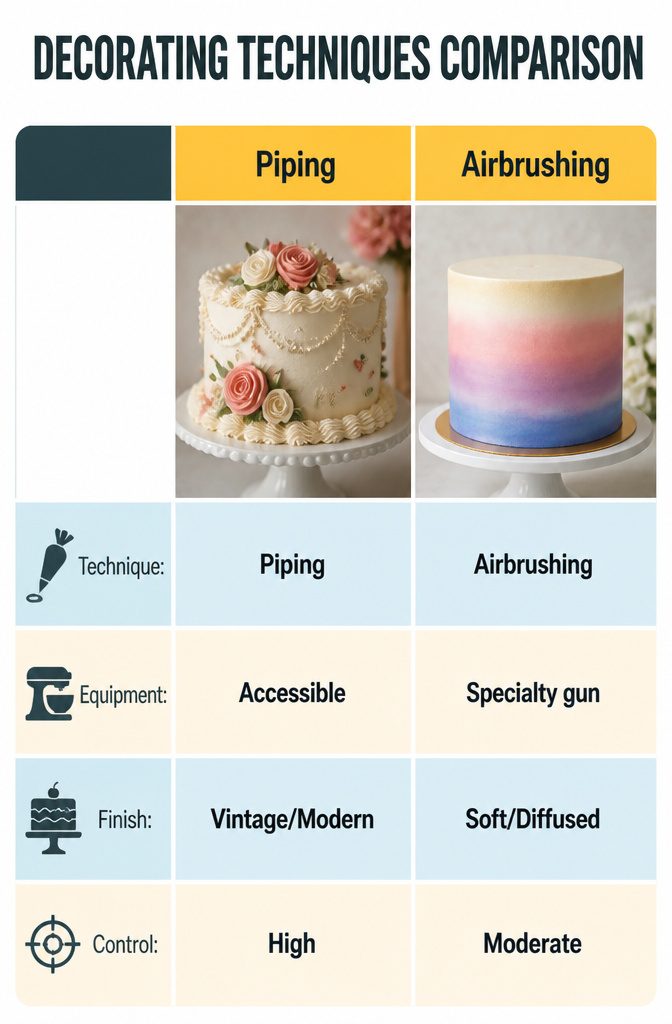
The three techniques showing up most in the latest cake trends are piping, airbrushing, and stenciling, and none of them require a professional setup.
Piping gives you the Lambeth swirls and floral details that read as vintage or modern depending on the pattern. It takes patience and a steady hand, but a piping bag and a few tips are grocery-store accessible.
Airbrushing adds depth and gradients without hours of blending. The downside is the gun itself, which is specialty equipment most home bakers will not own.
For an ombre effect, an offset spatula does the substituting. You work bands of tinted buttercream up the cake and feather the edges where colors meet.
The finish is softer, more diffused than atomized color, but it reads as intentional on a naked cake where precision would look out of place.
Stenciling sits between the two for control.
You get repeating patterns crisp enough to look finished, yet you are working in buttercream, not fondant. Frosting combs overlap here with stenciling.
They add texture through the same crumb-coated base, but the result is abstract, not patterned. Combs come in enough varieties that you can find one that suits the cake without buying a set.
The finish is faster than hand-piped detail and more forgiving than airbrushed gradients, though it will not give you the metallic or sunset effects that sell the trend in photos.
Flavor Trends

Matcha-white chocolate and brown butter-caramel are the two flavor pairings showing up most often in 2025 cake circles right now.
Matcha gives an earthy bitterness that white chocolate rounds out without overwhelming, while brown butter adds a nutty depth that makes caramel taste less like candy and more like something you could serve after a real dinner.
Tropical fusion runs close behind, mango and passion fruit layered with coconut to cut the richness.
The trick to combining these in one cake is thin layers with distinct boundaries. A matcha sponge, a white chocolate mousse, then a separate brown butter cake with caramel soak keeps each forkful clean rather than muddy.
I build them in rings or use a divider when chilling so the flavors meet at the edge but do not bleed.
Savory-sweet directions like miso or tahini are getting attention too. I skip them for weeknight baking.
They need careful balancing, and a Tuesday evening after work is not the time to guess whether your tahini frosting reads sophisticated or just strange. Save that experiment for a Saturday when you can taste and adjust twice.
Wedding Cakes
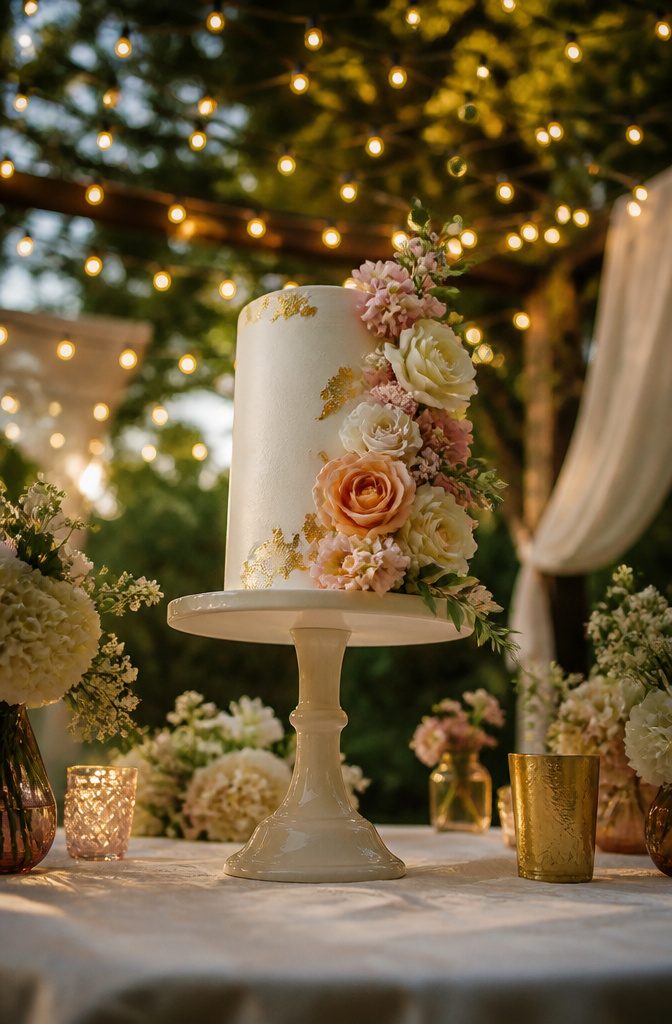
Six- and seven-tier wedding cakes still dominate the press, but that same vertical presence reads beautifully at home in a single tall tier. A 6-inch cake with extra height, stacked and trimmed flush, gives you the drama without the scaffolding.
Fresh flowers win on time; sugar flowers win on permanence. If you are serving the cake within hours, seasonal blooms from your florist look lush and cost less than hand-modeled sugar.
If the cake sits out for a full reception day or travels, sugar flowers stay crisp and become the keepsake your couple saves.
Whimsical and bold embellishments scale down through asymmetry and one dramatic element.
A single oversized piped buttercream flower, placed off-center, carries the same energy as a cascade of twenty. Skip the balanced pair; let one flourish do the work.
Buttercream Versus Fondant

Buttercream is winning in 2025 for its natural texture and flavor, though fondant still holds ground for structured designs. I reach for buttercream on anything eaten same-day; the finish stays soft and tastes like what it is.
Fondant only comes out if I need a sharp edge that has to travel, since it sets firm and shields the cake underneath.
At home without a turntable, buttercream forgives more than you would expect. An offset spatula and a bench scraper get you a smooth enough side if you work in thin coats and chill between layers.
The finish will not be bakery-perfect, but the texture reads as handmade in a way that fits the naked-cake look.
Fondant without a turntable is harder. You need to roll an even sheet, lift it cleanly, and drape it over the cake while smoothing out air pockets, all on a static surface.
The seams show more, and the edges blunt unless you have a steady hand with a straightedge.
For a home kitchen, you really do have to choose: fondant gives you that sculptural precision, but buttercream gives you a cake you will actually want to eat.
Minimalist and Maximalist

Minimalist and maximalist cakes are running parallel in 2025, and the choice tracks the occasion, not your skill level.
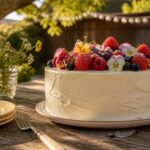
Clean lines, subtle textures, and refined elegance define the minimalist side: a single-tier cake with smooth buttercream and maybe a pressed flower or a whisper of gold leaf.
Maximalist swings the other way with multi-tiered height, dripping chocolate, and enough macarons and whole donuts to turn the cake into a centerpiece. Both show up at birthday parties and dinner tables; neither demands more technique than the other.
I default minimalist for a dinner party and maximalist for a birthday, but the real move is combining them.
A simple exterior with a bold interior surprise gives you the best of both: the quiet elegance guests see when you carry the cake in, then a hidden ombre of layered sponge or a burn-away reveal that turns dessert into the moment of the night.
The ombre layers can sit inside a barely-there buttercream shell; the burn-away top can flame away to show a message or a pattern beneath, all without changing the cake’s clean outside profile.
It is the same effort as picking one lane, just distributed differently.
Interactive and Floating Cakes
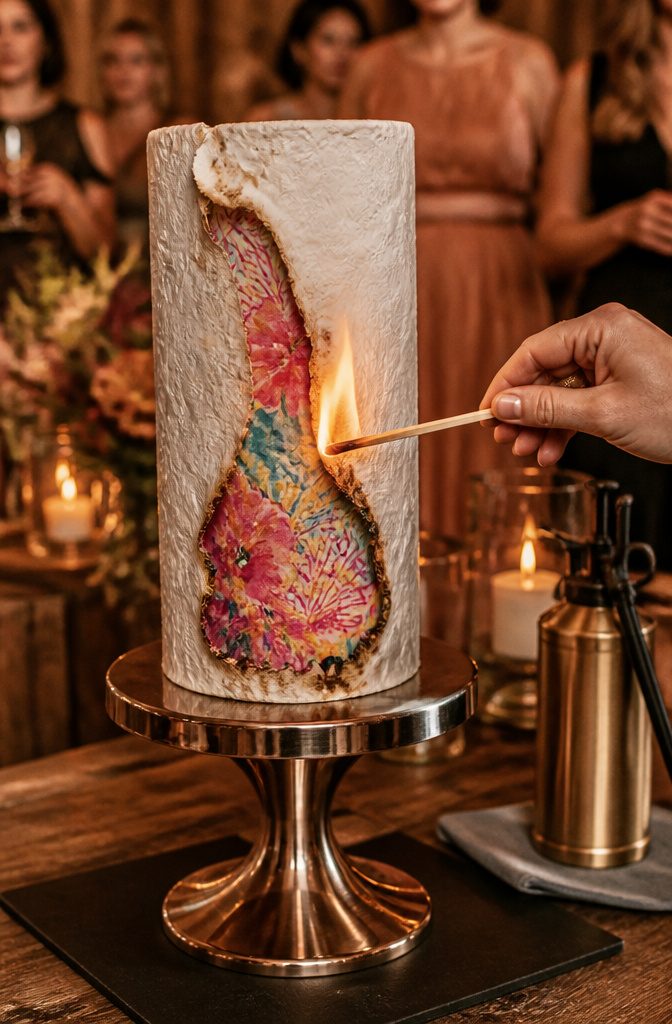
Burn-away cakes bring the spectacle of latest cake trends into a home kitchen without much fuss.
A printed image or message hides under a thin top layer of wafer paper, and a lit match reveals it in seconds as the paper chars and lifts away.
The wafer paper itself is food-safe, though you will want to keep a small extinguisher or water nearby and work on a surface that can take a little ash.
I have seen hosts pass the match to a birthday guest, which works fine if the cake sits on a metal stand and nothing flammable drapes nearby.
Floating cakes, built on perspex stands with clear runners between tiers, are the one trend I would mark as party-only, not weeknight.
The stands require ordering ahead, and the assembly needs a level table and patience you probably do not have on a Thursday evening. Save it for the event where someone else is fetching the dry cleaning.
Yield, Storage, and Substitutions
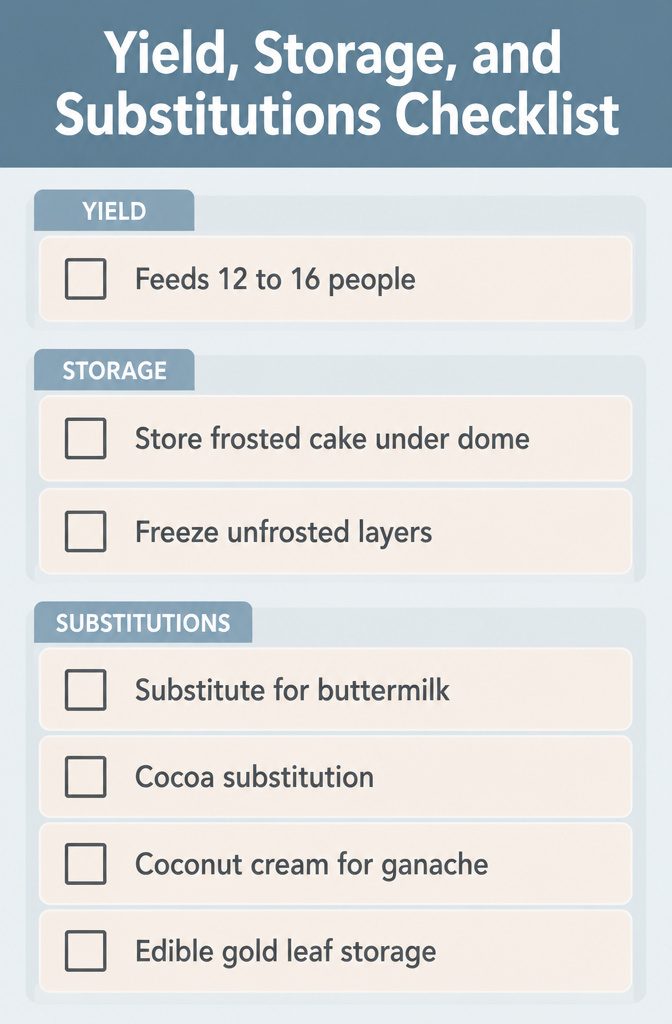
A finished cake this size feeds 12 to 16 people, depending on how thin the host slices it. Storage is simple and substitutions are forgiving:
- Store the frosted cake under a glass dome at room temperature for up to 2 days; after that, move it to the refrigerator, where it holds for 5 days total.
- Freeze unfrosted layers, wrapped tight in plastic and then foil, for as long as 2 months; thaw overnight in the refrigerator before you fill or finish them.
- Whole milk plus 1 tablespoon of vinegar stirred in and left to sour for 5 minutes replaces buttermilk without a separate trip to the store.
- Dutch-process cocoa substitutes directly for natural cocoa in the batter, though the color will deepen slightly.
- Coconut cream, the thick part from a chilled can, works in place of heavy cream for the ganache; the set is a touch softer but the flavor is clean.
- Edible gold leaf keeps indefinitely in its original packaging, but once the packet is open it sticks to nothing, not even itself, so have your tweezers and a clear workspace ready before you peel the first sheet.
Frequently Asked Questions
What are the latest cake trends in 2025?
Minimalist and maximalist designs are running parallel this year, with both showing up at birthdays and dinner tables. Minimalist cakes favor clean lines, smooth buttercream, and subtle touches like pressed flowers or gold leaf.
Maximalist cakes go tall with drips, macarons, and whole donuts piled on top. The hybrid approach, a simple exterior hiding a bold ombre or burn-away reveal inside, is getting the most attention right now.
Are buttercream or fondant cakes more popular?
Buttercream is winning in 2025 for its natural texture and flavor, especially for cakes eaten same-day. Fondant still holds ground when you need sharp edges or the cake has to travel, since it sets firm and protects what’s underneath.
At home without a turntable, buttercream forgives far more; an offset spatula and bench scraper get you smooth enough sides if you chill between coats.
What’s the biggest flavor trend this year?
Matcha-white chocolate and brown butter-caramel are the two pairings showing up most often in 2025 cake circles.
Matcha brings an earthy bitterness that white chocolate rounds out, while brown butter adds nutty depth that makes caramel taste like a real dessert rather than candy. Tropical fusion with mango, passion fruit, and coconut runs close behind.
Can I mix minimalist and maximalist trends in one cake?
Yes, and it is the best move for a dinner party or birthday. A barely-there buttercream shell on the outside hides an ombre of layered sponge or a burn-away wafer-paper top that flames away to reveal a message.
You get the quiet elegance guests see when you carry the cake in, then a surprise moment when you cut or light it. The effort is the same as picking one lane; you just distribute it differently.
Are edible flowers still trendy?
Yes, pressed and fresh edible flowers are a favorite in minimalist designs right now. For this vanilla naked cake, pressed edible flowers go on last because their moisture weeps into soft buttercream if left too long.
Always verify they are food-safe, not just decorative, before anyone eats them. Fresh flowers win on time for same-day serving; sugar flowers win on permanence if the cake sits out for hours.
What is a burn-away cake?
A burn-away cake hides a printed image or message under a thin top layer of wafer paper, and a lit match reveals it in seconds as the paper chars and lifts away.
The wafer paper itself is food-safe, though you will want a small extinguisher or water nearby and a surface that can take a little ash.
It brings the spectacle of the latest cake trends into a home kitchen without much fuss.
What is a floating cake?
Floating cakes are built on perspex stands with clear runners between tiers, so the layers appear to hover.
The stands require ordering ahead, and assembly needs a level table and patience you probably do not have on a Thursday evening. This is the one trend to save for a party, not a weeknight project.
What piping tips do I need for floral buttercream?
A piping bag and a few basic tips are grocery-store accessible for the Lambeth swirls and floral details that read as current.
A professional setup is not required; an offset spatula and a bench scraper handle most of the finish. The steady hand matters more than the tip count.
How do I make an ombre cake without an airbrush?
Work bands of tinted buttercream up the cake with an offset spatula and feather the edges where colors meet.
The finish is softer and more diffused than atomized color, but that reads as intentional on a naked cake where precision would look out of place. It substitutes well for the gradient effects that airbrushing gives.
How far in advance can I bake the layers?
Wrap unfrosted layers tight in plastic and then foil, and freeze them for as long as 2 months.
Thaw overnight in the refrigerator before you fill or finish them. A frosted cake keeps under a glass dome at room temperature for up to 2 days, then move it to the refrigerator for a total of 5 days.