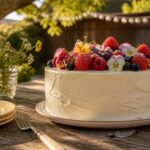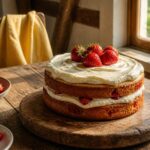

A black and white cake tastes of vanilla and dark chocolate in alternating layers, and this version earns its graphic finish by keeping two buttercream textures identical through a simple batch-splitting trick.
The whole project takes about four hours, including cooling. What trips most home bakers is impatience with that cooling; warm cake melts buttercream and ruins the clean lines that make the design work.
Four 6-inch layers, split between plain and cocoa batters, give you enough surface for zebra stripes, checkerboard, or a subtle interior marble if you drag a toothpick through the alternating spoonfuls before baking.
Ingredients

Good black and white cake design starts with a clean, organized setup. I separate my ingredients into batter and buttercream before I begin, because the timing matters once mixing starts.
For the cake batter:
- 2/3 cup butter, softened
- 2 cups all-purpose flour
- 1 3/4 cups sugar
- 3 eggs
- 2 teaspoons vanilla extract
- 1/2 cup cocoa powder (for the chocolate layers)
- 3 1/2 teaspoons baking powder
- 1/2 teaspoon salt
- 1 1/4 cups milk
For the buttercream (make two batches, one vanilla and one chocolate):
- 1 cup unsalted butter per batch
- 5 cups confectioners’ sugar per batch
- 2 tablespoons vanilla extract per batch
- 1/4 cup heavy whipping cream per batch
For the chocolate buttercream, I pull out 2 cups of the finished vanilla batch and beat in an additional 1/2 cup cocoa powder and a splash more cream.
This keeps the two frostings identical in texture, which matters when you are piping alternating colors for a clean graphic effect.
Bake the Layers
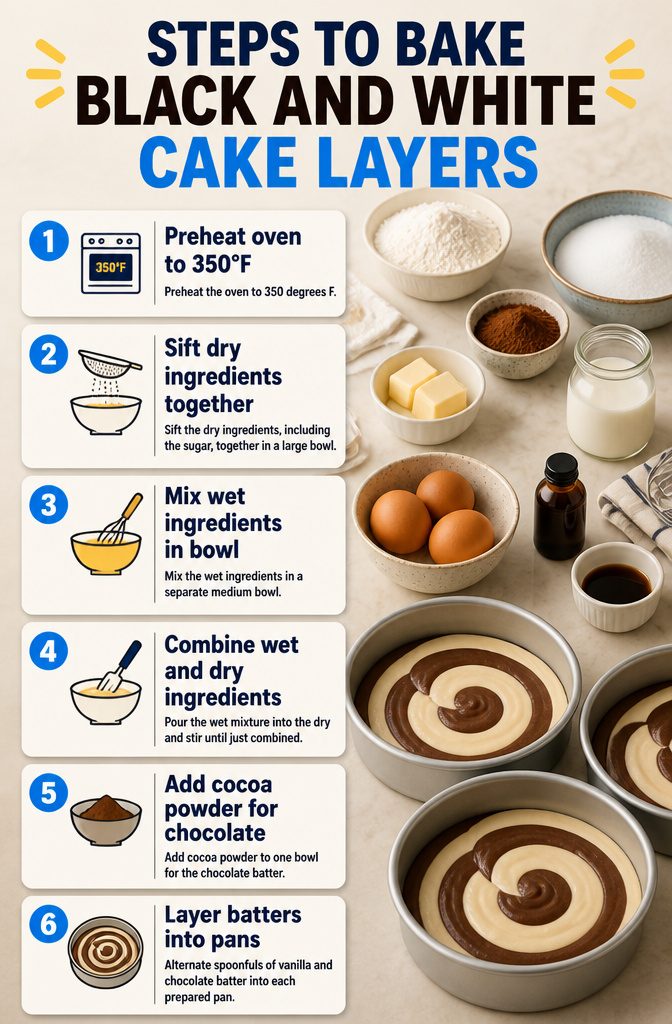
- Preheat the oven to 350 degrees F and butter and flour four 6-inch cake pans. Cake strips help the layers bake flat and even, though they are optional.
- Sift the dry ingredients, including the sugar, together in a large bowl. Keep the cocoa powder out for now.
- Mix the wet ingredients in a separate medium bowl. Small butter lumps will remain; that is normal and they will disappear into the batter.
- Pour the wet mixture into the dry and stir until just combined. Divide the batter evenly between two bowls.
- Add cocoa powder to one bowl for the chocolate batter. Leave the other plain for vanilla.
- Alternate spoonfuls of vanilla and chocolate batter into each prepared pan. A toothpick dragged through the batters creates a subtle marble effect inside the slice, which counts as its own black and white cake design without any extra decorating. For cleaner stripes, keep the batters separate and layer them in distinct bands.
- Bake for about 30 minutes, until the centers spring back when lightly touched and a toothpick inserted comes out clean.
- Cool the layers in their pans for 10 minutes, then turn out onto a wire rack to cool completely before decorating. Warm cake will melt the buttercream, so this wait is not optional.
Decoration Techniques

Fondant work and buttercream piping are the two roads into a black and white cake design, and they split cleanly by occasion.
A fondant zebra pattern lands with real drama on a birthday or graduation cake, the stripes sharp enough to read from across the room.
Rosette swirls and ruffles in buttercream, by contrast, soften the contrast and suit a baby shower or wedding where the tone stays gentle.
The marble effect bridges both worlds. Swirled black and white fondant or buttercream reads as elegance at a wedding, especially paired with edible gold leaves or gum paste appliqués for the finish.
The same technique on a Halloween cake turns darker: white frosting against black chocolate layers, maybe meringue ghosts on top, plays into the spooky mood without extra color.
Pattern creation is where the palette gets interesting.
Checkerboard and geometric patterns need precision, so I reach for fondant and a straightedge. Stripes, drips, and brushstrokes move faster in buttercream.
Ombré accent tiers work in either medium, fading from charcoal to cream up the cake. Modern lines and zebra patterns keep the look current for a milestone birthday; for a wedding, matte fondant with textured appliqués signals timelessness.
Flavor Pairings
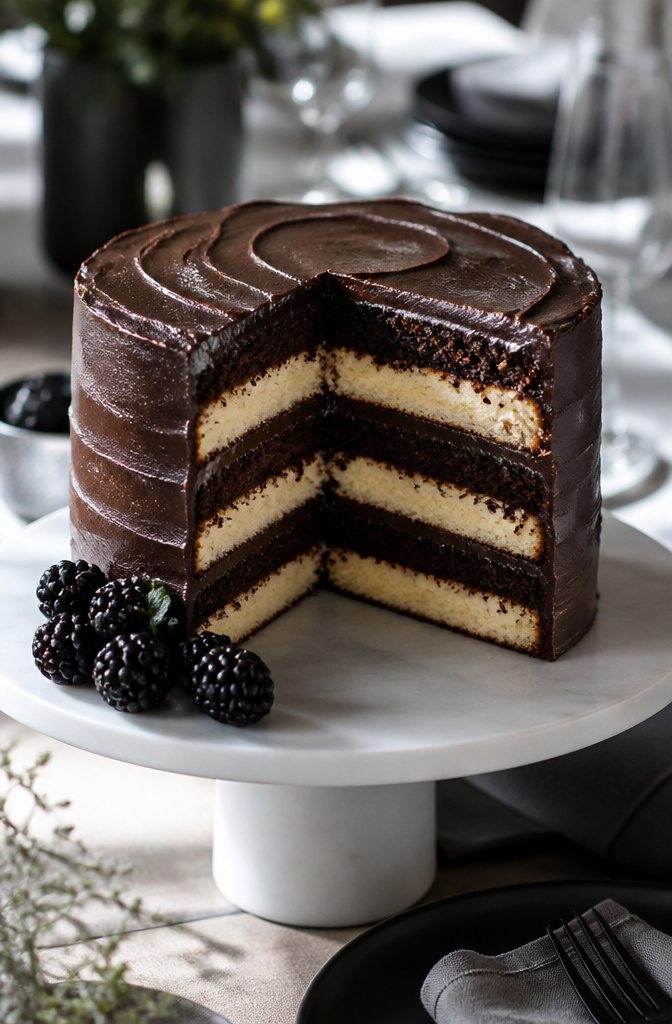
Vanilla and dark chocolate layers deliver the classic black and white cake design that reads instantly on the plate and palate.
The pale crumb against near-black frosting sets up flavor expectations before the first bite: mild, floral vanilla against bitter-edged cocoa.
That contrast is what most guests anticipate when they see the color scheme, and straying from it works best when you signal the switch.
I keep this pairing for formal events where the decoration does the talking. Striped buttercream or 3D roses and leaves in monochrome let the familiar flavors stay in the background while the visual carries the occasion.
For something less expected, black velvet swaps in deeper cocoa and a touch of food coloring to darken the crumb itself.
It is richer, less predictable, and pairs well with white chocolate buttercream or whipped ganache when you want the white elements to read as creamy rather than plain vanilla.
Berry accents, particularly blackberries against white cake, introduce a tart note and a color break that still honors the theme. The risk is visual confusion: once the slice shows purple, the black and white read is gone.
My preference is to stay classic for a first attempt.
The vanilla and chocolate pairing forgives slight unevenness in layer thickness because the contrast still registers. Novelty flavors demand neater construction to keep the design coherent.
Design Ideas by Occasion

A black and white cake design works for nearly any celebration, though some occasions call for restraint and others for drama.
- Weddings favor elegance: tiered cakes with sugar pearls, sugar flowers, and clean lines where white dominates and black accents the borders or piping.
- Birthdays invite bold pattern work. Zebra stripes, galaxy swirls, and sprinkle accents in black and white give the cake energy without leaning on color.
- Baby showers soften the palette. Gingham checks, yin-yang motifs, and small butterfly accents in monochrome feel sweet without tipping into pastel territory.
- Graduations suit sharper geometry. Art Deco fan patterns, bow tie shapes, and clean chevrons read celebratory and grown-up.
- Halloween is where black takes the lead. Black velvet finishes, mysterious galaxy effects, and dramatic drips turn the cake into the room’s focal point.
The same grocery-store colors, black and white gel or cocoa-based, carry across all five. What changes is the ratio and the technique.
Edible Decorations That Elevate the Design

A silver drip on white fondant with crystalline black sugar gems catches light in a way buttercream never will, and the only equipment required is a spoon and a steady wrist.
The same goes for gold fondant lines piped thin against a white base, then studded with large black and mini white sugar roses; the contrast reads as formal because of the precision, not the price of the tools.
Sugar pearls and gum paste hearts or bows work the same way: they signal occasion because they take time, not because they need a pasta roller or airbrush.
I think the most reliable move for a home kitchen is mixing one metallic element with one organic one, like silver drip plus a few real blackberries tucked around the base, or gold lines softened by green sugar-paste leaves.
The berries give you color variation without breaking the black and white cake design, and they cover any gap where your fondant seam shows.
Real sugar flowers sit at the top of this hierarchy, but a single large white bloom on a small tiered cake delivers nearly the same effect as a full spray.
What separates home-baked from event-worthy is restraint: one metallic accent, one floral accent, and nothing else competing for attention.
Yield, Storage and Substitutions

A finished black and white cake serves twelve to sixteen, depending on how thin you slice it. I cut party wedges at twelve and coffee-shop slivers at sixteen; the cake itself does not change.
Storage is where most recipes go quiet and home bakers lose the cake they made. A frosted black and white cake sits at room temperature for up to two days, which is usually enough for a weekend event.
Push past that and it needs the refrigerator, but only under a cake dome or an overturned bowl. Bare frosting picks up every flavor in the fridge; five days is the ceiling if it is sealed.
The unfrosted layers are the real gift to your future self. Wrap them in plastic while they are cool, freeze up to two months, and thaw overnight in the refrigerator before you decorate.
Substitutions need honesty about what survives and what collapses. Whole milk replaces heavy cream in the batter with little drama; the crumb is slightly less rich, still tender.
The buttercream is stricter. Margarine or shortening will give you a greasy, soft layer that will not hold the sharp edges this design depends on.
For the black, Dutch cocoa is traditional and tastes better, but if you are avoiding chocolate entirely, black gel food coloring works.
Start with a dropper’s worth and build; it goes further than you think. If your layers feel dry, a thin brush of simple syrup before frosting saves them, or corn syrup cut with water in the same proportion.
Frequently Asked Questions
What are some black and white cake decorating ideas?
Zebra stripes, marble swirls, checkerboard patterns, and geometric lines all work in monochrome buttercream or fondant.
For softer occasions like baby showers, try rosette swirls or gingham checks; for drama, add a silver drip, crystalline black sugar gems, or gold fondant lines with sugar flowers.
How do you make a black and white cake?
Preheat to 350 degrees F, butter and flour four 6-inch pans, then divide vanilla batter in half and add cocoa to one portion.
Alternate spoonfuls of each batter into the pans, bake about 30 minutes until centers spring back, and cool completely before frosting with matching vanilla and chocolate buttercream batches.
What flavors go well with black and white cake?
Vanilla and dark chocolate layers are the classic pairing, with mild floral notes against bitter-edged cocoa. For a richer twist, black velvet cake with white chocolate buttercream works well, though classic flavors are more forgiving for a first attempt.