
This cinnamon swirl cake tastes like a snickerdoodle grew up: warm spice, tender sour-cream crumb, and a buttercream that carries the same cinnamon sugar folded through in visible ribbons.
What separates it from other swirl cakes is that the frosting itself gets the swirl treatment, not just the batter below.
Temperature control trips people up: if your butter and eggs skip the counter time, the batter turns grainy and the crumb suffers before you even reach the oven.
One hour and fifteen minutes total, and the 2A round tip is what gives the frosting its clean spiral lift.
Cinnamon Swirl Cake Ingredients

A 13" by 9" pan lined with parchment paper is what I reach for here; the size gives the batter enough room to bake evenly without doming too high in the center. The full lineup follows.
For the cake:
- 1 1/2 cups sugar
- 3/4 cups unsalted butter, room temperature
- 3 eggs, room temperature
- 2 tsp. vanilla
- 2 1/2 cups all-purpose flour
- 1 tsp. baking powder
- 1 tsp. baking soda
- 1/4 tsp. salt
- 1 1/4 cups sour cream
For the cinnamon sugar filling and topping:
- 1/2 cup sugar
- 2 Tbsp. cinnamon
For the cinnamon buttercream frosting:
- 1/2 cup unsalted butter, softened
- 2 3/4 cups confectioners’ sugar
- 3–5 Tbsp. heavy whipping cream
- 1 tsp. vanilla
- 1/2 tsp. salt
I keep the second 1/2 cup sugar and 2 Tbsp. cinnamon separate from the first batch; the filling gets layered into the batter and the rest gets folded into the finished buttercream for the swirl effect that earns this cake its name.
The butter and eggs need real time at room temperature, not a shortcut in the microwave, or the batter turns grainy and the crumb suffers.
How to Make It
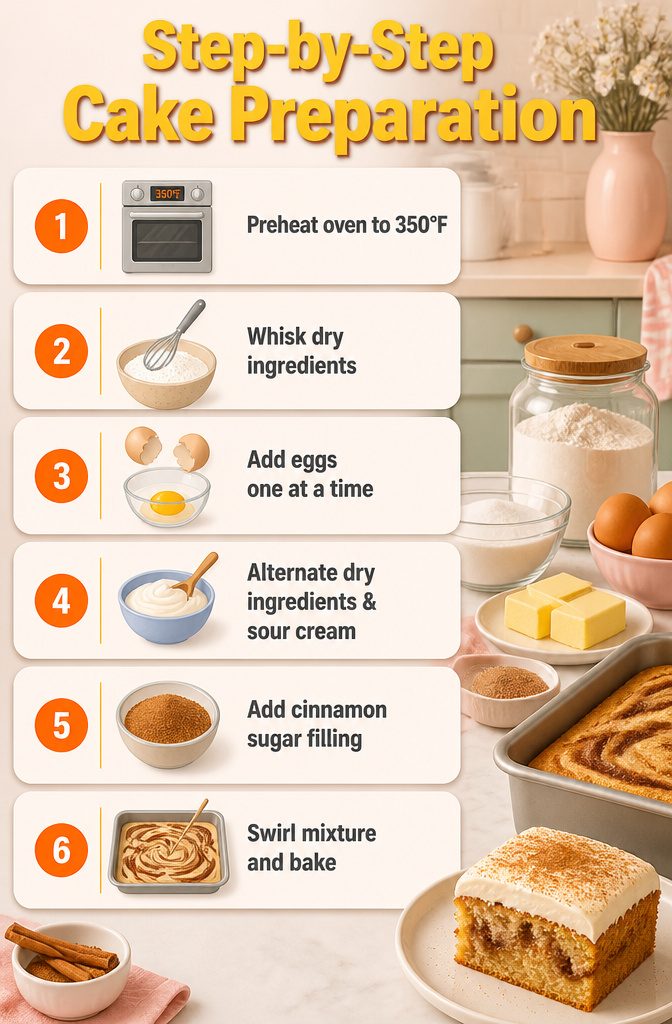
- Preheat the oven to 350°F, line a 13" by 9" pan with parchment, and grease it lightly with non-stick spray.
- Whisk the flour, baking powder, baking soda, and salt together in a medium bowl. In a separate large bowl, cream the butter and sugar until light and fluffy, about two minutes, scraping down the sides as you go.
- Add the eggs one at a time, mixing between each addition, and add the vanilla with the last egg.
- Alternate adding the dry ingredients and sour cream to the butter mixture, mixing between each addition, until the batter is smooth and on the thicker side.
- Whisk the cinnamon sugar filling together in a small bowl. Pour about half the batter into the prepared pan and flatten it evenly with a silicone spatula. Sprinkle about three-quarters of the filling over this layer, then top with the remaining batter and smooth it out.
- Sprinkle the rest of the cinnamon sugar over the top, then use a toothpick, skewer, or butter knife to swirl the mixture all over.
- Bake for 45–50 minutes, until the center no longer jiggles and a toothpick inserted comes out clean. The outside should be golden brown.
- Cool completely in the pan, then transfer to a wire rack. The cake must be fully cooled before frosting.
- For the buttercream, cream the butter and confectioner’s sugar together while slowly adding the heavy cream one tablespoon at a time. Add the vanilla and salt, then whip until smooth.
- Whisk the remaining cinnamon sugar together, add it in large amounts to the buttercream, and fold it in with a silicone spatula, leaving visible swirls.
- Frost the cooled cake using a butter knife, spoon, or offset spatula. Dust with extra cinnamon sugar if desired.
- Slice into 12–15 servings. Total time: 1 hour 15 minutes (30 minutes prep, 45 minutes cook).
Frosting Consistency
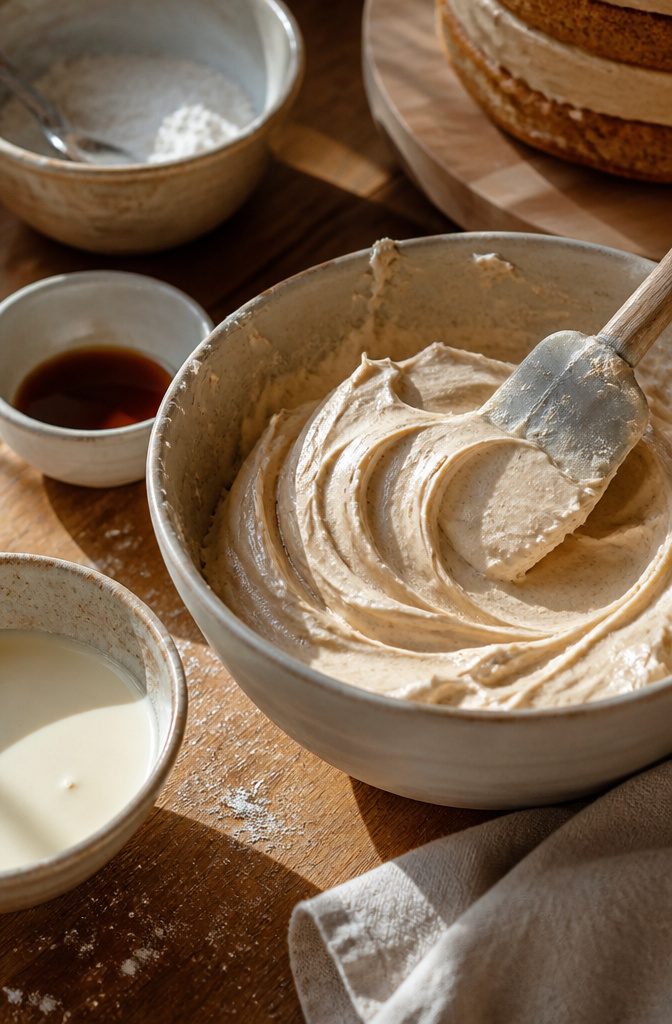
Thicker frosting holds its shape when piped because air pockets trapped during beating need a dense matrix to stay stable.
American buttercream works best here: the high butter-to-sugar ratio sets firm in cool air, and it crusts slightly, which locks a swirl in place.
The amount of heavy cream is what lets you fine-tune it.
Three tablespoons gives you a stiff frosting that will hold a rosette for hours, while five tablespoons softens the mixture enough to pipe without your hand cramping or the frosting tearing at the bag’s tip.
I start with three and add by the half-tablespoon, testing a quick squiggle on parchment before I touch the cake.
What you want is a frosting that passes the spatula test: it stands straight up when you press the flat side in and pull away, but yields smoothly when you squeeze it through a piping tip.
Too stiff, and you will get ragged edges that look like broken ribbon.
Too soft, and your swirl will slump into a puddle before you finish the top border. Three tablespoons is my baseline for a warm kitchen; four if the pipes are cold.
Piping Techniques
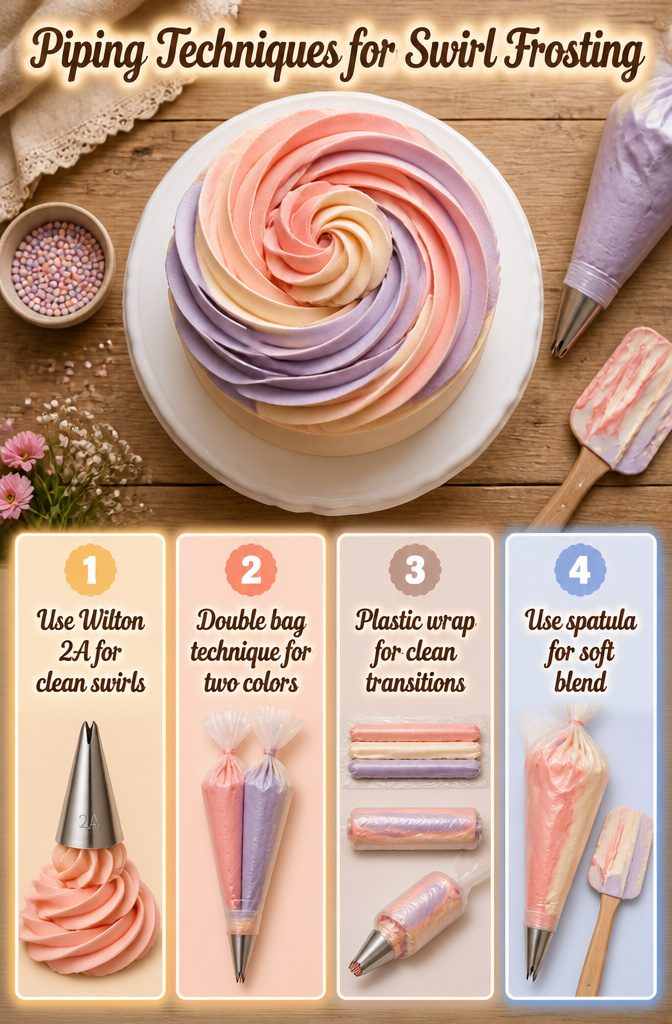
The Wilton 2A round tip is what I reach for when I want a clean, generous swirl that sits up without losing its shape.
Hold the bag steady just above the cake’s center, let the frosting touch down gently, and work outward in a continuous spiral.
The motion is closer to guiding than forcing; pressure stays even while the hand moves slow enough that the icing falls into place rather than stretching thin.
For a two-tone or ombré effect, the double bag technique keeps colors distinct without the fuss of layering inside one bag.
Fill two separate piping bags (no tips in either), then slide both into a larger 18-inch bag fitted with the 2A. The colors come out side by side, and the swirl carries both cleanly.
The plastic wrap method gives the cleanest transitions for more than two colors. Lay out about 12 inches of wrap, pipe or spoon rows of frosting roughly 8 inches long and 1 inch high, then roll it into a log.
Twist the ends, trim one, and feed that end into the bag. Chill the loaded bag for a few minutes if the frosting softens; a firmer log holds the spiral better and burps out fewer air pockets.
Squeeze a small blob before you start to clear any trapped air, then begin the center-out spiral the same way.
A spatula works fine if you are after something simpler: scrape two colors along opposite sides of one bag and pipe away. The effect is looser, less stripe than soft blend, and for a weeknight cake that is often enough.
Swirl Variations

The swirl technique I use for this cinnamon buttercream works on a much wider range of cakes than most bakers realize.
For a rainbow swirl, the critical step is pressing out air pockets before you pipe; trapped air separates the colors into streaks instead of the smooth ribbon you want.
Lay each color against the next on plastic wrap, roll the frosting into a tight log, and peel back one end before sliding it into your bag.
Two-tone cupcake swirls are smaller-scale practice.
The double-bag method keeps the colors cleaner than the spoon-in technique, which tends toward ombre. I use two 12-inch bags inside an 18-inch bag fitted with the tip, and the control is noticeably better.
If you want a perfectly clean top edge with sprinkles, the upside-down method is the one to learn. Frost smooth, freeze until firm, about 20 minutes, then flip the cake onto a second board.
Work over a cookie sheet, smooth fresh buttercream onto the now-exposed bottom edge in sections, and press sprinkles in with a cupped hand before flipping back. Do this before any piping so you do not disturb the decoration.
Frosting Types Compared

American buttercream and Swiss meringue both work for swirl frosting, but they behave differently enough that your choice shapes the whole project.
American buttercream is heavier and denser, which means it holds high swirls reliably on a cake that sits out or travels.
The ingredients are standard grocery-store fare: butter, powdered sugar, a little milk. Swiss meringue is lighter and silkier, and it does produce the smoother, more refined finish you see in professional photos.
Swirl frosting asks more of you in equipment and patience. You need a double boiler, a thermometer, and about twenty minutes of whisking over heat to bring the egg whites and sugar to temperature before you can even start beating.
| Attribute | American Buttercream | Swiss Meringue |
|---|---|---|
| Stability for tall swirls | Higher | Lower |
| Smoothness of finish | Good | Finer, silkier |
| Equipment needed | Mixer | Double boiler, thermometer, mixer |
| Ingredient source | Grocery store | Grocery store plus egg whites |
| Overall ease | Straightforward | More involved |
I reach for American buttercream when I need the cake to hold up through an afternoon party or a car ride.
Swiss meringue is worth the extra steps if the cake stays in one climate-controlled place and you want that polished, barely-there texture.
Sweetness is higher in American buttercream; silkiness belongs to Swiss meringue. Pick your priority, then pipe accordingly.
Storage and Make-Ahead
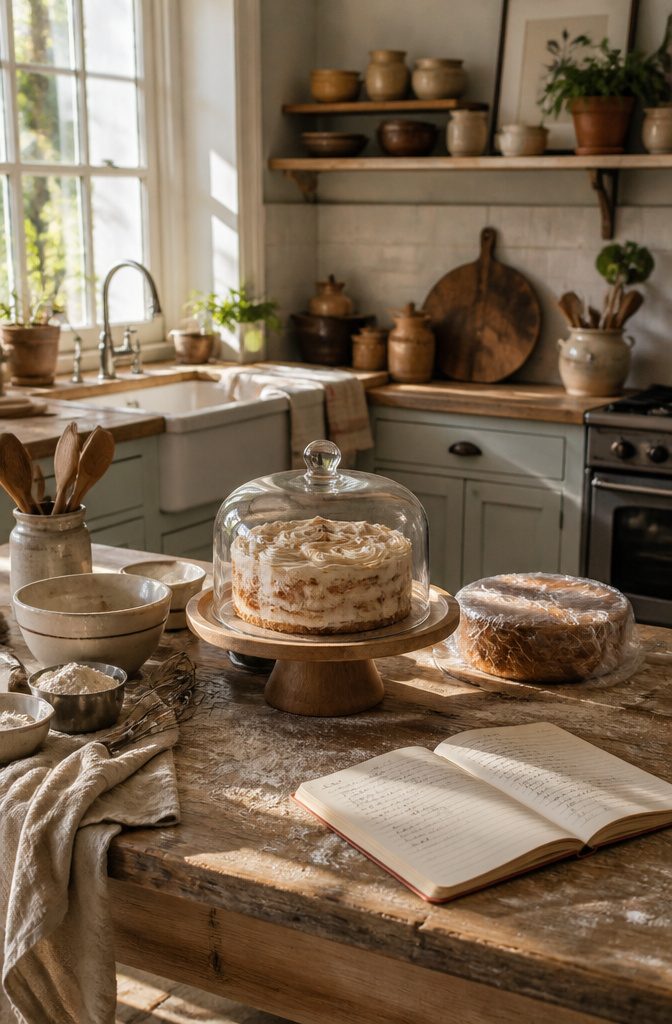
A frosted cinnamon swirl cake holds two to three days at room temperature if you keep it under a cake dome or an inverted bowl.
Bring it to room temperature before slicing if your kitchen runs warm enough that you stashed it in the fridge; cold buttercream turns waxy on the tongue, and the cinnamon flavor flattens out until it softens again.
Unfrosted layers are the better make-ahead move. I wrap mine in a double layer of plastic once they are completely cool, then freeze them for up to two months.
They thaw on the counter in about an hour, or overnight in the refrigerator if I am planning ahead.
The cinnamon buttercream keeps in the refrigerator for one week.
It stiffens as it chills, so I re-whip it for a minute or two before spreading or piping. A splash of cream or milk brings it back if it goes too far.
Frequently Asked Questions
How do I create a swirl effect on a cake?
Use a toothpick, skewer, or butter knife to swirl the cinnamon sugar mixture through the batter before baking; for the frosting, fold cinnamon sugar into the buttercream with a spatula, leaving visible streaks.
For piped swirls, hold the bag just above the cake’s center and work outward in a continuous spiral with steady pressure. A Wilton 2A round tip gives a clean, generous swirl that holds its shape.
What type of frosting is best for swirling?
American buttercream works best because its high butter-to-sugar ratio sets firm and crusts slightly, locking the swirl in place. Three tablespoons of heavy cream gives a stiff frosting that holds a rosette for hours; four if your kitchen is warm.
The frosting should pass the spatula test: it stands straight up when pressed, but yields smoothly through a piping tip.
What tools do I need for frosting swirls?
A piping bag fitted with a large round tip like the Wilton 2A is the basic setup.
For two-tone effects, use two smaller piping bags inside a larger 18-inch bag, or try the plastic wrap method: pipe rows of frosting onto wrap, roll into a log, and feed into the bag.
A silicone spatula, offset spatula, or butter knife work fine for simpler swirled finishes.
Can I use frosting as icing?
Yes, the terms are interchangeable in home baking; this recipe’s cinnamon buttercream serves as both.
The frosting here is spread or piped onto the cooled cake, which is the same function icing performs. American buttercream is the most common choice for this dual role because it spreads smoothly and pipes cleanly.
What cake is nicknamed the divorce cake?
The nickname does not apply to the recipe described here.
How to make Betty Crocker chocolate swirl cake?
For a boxed mix shortcut, you would follow the package directions and add a cinnamon sugar swirl layer similar to step 5 of this recipe.