
A two-tier cake can read as anything from a backyard party to a gallery piece, and the deciding factor is almost never the size.
It is the finish you have time to execute and the structure you remembered to build underneath.
The 6-inch over 8-inch frame serves forty to fifty people if you slice thin, but it collapses without dowels or bubble tea straws cut flush to each tier. Most failures happen there, not in the frosting color.
1. Celestial Dreams
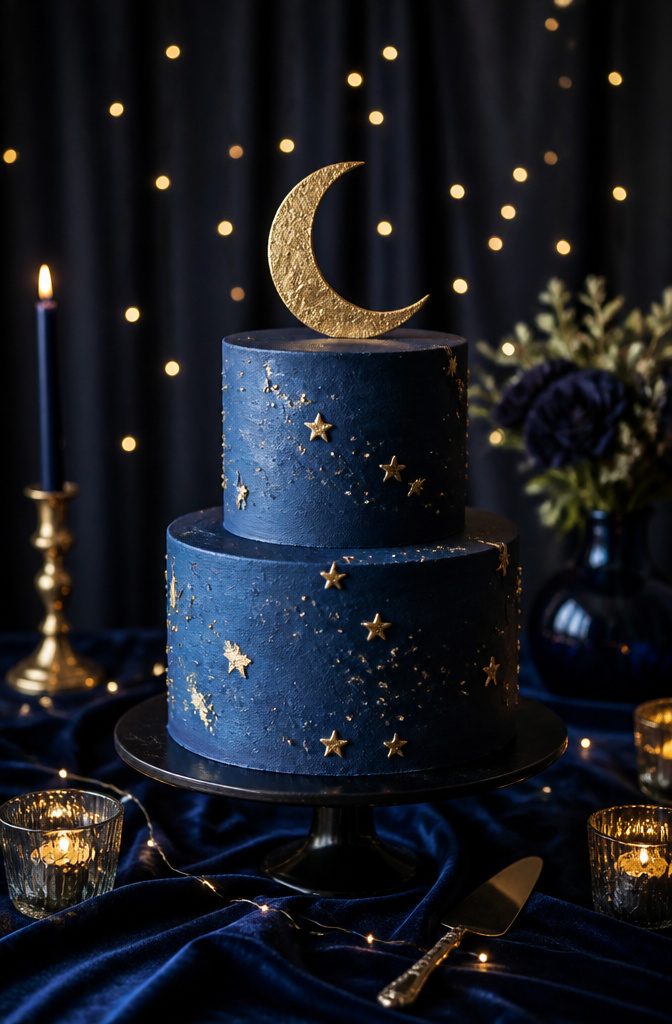
Midnight blue buttercream reads as sky rather than navy only when the color is deep enough to lose its daytime brightness.
I use American buttercream tinted with gel color, not liquid, because the water in liquid drops thins the frosting past the point where it can hold a smooth finish on two tiers.
The 6-inch top tier sits on an 8-inch base, and that height gap looks balanced only if you keep the overall silhouette fairly slim; a wide 8-inch layer can swallow the top tier and make the whole cake feel squat.
Bubble tea straws cut to the exact height of each tier keep the support invisible and the slice clean.
Push them straight down through the bottom tier before you stack, spacing them in a circle just inside where the top tier will sit.
A moon topper and edible gold stars finish the look without demanding piping skill; press the stars into the buttercream while it is still soft so they adhere without extra adhesive.
American buttercream crusts, so you have to work faster than you would with Swiss meringue if you want the stars to sink in and stay put.
2. Rustic Wildflower Bliss

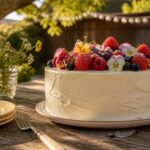
A naked or semi-naked finish lets the cake itself read as rustic, and fresh seasonal flowers tucked between the tiers and around the base do the rest of the work.
Vanilla or chocolate cake both hold up here, though the sturdier your crumb, the cleaner the slice. Dense layers stack without the sag that can turn a two-tier silhouette into a slump.
The 40 to 50 servings you get from this shape assume thin slices from the taller structure, so plan the cut accordingly.
If you are newer to stacking, the denser vanilla recipe is the more forgiving place to start; a fluffier chocolate can still work, but the layers need to bake thick enough to carry the weight above them.
3. Bold Monochrome Drama

A single color, carried across two tiers, reads expensive when the finish does the work.
Smooth buttercream against ruffled or combed texture gives an all-black or all-white cake its drama without a single extra element. The eye catches the contrast between finishes, not between colors.
You need a bench scraper held straight to the cake, wrist locked, while the turntable spins.
Stay still; let the rotation do the smoothing. Patches that need more frosting fill in as you go.
A lip of buttercream will crown the top, taller than the cake itself. Leave it, fill the top surface, then angle the scraper and draw that lip inward to meet the center.
Classic American buttercream is the right choice here.
It pipes cleanly and crusts enough to stack without sliding. Double the batch for basic coverage on both tiers; triple it if you want the generous coat that makes ruffles look lush rather than skimpy.
The combed or ruffled sections hide minor flaws, but the smooth panels between them do not, so the turntable and scraper are non-negotiable tools.
4. Pastel Carnival Whimsy
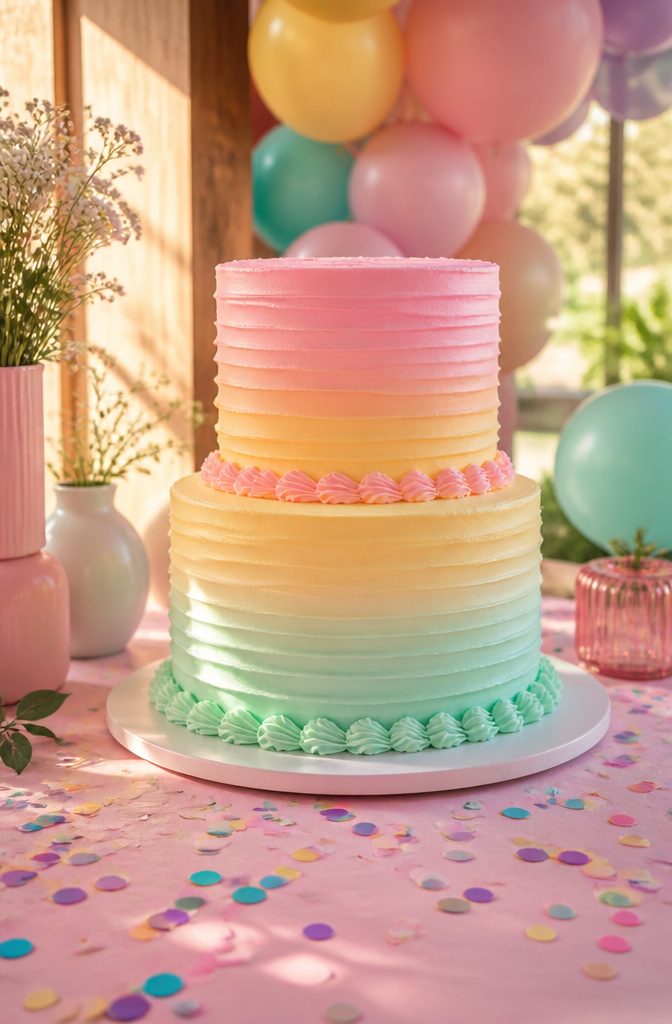
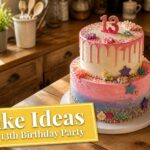
Soft rainbow tiers in cotton-candy pink, butter yellow, and mint green read as carnival nostalgia without tipping into childish.
I prefer them in ombré, the color bleeding gently from one tier to the next, though color-blocking the two tiers gives a cleaner silhouette if the party skews more modern.
The swirled finish that makes this style work comes down to offset spatula technique: a thick coat of buttercream, then broad, confident strokes while the frosting is still workable, letting the tool marks show rather than fighting them.
It takes maybe three passes around the cake before the motion loosens up and the waves stop looking deliberate.
What kills this design is the wrong cake. Angel food and chiffon both compress under the weight of a top tier, no matter how carefully you dowel underneath.
You need a dense cake here. A sturdy vanilla or chocolate layer holds its shape and still carries the pastel tint well.
For the support itself, bubble tea straws spaced evenly in a square pattern under the top tier do the job, though I keep an eye on larger cakes where a fifth straw in the center adds stability.
5. Boho Feathered Elegance

Textured buttercream in warm terracotta, oatmeal, and sage builds the foundation for boho feathered elegance, with each tier carrying enough dimensional swirls to catch candlelight without competing against the dried elements.
A 6-inch top tier over an 8-inch base leaves a ledge wide enough to wedge dried palm leaves and slender pampas grass stems between the tiers, which reads as intentional architecture rather than afterthought.
Cake boards between tiers are non-negotiable here; the combined weight of saturated buttercream and dried botanicals will compress an unsupported structure within hours of assembly.
I would skip fresh eucalyptus entirely, since its oils seep into buttercream and the moisture wilts the grass accents by the time candles are lit.
Dried elements work best inserted at the last minute, angled outward so the plumes frame the cake rather than droop across it. The earth-tone palette forgives imperfect buttercraft, which matters when you are smoothing two tiers before guests arrive.
6. Golden Luxe Marble

Marbled fondant or buttercream reads as expensive even when the technique is straightforward. Work in one color at a time, then blend with an offset spatula rather than overmixing into a single muddy tone.
For the base, a dark chocolate ganache sets the stage: heat cream to just before boiling, pour over chopped dark and milk chocolate, let it sit for five minutes, then stir until smooth.
If the chocolate has not fully melted, return it to the pan for gentle heat rather than rushing with a whisk.
Gold leaf is the detail that sells the luxe angle, but it is temperamental. Apply it to chilled buttercream or fondant, never warm ganache, or it will melt into brassy streaks.
The metallic drip over the top edge should be thick enough to run in controlled ribbons down both tiers; let the cake set in the fridge for 30 minutes before adding leaf or splatter.
For the finish, edible rose gold paint splatter, which reads peach in most lights, gives the marble movement without clutter.
Load a brush and flick it at the cake from a low angle so the drops land with gravity, not against it. The randomness is the point; trying to place each dot turns it twee.
7. Tropical Paradise Glow
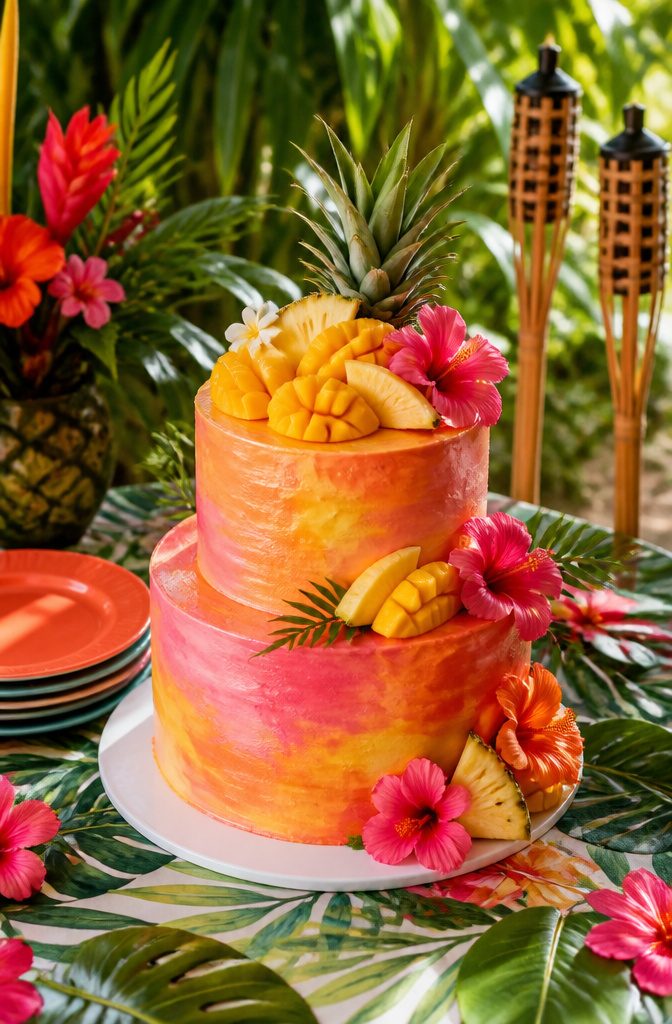
A ganache seal under the buttercream is what keeps fresh mango and pineapple from turning the cake soggy.
I brush cooled ganache over the sponge before the crumb coat, let it set, then apply the bright buttercream and arrange the fruit just before serving.
Hibiscus accents, either candied or as edible flowers, finish the tropical look without adding more moisture.
For the structure, bubble tea straws or Wilton dowels both work, but I reach for the straws first. They cut cleanly with scissors, leave no risk of wood splinters, and the thick walls handle the weight fine.
Cut them flush with the cake board, then set the 6" tier on top. Wilton dowels have small caps to spread the load if you prefer them, though I find the straws simpler for a home kitchen.
Either way, skipping support is not an option; the top tier will sink into the bottom without it.
8. Winter Wonderland Magic

A white-on-white finish reads as snow rather than blank canvas when the texture shifts from tier to tier.
Crystallized sugar snowflakes catch light like ice, silver dragees give the scatter a metallic bite, and a pale blue airbrush at the base keeps the palette from washing out entirely.
The 6" over 8" size serves 40–50 if you cut 1" slices; plan on 2" slices and the count drops to generous portions for a smaller gathering.
Dense vanilla cake is the right choice here. A lighter crumb would sag under the weight of the decorations and the second tier itself.
The height works in your favor: stacked cakes run taller than single tiers, so a thin slice still plates as a real piece of cake. I sometimes halve a tall slice crosswise if the party is running long on desserts.
The airbrush is the one technique that justifies owning the tool.
A dry brush or tinted buttercream never lays down that same even veil of color. Cleanup is the cost, plus the time to mask the white you want to keep.
9. Vintage Rose Garden Charm

A cake leveler is the tool that makes this design doable on a weeknight.
You will need flat tops before the 6" tier sits on the 8", and a leveler handles the job more cleanly than a long serrated knife if you are still building confidence.
The cut side of each layer faces down onto the buttercream, and flipping the final layer so its bottom becomes the top gives you the flattest surface to pipe on.
Buttercream roses in dusty pink and cream are the main event here.
You can pipe them directly onto the tiers or make them ahead on flower nails and transfer them once they crust. Either way, the look reads formal garden without requiring anything beyond standard grocery-store butter, confectioners’ sugar, and gel coloring.
Keep a bowl of very hot water nearby while you work.
When the buttercream in your piping bag starts to firm up, dip the bag in, pat it dry, and keep piping. That small step matters more than any specialty equipment.
10. Abstract Artistic Flair

Bold brushstroke buttercream, applied with a palette knife in sweeping, contrasting colors, turns a two-tier cake into something that looks like it belongs in a gallery rather than on a dessert stand.
The technique hides every bump and imperfection in the cake surface, which matters more than you might think when you are stacking layers for the first time and the top tier sits slightly off-center.
I reach for this method when I need a showstopper but do not have the hours for fondant smoothing or intricate piping.
Thick buttercream dragged across the surface in directional strokes builds texture fast; the ridges catch light, the valleys hold shadow, and the whole cake reads as intentional rather than rushed.
Deep navy against warm caramel, or coral streaked into cream, gives enough contrast that the shape of the tiers still reads clearly from across the room.
Cleanup is just the knife and a bowl, and the forgiving surface means a wobble in your base layer becomes part of the composition instead of a flaw to fix.
11. Enchanted Woodland Delight

A moss-green buttercream top tier over a bark-textured base reads unmistakably as forest floor without needing anything figurine-heavy underneath.
The base tier carries the weight of the visual story, and chocolate cake makes sense here: it matches the darker palette, and the denser crumb stacks steady for a two-tier build.
The bark texture comes from a small offset spatula dragged in short, irregular strokes through the buttercream.
A larger offset spatula smooths only where the tiers meet and where the top edge needs cleaning up; too much smoothing kills the effect.
For the woodland details, fondant toadstools, tiny sugar ferns, and gold-dusted acorns work across both tiers, with a miniature fondant owl as a single focal point if you want one.
The toadstools read more clearly than ferns from a distance, so I would cluster those toward the front and let the ferns fill behind.
For assembly, a standard two-tier frame applies: four dowels set toward the middle of an 8-inch bottom tier to carry a 6-inch top. A thin cake board under the top tier keeps it stable for cutting and serving.
12. Ethereal Watercolor Fantasy
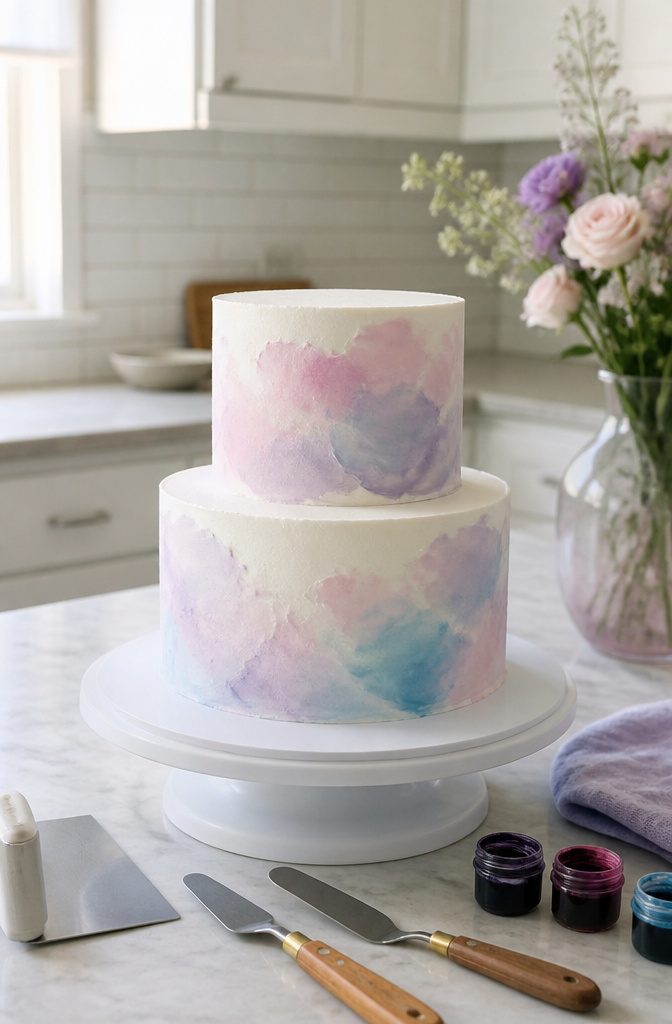
A watercolor buttercream finish lives or dies by what happens before the paint ever touches the cake.
The base coat needs to be almost fondant-smooth, which means your bench scraper and turntable earn their keep here more than on almost any other 2 tier birthday cake ideas in this list.
I hold the scraper straight against the side, wrist locked, and spin the turntable rather than dragging the blade around. Patience matters; it takes a few passes, and frosting gets added back in spots, not subtracted in one go.
That lip of excess at the top edge stays put until the sides are right, then gets smoothed inward at an angle with the scraper or a spatula.
For the watercolor itself, gel colors thinned with clear alcohol give the soft, diffused washes that make this style read as fantasy rather than accident.
No hard lines, just blended color drifting into the next. The alcohol thins without dissolving the buttercream underneath, which water would do, so the pigment sits on the surface and feathers out the way actual watercolor does on paper.
The effect is ethereal and forgiving in its way; a slightly uneven wash looks intentional, but the base underneath cannot be slightly uneven or the whole thing reads as sloppy.
13. Modern Geo Glam

Sharp edges are what separate a modern geo glam 2 tier birthday cake from a homey one, and the finish you choose determines how you get there.
Cold cake, hot knife is the combination that makes buttercream genuinely smooth: chill each tier for at least 30 minutes after filling and crumb coating, then run a scraper under hot water, dry it, and pull it around the set buttercream for that final glass-like surface.
Fondant demands the same cold base plus a sharpener tool to true up the corners after draping.
Geometric patterns in metallic or a single contrasting color carry the whole design here, so precision beats ornament.
A light mist of water on just-frosted buttercream, scraped smooth while the cake spins on a turntable, erases bumps before they set. I would skip hand-piped details entirely; the clean lines are the decoration, and anything extra competes with them.
14. Lush Tropical Jungle

Dense greenery starts with monstera leaves wide enough to hide a seam, and tropical flowers that read as plumeria or hibiscus in buttercream or fresh stems.
The buttercream route means a full day of piping stiff leaves on flower nails, letting them crust on parchment, then lifting them onto the cake with a chilled offset spatula.
Fresh flowers need food-safe picks, not bare stems jammed into sponge. Either way, the 6" top tier over an 8" base needs dowels through both tiers or the weight of sugar paste monstera leaves will slowly sink the structure.
I would choose buttercream foliage for a summer outdoor party where wilting is guaranteed, and save fresh tropicals for air-conditioned rooms where the blooms last the full four hours.
Piping gives you control, fresh gives you color depth no gel matches; you pay in time either way.
15. Timeless Pearl Cascade

A smooth white buttercream base gives the pearl cascade its real power, since any flaw in the finish catches light and betrays the work.
I start with a crumb coat, chill until firm, then apply the final layer with a bench scraper and a turntable for the straightest sides I can manage.
Fondant pearls look softer and more seamless, but candy pearls save hours of hand-rolling and dry faster; for a weeknight timeline, candy wins without apology.
Mark the cascade path with a toothpick before you place a single pearl, because freehanding the curve almost always drifts toward one side.
On a 6" top tier paired with an 8" bottom, the math does the styling: fewer pearls above, then a denser drift as the tier widens.
I space them about an inch apart on the small tier and let them tighten to half that spacing by the base, where the eye expects weight.
A dot of buttercream or piping gel anchors each pearl; press gently and move on, since shifting one after placement leaves a smear that white buttercream struggles to hide.
16. Festive Fiesta Colors

A dense cake base carries this palette better than something airy. The weight of stacked tiers needs structure, and the decorations themselves add almost nothing once they are in place.
Buttercream in warm reds, oranges, and yellows is the right vehicle here. It holds saturated color without weeping or separating, which is more than you can say for whipped cream or cream cheese frostings that fade by the second hour.
Gel coloring is the only choice: liquid dyes thin the buttercream and leave you with a wet, streaky finish that never deepens past pastel. Papel picado toppers, tassels, or piped chili and lime motifs all sit light on the surface.
The dense base recipe that stacks cleanly is the one to reach for here, especially if you are newer to building two-tier birthday cake ideas.
A fluffy cake can work if the layers are thick enough, but the margin for error shrinks fast. Start sturdy.
17. Cherry Blossom Serenity

A 6"/8" stacked structure is the standard setup for this design, and it is sturdy enough that the real work happens in the surface decoration. Pale gray or white buttercream gives the branches something to read against without competing for attention.
The branch work needs a small round tip and a steady hand. I would pipe the main limbs first, let them crust for ten minutes, then come back with thinner offshoots so they do not smudge into one solid mass.
Pressure control matters more than speed here; too firm and the line balloons, too light and it breaks.
For the blossoms, wired or premade sugar flowers save an hour and look more consistent than anything I could pipe freehand in one session.
Cluster them where branches fork, not evenly spaced, and press the wires into drinking straws or a thick bubble tea straw cut short so nothing metal touches the cake.
The delicacy is in the placement, not the engineering, which is why this design wins for bakers who want a refined look without a refined skill set in gum paste.
18. Romantic Gothic Elegance
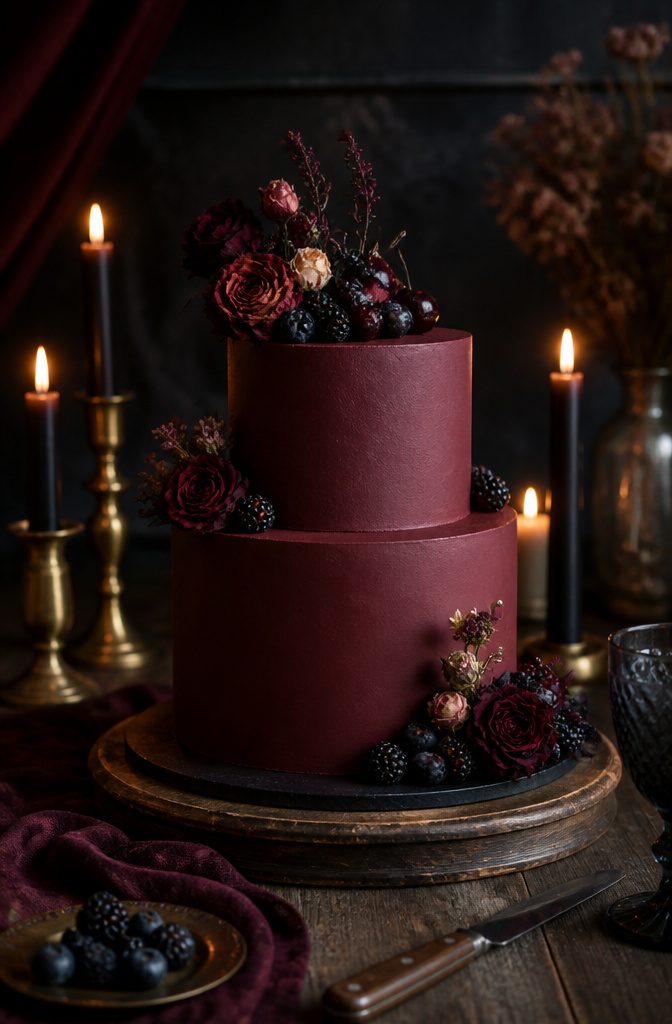
A 2 tier birthday cake in deep black or burgundy buttercream reads as romantic and severe, not gloomy, when the finish is glass-flat and the edges are sharp enough to catch light like a blade.
That flatness demands a leveler, not a hopeful eye and a long knife. The small cost buys insurance against the wobble that ruins the whole mood.
American buttercream is the right base here. The gel color load this style needs, especially for a true black, will break a Swiss meringue, turning it loose and weeping.
American holds its structure under half a bottle of color and still crusts hard enough to stack without sliding.
Decorate with dried roses, dark berries, and candle-style tapers.
The tapers should be thin and white, set low so they read as lit-from-within accents against the dark coat, not birthday-cake clutter. Keep the berry placement asymmetric; symmetry turns gothic into formal, and formal is a different party.
19. Playful Polka Dot Party

A 6-inch cake stacked on an 8-inch cake is the standard two-tier structure for a polka dot design, feeding about 40 to 50 people depending on slice size.
The height works in your favor here: taller stacked layers let you cut thinner slices and still hand out a satisfying portion. I sometimes slice a piece, then halve it again for anyone who wants a smaller serving.
For the dots themselves, you have two approaches. Random placement is forgiving; you can stamp or pipe circles wherever the eye feels right.
Regimented dots look sharper but need measurement. Mark the spacing with a ruler or toothpick before you commit, or the pattern drifts and the cake looks seasick rather than cheerful.
Smooth fondant gives the cleanest base, though a flawlessly smooth buttercream works if your finish is tight. Pipe the dots in contrasting sizes and colors, or roll fondant circles and attach them with a dab of water.
Either way, the 6-inch/8-inch ratio with standard supports keeps the structure sound and the presentation light enough for any age.
20. Harvest Pumpkin Charm

Warm orange, cream, and brown tones read autumn immediately without any novelty needed. A spice cake or pumpkin cake works here because both hold up under buttercream weight and taste like October.
The density matters more than the specific flavor, though I lean pumpkin if the party is actually in fall and spice cake if you want that warmth year-round.
The decoration builds from simple shapes: piped buttercream pumpkins in graduated sizes, wheat stalks in pale gold, and leaves in burnt orange and cream.
Candied leaves and wheat offer a glossier finish and hold their shape longer in humidity, but piping keeps everything edible and skips the sugar-work setup.
Either way, the time goes into detail work, not structural engineering. No dowels beyond standard tier support, no fondant smoothing marathon.
Where this cake risks looking craft-project is in color saturation. Too vivid an orange and the palette goes Halloween.
I pull the main pumpkin tone from a mix of copper and ivory gel, not straight orange, and keep the brown to coffee-with-cream rather than chocolate. The restraint reads seasonal and grown-up.
Frequently Asked Questions
What is the difference between a 2 tier cake and a 2 layer cake?
A tier is a complete cake section, while layers are the individual cake sheets stacked inside it.
One tier typically holds two or three layers of cake with filling between them. A two-tier cake has two separate cake sections stacked vertically, so it contains many more than two layers total.
How do you stack a two-tier cake?
Push bubble tea straws or dowels straight down through the bottom tier in a circle just inside where the top tier will sit, cut flush with the cake surface, then place a thin cake board on top before setting the smaller tier down.
This keeps the top tier from sinking into the bottom and gives you clean slices.
How many will a 2 tier cake feed?
A standard 6-inch top tier over an 8-inch base serves 40 to 50 people when you cut 1-inch slices.
The taller stacked structure works in your favor here; even thin slices plate as real portions because the cake runs higher than a single tier. Cut 2-inch slices and the count drops to generous portions for a smaller gathering.
What kind of cake is best for a two-tier cake?
Dense vanilla or chocolate cake works best because the sturdier crumb stacks without sagging under the weight above. Angel food, chiffon, and other airy cakes compress under a top tier no matter how carefully you dowel underneath.
How to make a simple 2 tier cake?
Start with a dense cake recipe baked in 6-inch and 8-inch pans, level the tops flat, fill and stack each tier’s layers, then chill before crumb coating.
Add supports to the bottom tier, place a cake board under the top tier, and stack.