The best birthday cake lands somewhere between a five-minute sprinkle press and a weekend buttercream project, and the deciding factor is almost always how much time you actually have the morning of the party.
What most home bakers miss is that the reveal matters more than the decoration: a chocolate shell that cracks open with a small hammer, or a plastic sleeve that releases a slow cascade of ganache, turns the guest of honor into the performer without requiring a day of piping.
Even the humble ice cream cake demands its own architecture, a warm knife run under hot water between every cut, or the layers smear into each other and the stripe pattern is lost.
1. Pinata Cake

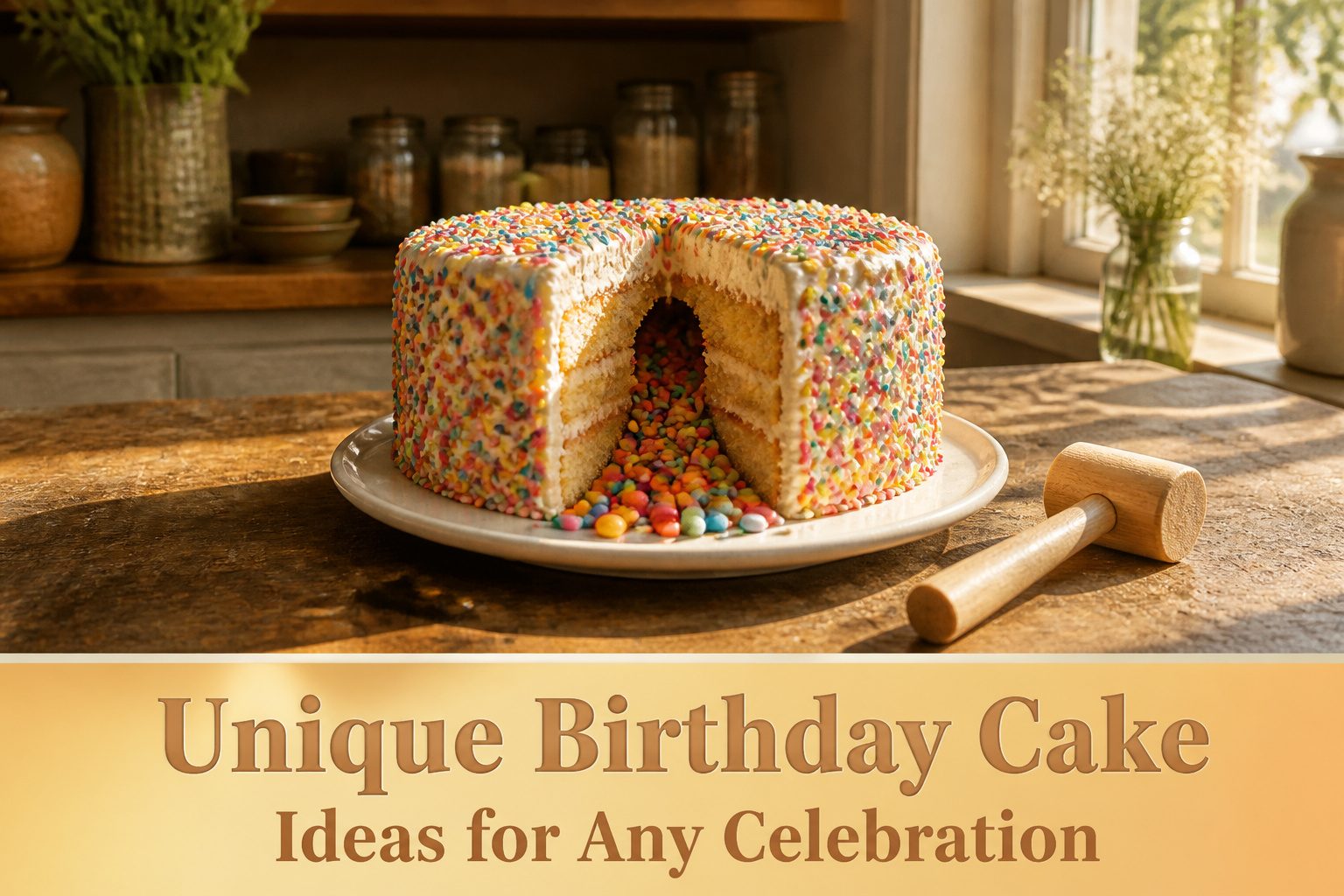
A piñata cake hides candy or small treats inside an edible shell that cracks open with a light tap, usually from a small hammer included with bakery orders.
The shell is most often chocolate, poured over a dome mold and allowed to set into a thin, brittle coating that shatters cleanly without crumbling into the cake beneath.
Hardened sugar works too, though it demands more precision; pulled or isomalt shells can achieve a clearer, glass-like finish but temperamental humidity makes chocolate the safer home-kitchen bet.
Two separate roundups of standout party cakes single this style out for the moment of genuine surprise it delivers after the candles are blown out.
The construction is straightforward once you grasp the order: bake your layers, pile the candy in the center hole or on top of the stacked cake, then invert your set shell over the whole assembly and seal the base with a ring of matching frosting.
The shell should be thick enough to hold shape through transport but thin enough that a child-sized tap fractures it. Too thick, and guests work at it; too thin, and it cracks in the fridge.
2. Pull Me Up Cake

A Pull Me Up Cake hides its best moment inside a thin plastic sleeve or acetate ring. When someone lifts it, chocolate ganache or cream flows down the sides in a slow cascade that looks almost theatrical.
The sleeve holds the topping in place against gravity, so the cake itself needs enough structure to stand firm without that support once the sleeve comes off.
A sturdy sponge, chilled firm, handles the transition; a soft or warm cake would sag or crack as the coating shifts.
Two bakeries I watch both list this as a current favorite for adult birthdays, likely because the reveal turns the guest of honor into the performer.
The mechanism is simple enough to replicate at home: pour cooled ganache into the sleeve, chill until set, then let the room-temperature cake sit for ten minutes before the pull so the coating loosens just enough to run rather than clump.
The plastic must release cleanly, which means smooth acetate, not crinkled wrap, and a wipe of neutral oil along the seam helps it separate without dragging the surface.
You have to get the timing exactly right. Pull too early and the ganache stays too thick to drip; pull too late and it sets in place and merely cracks.
For a reliable result, I would plan the reveal within an hour of removing the cake from the refrigerator, and I would not attempt this with a layer cake taller than three tiers unless the base is doweled.
3. Birthday Balloon Cake

Candy balloons made from melted sugar or gelatin float above the cake on thin wire or sticks, and the effect reads as playful rather than fussy. Color is where the idea earns its place.
You can match the balloons to party linens, go ombré from white to the birthday person’s favorite shade, or cluster a handful of brights against a plain white or chocolate base so the shapes actually register from across the room.
The sugar version sets glass-hard and keeps for two to three weeks in an airtight container with a desiccant packet; gelatin balloons stay slightly softer and hold about one week before they begin to weep.
Both tolerate the humidity of a standard kitchen, though gelatin nearer a warm oven will sag. I would make either style two days ahead, no sooner, so the work feels manageable and the finish stays crisp.
4. Bomb Cake

A bomb cake builds suspense into the structure itself: a hard chocolate shell shaped into a sphere hides the cake inside, and the birthday guest cracks it open with a small hammer or pulls a pin to split the shell apart.
The reveal lands better than slicing ever could, because everyone sees the cake at once instead of watching it get portioned behind a knife.
The shell is usually dark or white chocolate poured into a spherical mold, cooled, then sealed around a smaller cake or stacked layers.
Some versions ship with a wooden mallet; others use a ribbon pull that fractures the chocolate along a scored seam.
Either way, the hammer matters more than the frosting for making this one memorable, so I would not skip it if I were building this at home.
Two popular lists rank this among the top surprise cakes right now, which tells me the novelty has enough staying power that guests expect it rather than puzzle over it.
Timing is everything: the shell has to stay cool enough not to soften, but you need it at room temperature or the chocolate shatters into powder instead of clean shards.
I would set it out ten minutes before the candles, no more.
5. Ice Cream Cake

An ice cream cake only earns its place on this list if you commit to the architecture: thin layers of cake alternating with thick slabs of ice cream, wrapped in a frosting that turns snappy and firm from the freezer’s cold.
Buttercream stiffens; whipped cream weeps and separates. A chocolate ganache, poured while warm and left to set, gives you that clean crack when you slice.
The cutting matters more than the baking. Let the cake sit out 15 to 20 minutes at room temperature before you bring a knife down, and run that knife under hot water between every cut.
A cold blade drags through ice cream and smears the layers into each other; a warm one slides through and leaves the stripe pattern intact.
For timing, figure on pulling the cake from the freezer right before you sing, not after. It holds its shape well enough for transport, but once sliced, plates need to reach guests fast.
What works best is a cake that looks like a bakery showpiece but comes together from a standard springform pan and two quarts of store-bought ice cream you let soften just enough to spread.
6. Floral Birthday Cake

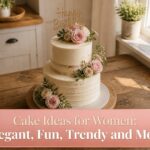
Buttercream flowers are the most reliable way to get a floral look without buying edible blooms or fondant tools. The basic buttercream roses, rosettes, and simple five-petal daisies are where I would start if I had never piped before.
They ask for a coupler, a petal tip like Wilton 104, and a steady hand. The frosting should be stiff enough to hold its shape but soft enough to squeeze through without cramping your palm.
More complex flowers, peonies and ranunculus especially, take practice because they layer petals over a base in stages.
Two approaches work here. You can pipe directly onto the cake, which means every placement is final and you need to think about spacing before you start.
Or you build the flowers ahead on flower nails, let them harden in the freezer for 10 to 15 minutes, then lift them off with a small offset spatula and press them into place.
The nail method is slower overall but forgiving; a petal that sags gets scraped off and redone, not camouflaged into the cake.
7. Rainbow Birthday Cake

A rainbow birthday cake works for a first birthday or a fiftieth because the surprise is inside, not in cartoon characters or slogans anyone will outgrow.
Six or more thin layers, each tinted a different color, stack into a stripe you only see when the knife goes through.
The visual impact is high, but the work is in keeping those colors from bleeding into each other before the cake ever reaches the table.
Chill each layer before you add the next color of batter on top, whether you are baking them separately or pouring each shade into the same pan with a divider.
Warm cake softens the dye and lets it migrate across the boundary. Cold cake firms the crumb and buys you clean edges.
Thin layers help here too: they cool faster, and they bake more evenly, so you are less likely to get a domed center that cracks and lets frosting seep into the color line.
I use gel food coloring, not liquid, because the concentrated pigment means less water in the batter. Less water means less steam in the crumb, and that means less chance the dye will weep sideways while the cake finishes.
A thin coat of buttercream between layers acts as a seal as much as a flavor, so do not skip it or spread it too thick.
The cake should slice neatly and show six distinct bands, which is why you choose this over a single-color layer cake.
8. Unicorn Cake

A two-tier unicorn cake stands up to transport better than most shaped cakes because the weight sits low.
The horn and ears are modeling chocolate or fondant made a day ahead so they firm up, and the pastel buttercream mane is built from simple star and rosette piping, nothing that requires a specialty tip.
The second tier needs a cake board and dowels underneath it, otherwise the top layer slowly sinks into the bottom and the whole silhouette collapses before candles get lit.
Pastel colors read as unicorn without overthinking the palette. Soft pink, lavender, and mint buttercream swirled together in the mane give the effect without custom mixing.
The horn gets a quick brush of gold luster dust if you have it, or stays white and still reads fine against the color.
For weeknight timing, bake the layers one evening, wrap and chill them, then stack and pipe the next day. The modeling chocolate pieces can sit on the counter uncovered; humidity is what softens them, not time.
9. Sprinkle Cake
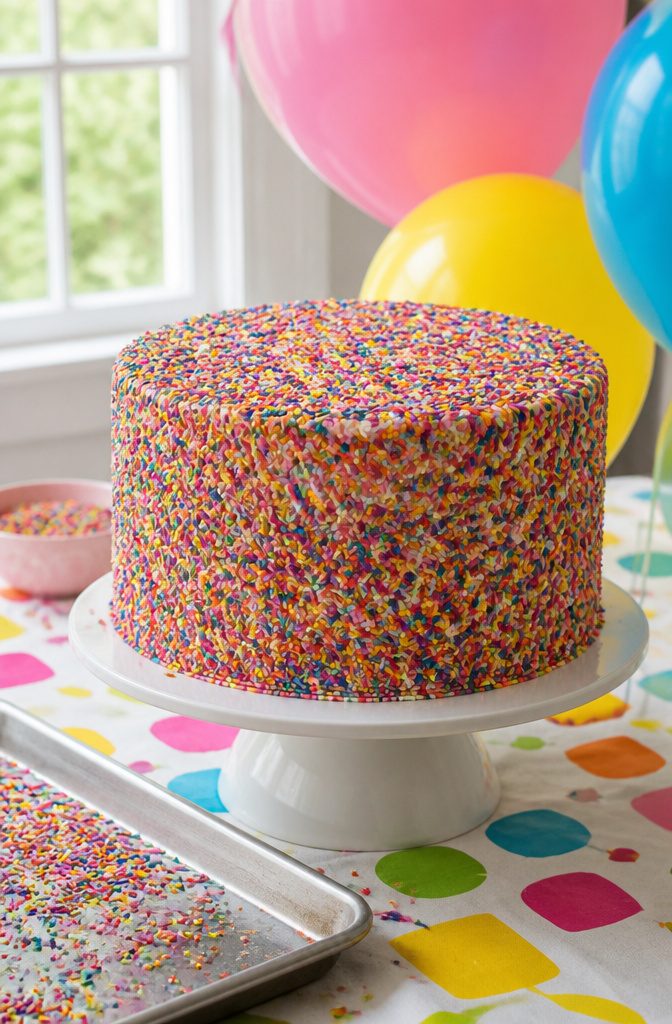
A sprinkle cake coated entirely in sprinkles reads festive from across the room, and the texture hides every uneven spot in your buttercream.
Press the sprinkles into a fresh coat of buttercream while it is still tacky, or use a thin crumb coat of glaze as the adhesive if you want a glossier finish underneath.
The real problem is the floor. A rimmed baking sheet catches what falls when you hold the cake over it and press sprinkles up the sides in handfuls.
Rotate the cake, let the excess drop, and reuse what lands on the sheet. This is the kind of decoration that looks planned and expensive but costs the price of one jar of sprinkles and twenty extra minutes.
It also adapts to any theme without changing the method. Match the sprinkle colors to the party, swap jimmies for nonpareils, or use a single metallic shade for an adult birthday that still wants some fun.
The cake underneath can be vanilla, chocolate, or whatever the birthday person prefers; the sprinkles do the heavy lifting on presentation.
10. Number Birthday Cake

A number cake reads clearly across the room and still feels personal. The standard method is simple: bake a sheet cake, chill it until firm, then cut out the numeral twice so you can stack the layers with filling between.
One video walkthrough I found useful stresses that chilling before cutting keeps the cake from crumbling as you move the pieces. Buttercream works between the layers and across the top, then you finish with fruit, meringue, fresh flowers, or sprinkles.
Specialty number pans exist if you prefer one solid layer, though the cut-and-stack approach gives you more height and a cleaner serving slice.
Owners on Reddit mention that dense sponge or pound cake styles hold their shape better than airy chiffon here.
For anyone worried about the age on display, a playful topper, say chocolate piped with "YAY," turns the number into a joke rather than a statement.
11. Theme Cake
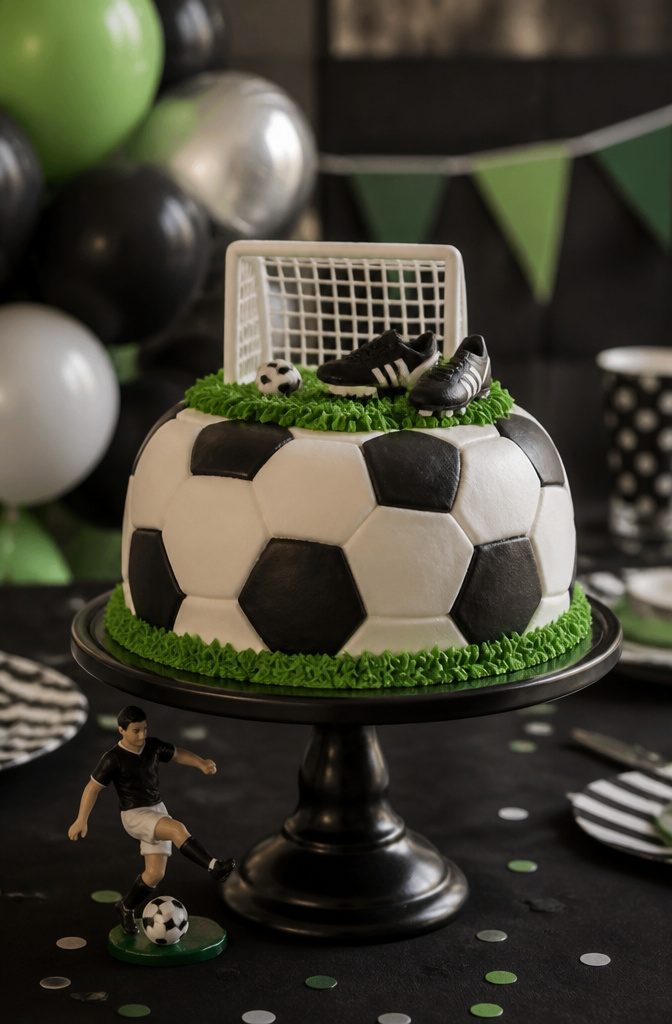
A theme cake built around the recipient’s actual interest is the most reliable way to make a birthday cake feel personal instead of generic.
Movies, cartoons, sports, hobbies, even someone’s line of work: the source material is endless because these things keep evolving year to year.
The detail level is where most home bakers trip up. A full recreation of a movie scene in buttercream takes hours and a steady hand most weeknight cooks do not have.
I would rather pick one signature element, the way a single red heart sprinkle pattern carries the whole Valentine idea.
A basketball cake does not need a court and players; an orange sphere with black piping reads instantly and builds in an evening.
Two choices matter here. One is the theme itself.
A child’s favorite cartoon character works because they will recognize it in any form. An adult’s hobby or job takes more care: a lawyer might smile at a gavel, but a full courthouse scene is too much.
The other choice is the execution. Gel colors and a few shaped cutters get you most of the way there.
Specialty molds and sculpted fondant are available, yet they sit in drawers afterward. For a cake you actually finish before the party starts, simpler almost always wins.
12. Upside Down Cake
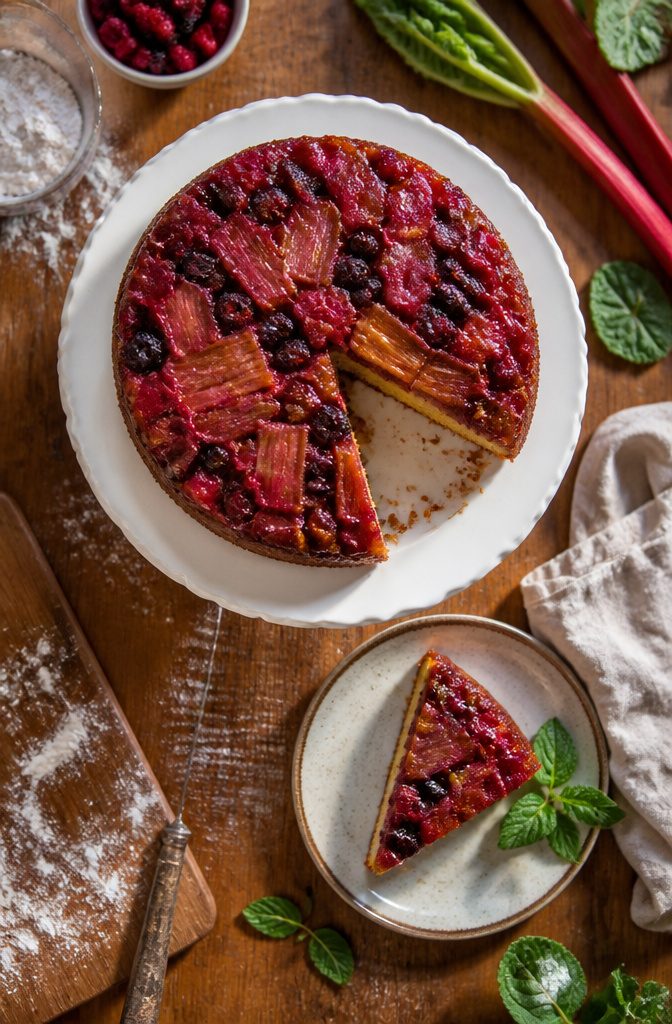
Pineapple still dominates the upside down cake conversation, but rhubarb with mixed berries or apple paired with pumpkin land harder as unique birthday cake ideas because guests rarely see them coming.
The method stays constant: butter and brown sugar line the pan bottom, fruit goes down in a single tight layer, and batter pours over the top.
Bake, rest five minutes, then flip. The fruit that was protected from direct heat stays plump and glossy on top.
Sticking is the real risk. A heavy layer of butter and sugar in the pan bottom is non-negotiable; the sugar needs to caramelize into a coating that releases cleanly.
Run a thin knife around every edge before you flip, and keep the plate wider than the pan so nothing escapes the landing.
Two paths present themselves.
Rhubarb-berry reads bright and spring-like, with the tartness cutting the sweetness. Apple-pumpkin leans fall, warm, and the pumpkin in the batter keeps the crumb dense and moist.
I would pick the rhubarb-berry for a birthday where you want the cake to feel like a surprise rather than seasonal comfort, but either beats pineapple for sheer novelty.
13. Hamburger Cake

A round cake cut and frosted to look like a hamburger lands among the most memorable unique birthday cake ideas for anyone who wants the room to laugh before they eat.
Brown frosting forms the patty, yellow buttercream stands in for cheese, and red and green complete the tomato and lettuce.
What makes it worth the effort is the layering: a thin disc of cake, tinted and cut, sits between the "bun" halves so when someone lifts the top, the cross-section reads as lettuce, meat, and cheese stacked in order.
Fondant cutouts for the fixings keep the shapes clean, though fruit layered in adds moisture and a break from all that sugar.
Two approaches win here. Build the fillings from frosting alone for a softer slice and easier prep, or press in actual fruit layers for flavor complexity and a more wholesome finish.
The fruit route demands firmer cake layers so nothing slides; if your schedule is tight, stick with buttercream fillings and call it done.
Either way, the illusion works because the colors sit in the right order, and the height matches what a real burger gives you.
14. Cupcake Bouquet

A cupcake bouquet reads as a centerpiece and a dessert at once, which is why it keeps coming up as an alternative to a single cake.
The arrangement is simple in concept: cupcakes sit in a vase or pot, and buttercream gets piped in petal shapes so each one looks like a bloom.
The practical question is keeping the cupcakes upright. A tiered stand with a sturdy base works, though I prefer a pot filled with styrofoam or florist foam.
Push a toothpick or lollipop stick into each cupcake from below, then sink the stick into the foam until the cupcake base sits flush.
This is the detail that decides whether your bouquet arrives at the table intact or leans like a tired sunflower.
For the frosting, a mix of colors and piping tips gives you the range of shapes you would see in a real bouquet.
A 1M tip makes ruffled roses, a 104 petal tip builds daisies, and a plain round tip drops in the centers.
The buttercream should be stiff enough to hold a peak; if it softens while you work, ten minutes in the refrigerator firms it back up.
You spend more time for a bigger impact. Piping fifteen to twenty individual flowers takes longer than smoothing one cake, but the result photographs well and portions itself without a knife.
15. Fresh Fruit Cake

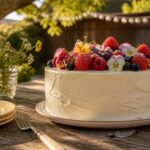
A fresh fruit cake earns its place among unique birthday cake ideas by doing almost nothing to hide the cake underneath.
The base is a single layer or a modest stack, barely frosted so the crumb shows through, and the real decoration comes from what is in season: figs split open in early fall, berries packed tight in July, or citrus segments fanned across the top in winter.
The look is immediate and generous, not architectural, and the flavor follows the same rule. The fruit does the work.
The minimal frosting keeps the sweetness in check, which matters more than some party crowds admit.
Guests who skip ordinary birthday cake often take a slice of this one. Timing matters: the fruit has to go on within a few hours of serving or it weeps into the crumb and slides.
A vegan version swaps butter for oil and dairy milk for the plant kind, oat or almond or whatever is already in the pantry.
The cake bakes slightly more tender, with a softer crust, and the oil keeps it moist for days if the fruit does not sit on it too early.
That matters for a party spread that may sit out longer than planned.
Decorating Techniques That Make Any Cake Stand Out

Buttercream flowers reward the baker who already owns a set of piping tips and has an hour to practice.
The technique works on any single-tier cake, and the color combinations are unlimited: a mix of blooms in all shapes and sizes covers the top or cascades down one side.
A 104 petal tip and a small round tip are the only specialty pieces you need, and both sell at the grocery store baking aisle.
Colorful candies skip the piping bag entirely. Heart-shaped sprinkles, arranged in a polka dot pattern, take five minutes and zero skill.
This is the right choice for a weeknight celebration or any baker who finds buttercream intimidating. You lose some flexibility: you are working with whatever shapes the manufacturer produced that season.
Themed designs, such as a unicorn built from stars and rosettes, sit in the middle for skill level and demand the most time.
A two-tier cake with a striking figure on top suits a large party where the cake doubles as the centerpiece.
The piping itself uses simple pressure and motion, but the scale means the project may take some time to complete. For a home kitchen with standard equipment, this is a weekend project, not a Tuesday night one.
Flavor Pairings Worth Building Around

Some of the strongest unique birthday cake ideas come from treating the cake and what you serve with it as a single decision.
A warm butter pecan cake, for instance, borrows its whole logic from a classic ice cream flavor, so the finished cake already carries the expectation of something cold and creamy alongside it.
That pairing works because the warm cake and cold ice cream hit different receptors instead of competing on the same note.
Pecans and butter give this cake the same irresistible flavor as the ever-popular butter pecan ice cream flavor.
What you get is a dessert that feels like a composed dish rather than a cake with an afterthought.
Cardamom pumpkin pudding cake follows the same principle: the recipe itself suggests ice cream or whipped cream, because the spiced, custard-like crumb needs that textural contrast to feel complete.
What clashes is trying to pair two equally rich, dense elements, like a heavy fudge cake with an equally dense ice cream; one side needs to give.
When both the cake and its accompaniment lean light, or when one leans rich and the other leans clean, the combination earns its place on the plate.
How to Customize Without Starting Over

The easiest wins come from buttercream color swaps, which take minutes and let you match a kid’s current obsession or an adult’s favorite sports team.
Rosettes and simple blooms accept any gel food coloring without changing the technique, so you can keep the same piping tips and motions even when the palette shifts from pastel pinks to team orange.
Sprinkles are nearly as flexible. The same sprinkle-covered finish works with rainbow jimmies, metallic dragees, or a single-color sanding sugar, and you can usually find the right shade at a standard grocery store.
Floral arrangements need more planning. A mix of bloom shapes and sizes looks best when the colors relate to each other, not when they clash, so I would sketch the palette before I tinted the buttercream.
If the birthday person wants a specific flower that is not in season, buttercream lets you fake the shape with the right petal tip, but that means buying a tip you might not own.
Age changes the scale more than the style.
A first birthday cake carries the same rosettes as a fiftieth, just with fewer tiers and softer colors. For teenagers, I would go bolder on saturation and let the contrast do the work.
Frequently Asked Questions
What are some unique birthday cake ideas?
Pinata cakes, pull me up cakes, birthday balloon cakes, bomb cakes, and rainbow birthday cakes all deliver a surprise element guests rarely expect.
A pinata cake hides candy inside a chocolate shell that cracks open with a tap, while a pull me up cake releases a ganache cascade when someone lifts a plastic sleeve.
For something simpler, a fresh fruit cake or upside down cake with rhubarb and berries stands out from standard frosting-heavy options.
How can I decorate a birthday cake?
Buttercream flowers need only a 104 petal tip and a small round tip, both sold in grocery store baking aisles.
Colorful candies like heart-shaped sprinkles arranged in patterns take five minutes and no skill. For full coverage, press sprinkles into fresh buttercream over a rimmed baking sheet to catch what falls, then reuse the excess.
What flavors work well for birthday cakes?
Pair a warm butter pecan cake with cold ice cream so the temperatures hit different receptors rather than competing.
Cardamom pumpkin pudding cake works with whipped cream or ice cream because the spiced, custard-like crumb needs textural contrast. Avoid pairing two equally rich, dense elements; one side needs to give.
What’s the secret to a moist cake?
A vegan version using oil instead of butter bakes slightly more tender with a softer crust, and oil keeps the cake moist for days.
For an upside down cake, pumpkin in the batter keeps the crumb dense and moist. In general, less water in the batter means less steam in the crumb and less chance of weeping or drying out.
What are the most popular cake flavors?
Ice cream cake remains a staple when built with thin cake layers alternating with thick ice cream slabs and wrapped in a frosting that turns snappy from freezer cold.
Butter pecan translates well from ice cream to cake form. Rainbow cakes work across ages because the surprise is inside, not in characters or slogans anyone outgrows.
What is a happy birthday cake?
A happy birthday cake is any cake built around the recipient’s actual interest rather than a generic design. A child’s favorite cartoon character, an adult’s hobby, or even someone’s line of work gives the cake personal meaning.
Pick one signature element, like an orange sphere with black piping for a basketball fan, rather than trying to recreate an entire scene.
What can I eat instead of cake on my birthday?
A cupcake bouquet serves as both centerpiece and dessert, with cupcakes arranged in a vase or pot and buttercream piped in petal shapes so each looks like a bloom.
The portions need no knife, and the result photographs well. Use styrofoam or florist foam in the base, with toothpicks or lollipop sticks pushed up through each cupcake to keep them upright.