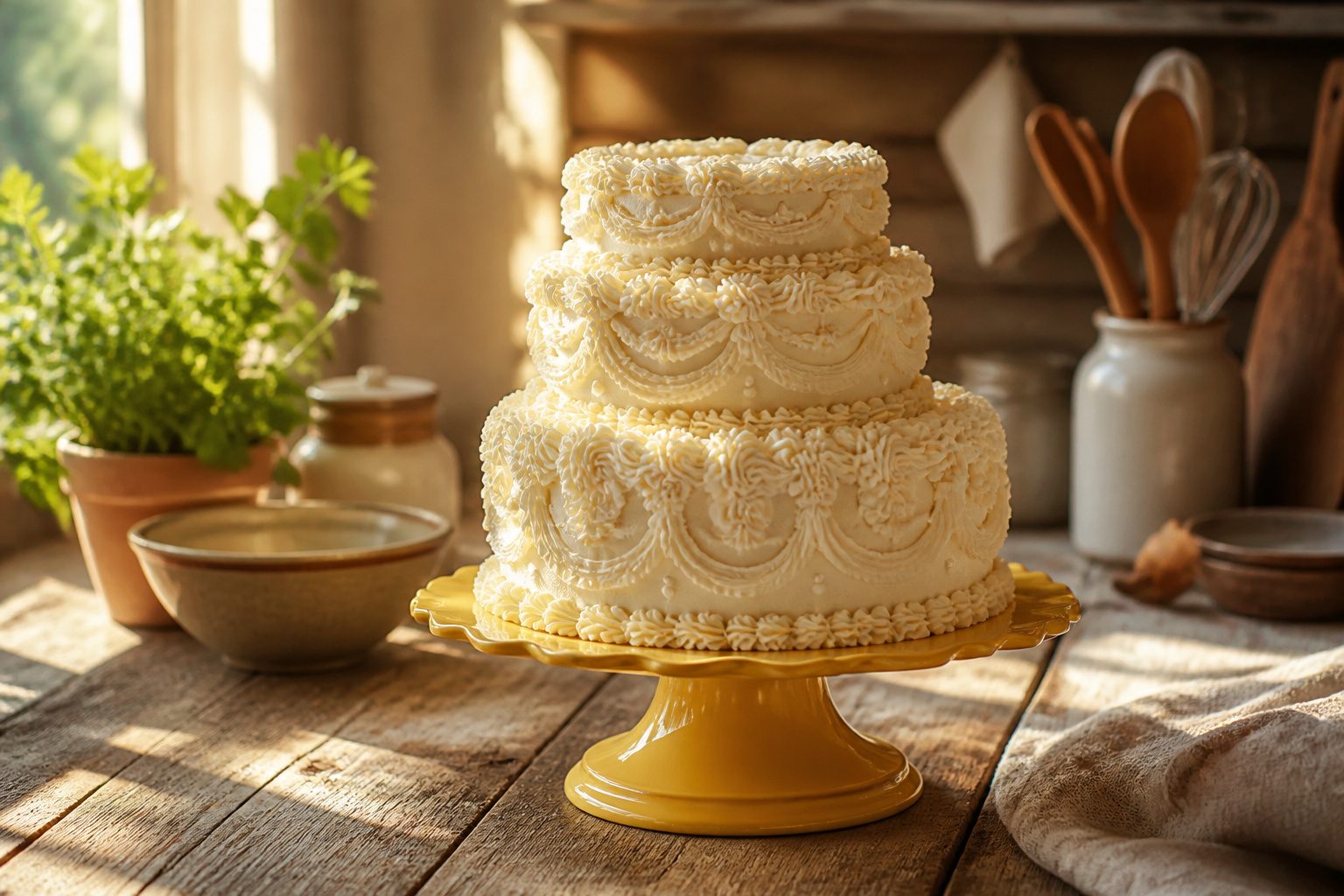
A sturdy vanilla crumb and American-style buttercream that crusts slightly make this 3D birthday cake hold its shape without a thermometer or meringue. Total time is about three hours plus chilling.
The carving takes patience: even slight warmth makes buttercream slide, so you must work with fully cooled, then chilled layers.
Two standard 9-inch rounds give you the density to carve without crumbling, and a 20-minute refrigerator set between thin coats is what keeps the finish smooth instead of speckled.
Ingredients
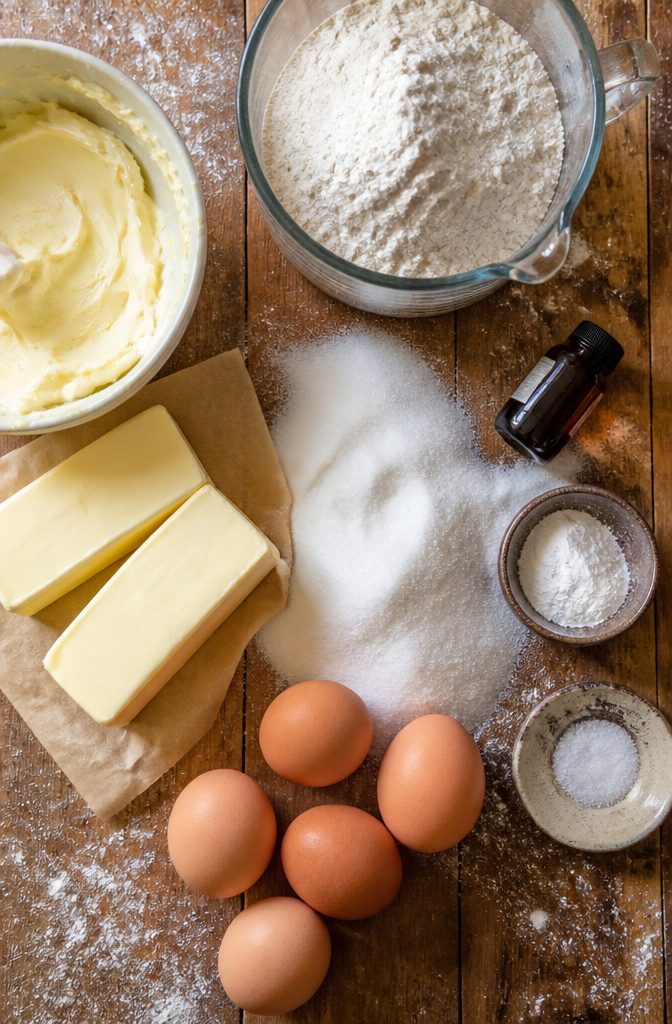
A 3D birthday cake needs a sturdy vanilla base that holds its shape without drying out. The buttercream here is American-style, which crusts slightly and supports details without requiring a thermometer or meringue.
For the cake:
- 2 sticks unsalted butter, softened
- 2½ cups granulated sugar
- 5 large eggs, room temperature
- 3 cups all-purpose flour
- 2½ teaspoons baking powder
- 1 teaspoon table salt
- 1¼ cups whole milk
- 2 tablespoons vanilla extract
For the buttercream:
- 3 sticks unsalted butter, softened
- 7½ cups powdered sugar
- 3 tablespoons heavy cream
- 2 tablespoons vanilla extract
- ¼ teaspoon table salt
For assembly and color:
- 2 cups additional powdered sugar, for stiffening if needed
- Gel food coloring in your chosen shades
Whole milk gives the crumb enough structure to carve without the open texture that buttermilk produces.
I use gel rather than liquid color because it tints buttercream without thinning it, which matters when you are piping dimensional details that need to hold an edge.
Method
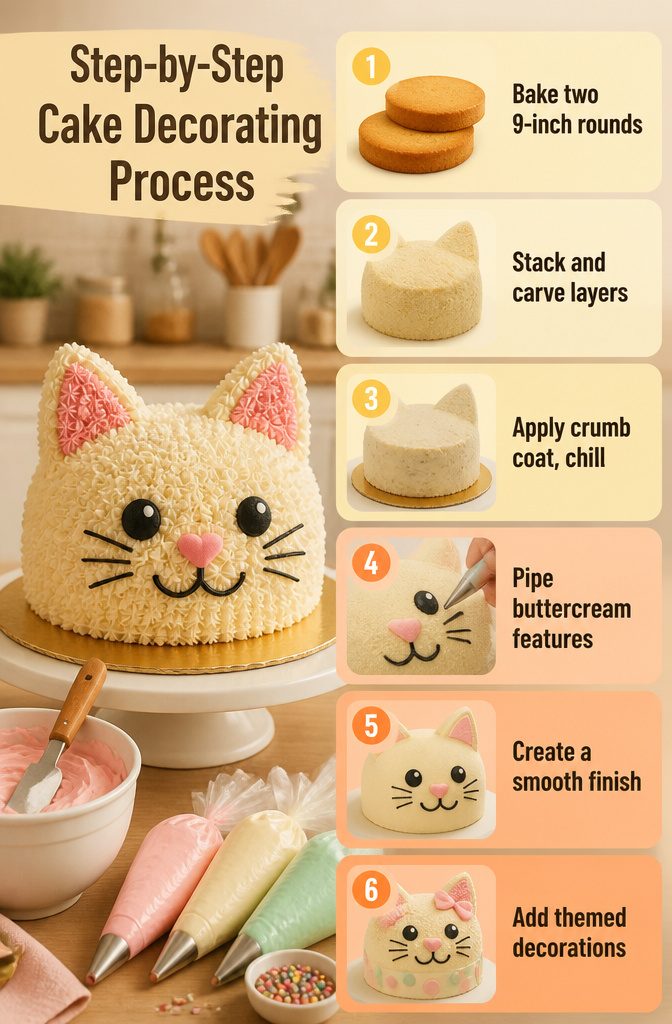
- Bake two standard 9-inch rounds from a sturdy butter cake or pound cake recipe. These denser crumbs hold up to carving far better than airy sponge. Let layers cool completely; even slight warmth makes buttercream slide.
- Stack and carve the cooled layers while cold. A chilled cake is firmer and far less likely to crumble under the knife. Start with the basic silhouette, then shave gradually. Step back often; the profile reads differently from three feet away than it does up close.
- Apply a thin crumb coat and chill until the buttercream sets hard, about 20 minutes in the refrigerator. This seal is what keeps final frosting smooth instead of speckled with loose crumbs. A second thin layer after the first sets is usually worth the extra quarter hour.
- For a kid-friendly design, pipe simple buttercream features like round eyes, a wide smile, or scattered polka dots. A coupler ring and a few basic tips, nothing specialty, are all you need. Bright colors and soft shapes read as charming without demanding precision.
- Adult celebrations call for restraint: a smooth finish, subtle tonal shifts in the buttercream, and one deliberate accent like a small gold leaf cluster or a single ribbon of contrasting color. The carving itself does the work; decoration should not compete.
- Themed elements attach best when the buttercream is still slightly tacky. Fondant cutouts, edible prints, or simple piped motifs that reference the party, a hobby, a season, go on in minutes if you have them ready before the cake emerges from the chill.
- Photograph the finished cake in natural window light, turned so the strongest feature faces the camera. A plain background, even a sheet of neutral cardstock, keeps attention on the structure itself.
- For prints that hold up at poster size, shoot in the highest resolution your phone or camera allows and check that the file exceeds 300 dpi at the intended print dimensions. A 12-megapixel image is the practical floor; below that, edges soften when enlarged.
Creative Designs
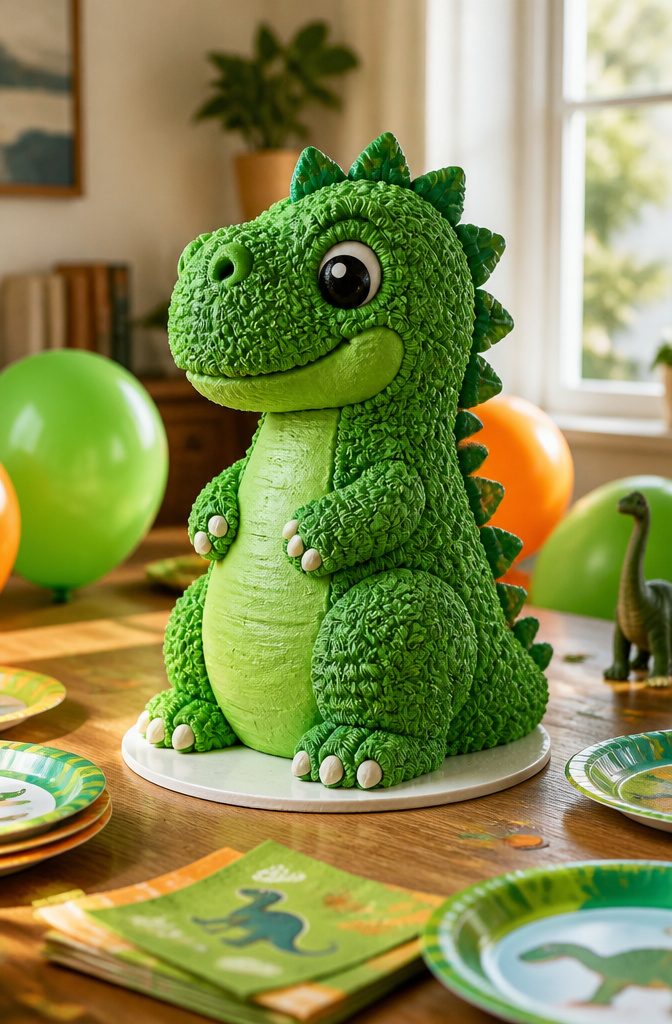
A three-dimensional cake reads as a centerpiece before anyone tastes it.
For a child’s party, buttercream shaped into a dinosaur or rocket lands harder than any flat sheet cake because the birthday kid can walk around it, point out the details, and believe for a moment the thing is real.
That physical presence matters less for adults, where a sculpted handbag, wine bottle, or tiered geometric form works better as a wink at their actual interests rather than a spectacle.
The theme determines the technique. Children’s designs rely on bold color blocking and rounded forms that forgive small imperfections in the buttercream.
Adult celebrations call for sharper edges, metallic finishes, or architectural shapes that read as intentional craft. Themed events, corporate or otherwise, split the difference: recognizable silhouettes like a sports arena or musical instrument carry the message without needing cartoon brightness.
What I skip is the design that tries to please everyone at once.
A cake half dinosaur, half elegant minimalist tier, satisfies no table. Pick the age, pick the purpose, and build the structure to match.
Using the Images
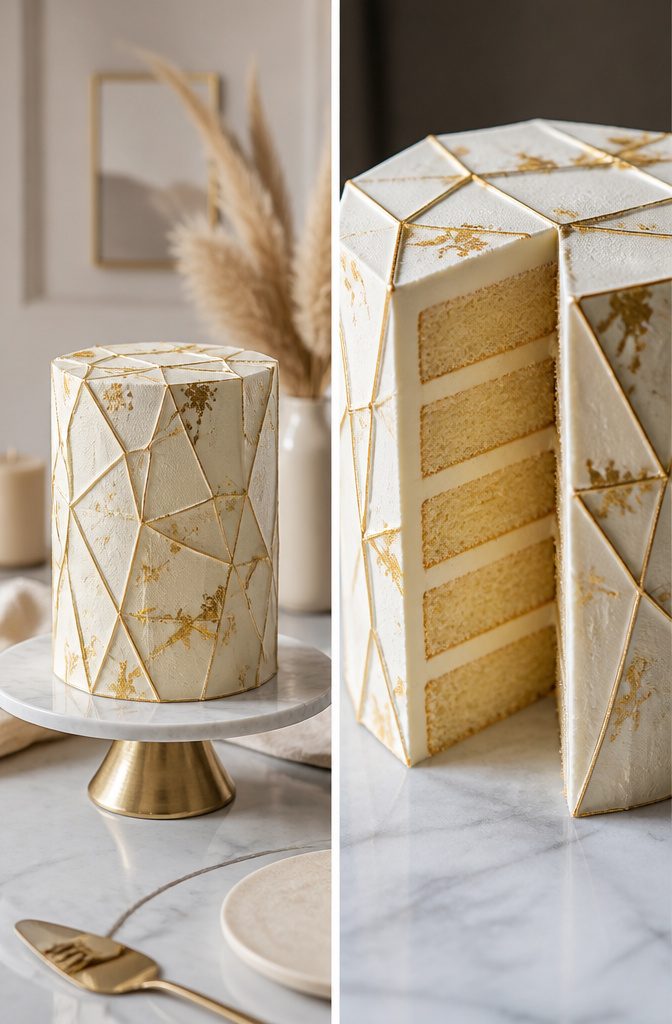
A finished 3D birthday cake pulls double duty before anyone cuts a slice. I use mine as the centerpiece in party photos, then reuse those same shots for digital invitations and personalized greeting cards that arrive in inboxes days ahead.
The cake’s sculptural shape, whether it’s a sculpted animal or a stacked novelty design, reads instantly even at thumbnail size, which matters when your audience is scrolling fast on a phone.
The same image file works across occasions. A dinosaur cake shot from a clean angle becomes a kid’s birthday invite; a more elegant buttercream structure with sharp edges and metallic accents suits an adult milestone post.
I keep the background neutral, a white counter or a plain wall, so the cake itself carries the frame and the image stays versatile for reuse.
Social sharing adds another layer. A well-lit 3D cake photograph on a platform feed draws engagement that flat sheet cakes rarely match, and that attention translates into saved pins and shared links that bring traffic back to the original design.
The physical cake and its photographic copy each justify the effort.
Accessibility
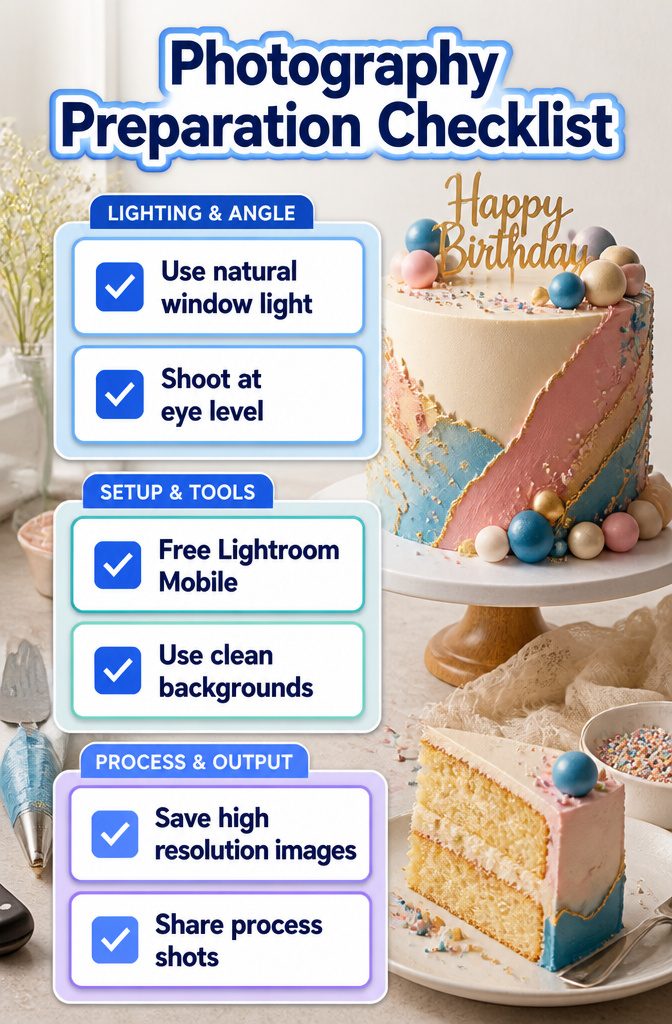
A finished 3D birthday cake is already a photograph waiting to happen. The sculpted shape catches light differently than a flat tiered cake, which means your phone can produce portfolio-worthy shots without a DSLR.
I shoot on a cloudy morning near a window, never in direct sun, and I raise the cake to eye level on an overturned box so the angle feels intentional, not accidental.
For home bakers sharing progress, the free version of Lightroom Mobile corrects yellow kitchen lighting with one slider.
Event planners pulling reference images for clients can crop tight on the buttercream texture or pull back to show scale against a hand or knife; both shots answer different questions.
Graphic designers will want a clean background, so I keep a yard of unbleached muslin clipped to a chair back, which costs less than a coffee and folds to nothing.
The images save at high resolution straight from the camera roll, and I have never needed paid software to resize them for Pinterest or a printed invitation.
Share the process shots too: the half-carved cake, the crumb coat, the first failed attempt. Those intermediate frames are what other makers actually search for when they are stuck on their own build.
Trends in 3D Cake Artistry

Clean lines and asymmetrical shapes have replaced the busy fondant sculptures that dominated a few years ago. Home bakers are leaning into buttercream textures, shaggy or ridged, that read as modern art rather than literal replicas of objects.
The unicorn-and-mermaid era has cooled; now I see more cakes shaped like abstract blobs, mushrooms, even oversized grocery items rendered in muted palettes.
What is shifting is the entry point.
Where 3D cakes used to require a week of planning and a garage’s worth of tools, the current approach favors a single structural element, a wedge cut and stood on end or a hemisphere stacked off-center, finished with a rustic coat of frosting that forgives imperfections.
TikTok and Instagram have normalized the half-finished look: a cake that is recognizably a frog or a potted plant but clearly handmade, with fingerprints still evident in the buttercream.
For weeknight bakers, this is the practical liberation. A shaped cake no longer demands mastery; it demands a bold idea and a willingness to stop before it is overworked.
Frequently Asked Questions
How do you make a 3D cake?
Bake two sturdy 9-inch rounds from a dense butter or pound cake recipe, then stack and carve them while cold.
Apply a thin crumb coat, chill until the buttercream hardens, and finish with a final frosting layer and any piped or attached details.
What are some creative designs for 3D birthday cakes?
Kids respond to bold buttercream shapes like dinosaurs or rockets they can walk around, while adults suit sharper silhouettes such as handbags, wine bottles, or geometric forms.
Children’s designs use rounded, forgiving shapes and bright colors; adult versions favor smooth finishes, tonal shifts, and single deliberate accents like gold leaf.
How much do 3D cakes cost?
Costs vary based on size, complexity, and whether you bake at home or commission a baker, with homemade versions requiring only standard pantry ingredients and basic piping tips.
How to make a 3 layer birthday cake?
For a taller 3D cake, you could bake additional 9-inch rounds and extend the same stacking, carving, and crumb-coat method, though structural support becomes more important as height increases.
Can you 3D print a cake?
The 3D cakes described are hand-carved and frosted, built from baked layers shaped with a knife and finished with American-style buttercream.