
The right cake design depends on how much control you have over timing and temperature, not how skilled you are with a piping bag.
Fresh flowers demand assembly within an hour of serving and a cake that never held raw egg whites, while buttercream roses hold for three to four days chilled but need a steady hand and a cold cake.
A mirror ganache hides uneven edges better than any fondant smoother, and a concrete-finish buttercream stops the scroll only if you have fridge space between coats.
1. Birthday Cake with Flowers

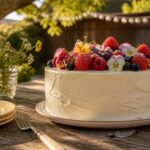
Fresh buttercream flowers, piped with a petal tip or pressed through a Russian piping nozzle, turn any round layer cake into the kind of beautiful cake designs guests pause to photograph before cutting.
The style works for a six-year-old’s party or a sixtieth because the flower palette shifts with the age: bright pinks and yellows for kids, soft mauves and ivory for adults.
Any flower that is food-safe works. Grocery store roses, daisies, or carnations, stems wrapped in floral tape and inserted with a drinking straw as a barrier, give the same effect in half the time.
Fresh flowers last a day, maybe two, while buttercream holds for three to four days chilled. I reach for buttercream when I am delivering the cake myself and for grocery blooms when the host wants to arrange them on site.
2. Wedding Cake
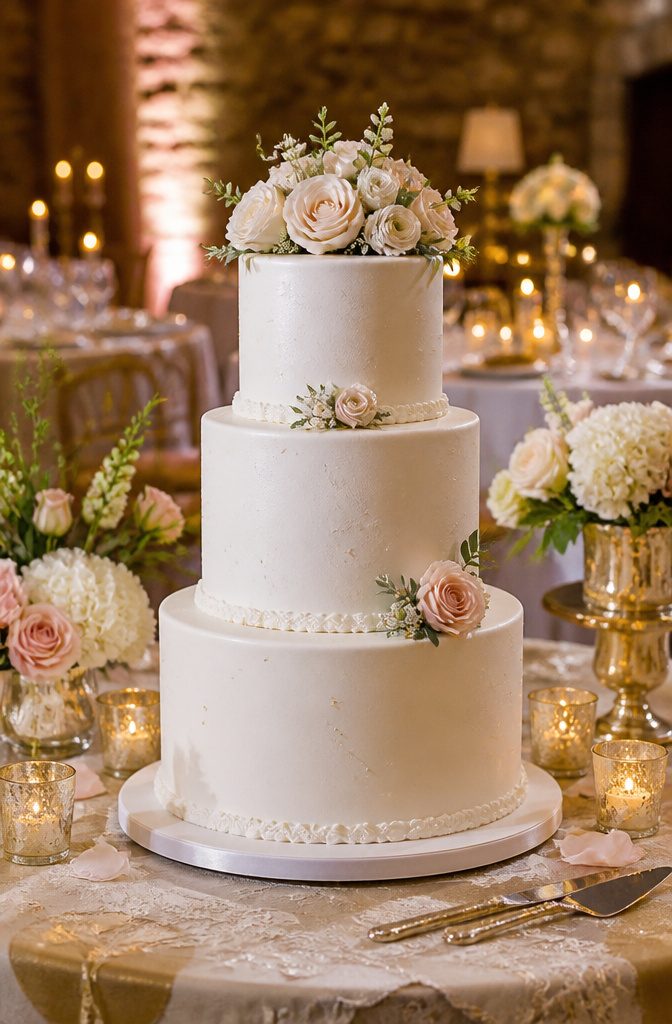
The tiered wedding cake remains the design most people picture when they hear the phrase beautiful cake designs, and that staying power comes from structure rather than ornament.
Clean vertical lines, perfectly level tiers, and a smooth finish in fondant or buttercream create the silhouette that reads as elegant from across a room.
Proportion does the heavy lifting. Each tier should step down by a consistent ratio, typically two inches in diameter, so the eye travels upward without catching on a visual stumble.
A 12-inch base, 10-inch middle, and 8-inch top is the combination I see most often, though a four-tier stack with a 6-inch crown works for larger gatherings.
Fondant gives you that porcelain-smooth surface and sharp edges, but it costs in taste and in labor.
Buttercream is more forgiving to slice and more pleasant to eat, though it demands a steady hand and a cold cake to achieve comparable smoothness.
For most home bakers, buttercream is the practical limit, and the result is still striking when the tiers are truly level.
The real mistake is overdecorating.
A well-proportioned tiered cake needs little more than a simple border or a few fresh flowers at the base. The architecture itself is the decoration.
3. Floral Wedding Cake

A floral wedding cake stands apart from the simple tiered white wedding cake and from the casual birthday flower cake in one way: the flowers are not decoration added on top, they are the architecture of the design itself.
Elaborate fresh flower installations cascade from tier to tier, sometimes pooling at the base, sometimes arcing overhead like a trellis.
The varieties that hold up out of water for a full reception matter here. Roses, ranunculus, and spray roses stay crisp longest.
Hydrangeas wilt fast unless stems are fully sealed, so I skip them for anything that sits out more than two hours. Eucalyptus and olive branch give greenery that stays stiff without water.
Cascading arrangements need structural planning. Each stem gets a food-safe pick or is wired and taped, then inserted into a straw sealed at one end with fondant or chocolate.
The cake itself stays untouched by the flowers. This is the detail that decides whether your design looks professional or like grocery store roses pushed into buttercream: the flowers must appear to grow from the cake, not rest on it.
For a home baker, the limit is time and refrigeration.
Fresh flowers demand assembly on site, within an hour of serving, and they need a cake that has never held raw egg whites or perishable fillings that would spoil at room temperature.
4. Purple Wedding Cake

A deep violet buttercream reads regal; a pale lavender reads romantic, and the shade you choose decides the whole mood before a single flower goes on top.
I reach for grocery-store gel color, not liquid, because the concentration lets you stop exactly where you want without watering the buttercream.
For a natural route, ube halaya or ube extract from the Asian aisle tints cake and frosting a soft violet with a faint nutty sweetness that guests notice but usually cannot name.
Synthetic color gives you the same purple every time, while ube shifts with the batch and the brand.
If the wedding leans rustic or farm-to-table, I think ube earns its place. If the bride has a Pantone swatch in her hand, gel is the safer bet.
Either way, keep the decoration simple. Purple carries enough visual weight that gold leaf or white sugar roses do the heavy lifting without crowding the cake.
5. Elegant Wedding Cake

Smooth buttercream with a combed texture, done right, reads as intentional restraint rather than something you skipped.
A single tone of fondant or buttercream carries the whole design, so the finish has to be flawless: every bubble filled, every edge sharp.
Metallic accents work best in thin bands or tiny dots of edible gold leaf; more than that, and you have a different cake entirely, one that competes with the bride rather than complementing her.
I think the combed finish is the safer choice for most home bakers.
It forgives a slight unevenness in the crumb coat, and the ridges catch light in a way that reads as texture rather than flaw. Single-tone fondant demands a perfectly level cake underneath, plus a deft hand with the smoother.
The metallic details are where I would spend my time budget: applied with a clean brush or tweezers, they take ten minutes and photograph like something a pastry shop charged triple for.
6. Dark Chocolate Cake
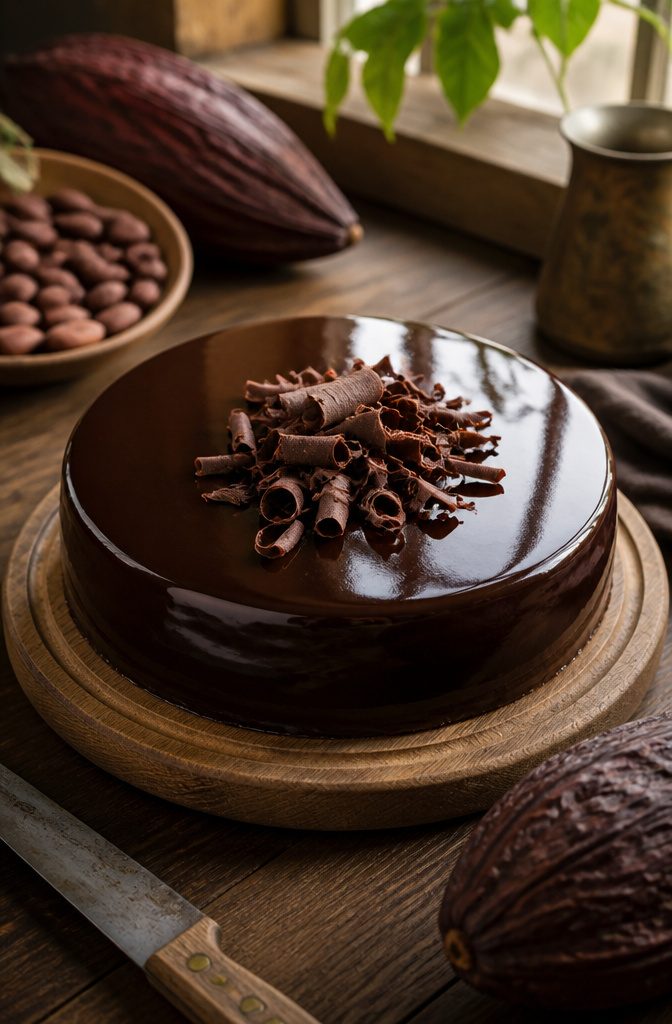
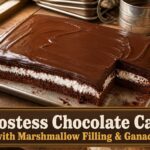
A dark chocolate cake carries its own decoration. The ganache sets to a mirror sheen that needs nothing else, or you can pull a comb through it while it is still soft and let the ridges catch the light.
Chocolate curls work best against that glossy surface, their matte texture creating a contrast that looks considered rather than crowded.
The naked style is another option worth knowing.
A thin layer of frosting, just enough to seal the crumbs, leaves the dark cake layers visible at the edges. It reads as intentional restraint, not unfinished work, and it saves the trouble of achieving perfectly smooth sides.
Ganache behaves differently depending on when you use it. Pour it warm and it runs down the sides in controlled drips; cool it to room temperature and it spreads like buttercream with a softer finish.
I find the poured look more forgiving for a home kitchen, since drips hide uneven edges rather than expose them.
7. Baby Shower Cake

Baby shower cakes lean hard into softness, and that restraint is what makes them work. Pastel buttercream in mint, blush, or butter yellow sets the tone without fighting the room.
The shapes that read as "baby" are simpler than they look: a pair of booties piped with a round tip and a small star tip, or ABC blocks built from square petit fours arranged on the cake board.
No silicone mold required, just a ruler and a steady hand.
Toppers stay light by design. A single paper banner across a wooden skewer, or a cluster of tissue-paper pom-poms stuck into the top tier, gives height without the weight of fondant figures.
I have seen grocery-store bakeries charge premium prices for exactly these details, and they are the kind of thing a home baker finishes in an evening.
The bootie shape needs only two teardrops of frosting side by side, with a cuff piped across the top.
That is the whole technique. Blocks are even plainer: frost a square, press a fork into the sides for texture, and pipe a letter with a #3 round tip.
You get a cake that photographs well against nursery colors without ever looking like you rented equipment to get there.
8. Celebration Cake

A versatile celebration cake lives or dies on color. I reach for deep teal, mustard, or coral buttercream before I reach for occasion-specific toppers.
Those shades read as festive at a retirement party, a graduation open house, or a promotion dinner without anyone asking what the theme was supposed to be.
Simple message piping carries the whole design. I write "Congrats" or "Here’s to You" in a basic shell or rope border, nothing fancier than a Wilton 18 or 21 tip.
The lettering takes maybe ten minutes once the buttercream is the right consistency, and it beats trying to center a plastic grad-cap pick that tips over in transit.
For decorations that travel across events, I keep a stash of chocolate cigars, gold-dusted berry clusters, and wide ribbon borders in matte satin.
They dress up a cake without committing to one milestone. These cakes photograph softer than themed ones; you will not get the gasp of recognition from a specific motif.
What you get is a cake that works on three days’ notice when someone texts that they need dessert for forty on Saturday.
9. Chocolate Cake
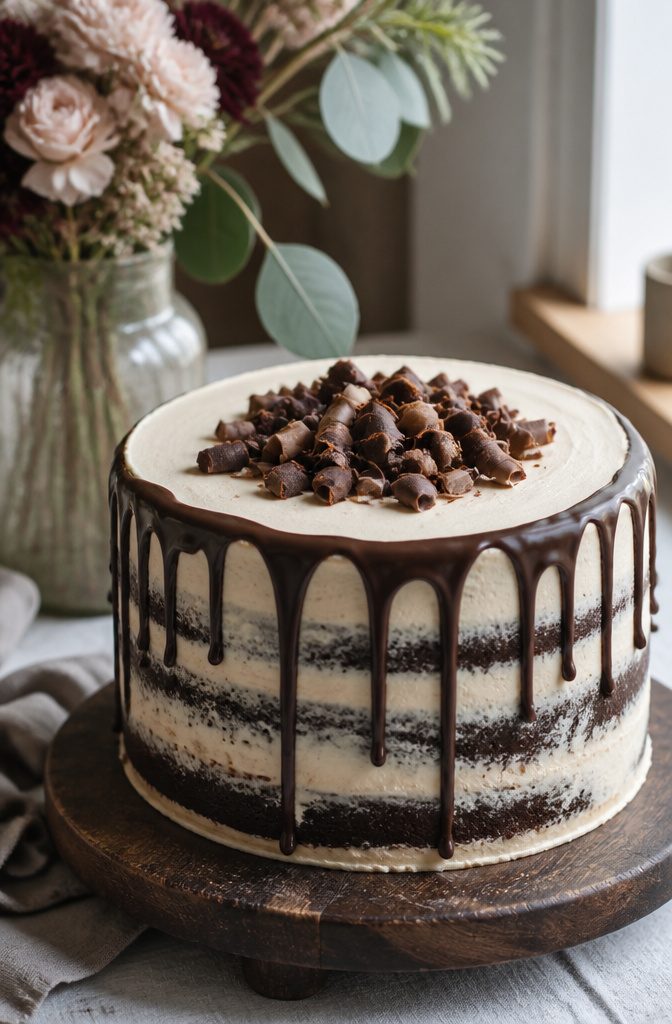
A standard chocolate cake earns its place among beautiful cake designs through contrast rather than intensity.
The lighter the frosting, the more dramatic the dark crumb appears, so I reach for vanilla Swiss meringue or a pale tan coffee buttercream rather than matching brown on brown.
Piping shows up crisply against that pale backdrop: shell borders, simple rosettes, or a classic basketweave all read as deliberate decoration, not afterthought.
The technique that makes this everyday flavor special is partial coverage. A semi-naked finish, where the scraper leaves streaks of chocolate showing through white frosting, gives you the contrast without the fuss of perfectly smooth sides.
Add a few strategic ganache drips from a chilled spoon and the cake looks bakery-case ready with nothing more than a rotating stand and an offset spatula.
For birthdays or casual celebrations where fondant feels like overkill, this approach keeps the process approachable.
The piping does not need to be elaborate; even a single row of dots along the base reads as finished against that two-tone palette. The deliberate choice to let the chocolate be visible rather than burying it is what counts.
10. Halloween Cake

Orange and black buttercream is the safest path to a Halloween cake that actually looks like Halloween.
I tint half the batch deep orange with gel coloring and leave the rest black, which reads better than the charcoal you get from overworking chocolate frosting.
A simple spiderweb piped in black across the orange base takes ten minutes and no steady hand if you start with a cross, add an X, then connect the points with gentle curves.
Candy toppers do the heavy lifting after that. Plastic spider rings pressed into the base tier, candy corn arranged in a border, or broken-up chocolate bars scattered like tombstones all read as effort without requiring sculpting skills.
Candy gets sticky in humid kitchens, so I add those pieces right before serving rather than the night before.
One limit worth naming: black buttercream will stain teeth and small fingers, which matters if you are feeding a crowd of costumed first-graders.
For that situation, orange frosting with black accents and candy details keeps the theme intact without the smudges.
11. Colorful Cake

A rainbow layer cake looks like the most effort but is actually the simplest method: one vanilla batter divided into six bowls, each tinted a different color, then baked in thin layers.
The bowls multiply fast, and so does the cleanup.
An ombré buttercream finish uses the same single batch of frosting, but you pull out portions at three or four stages of saturation and apply them in bands from dark to light.
It reads as sophisticated without the layer-count of a full rainbow, and the technique is one bowl for the buttercream plus the cake itself.
Sprinkle-covered finishes are the real weeknight move. A thick coat of buttercream and a generous handful of confetti quins or jimmies hides almost anything, and the texture distracts from small flaws in your smoothing.
The cleanup after is the price: sprinkles migrate to every countertop seam for days.
I would reach for the ombré if I wanted to impress with minimal dishwashing, and save the full rainbow for a birthday where someone else is loading the dishwasher.
12. Flamingo Cake
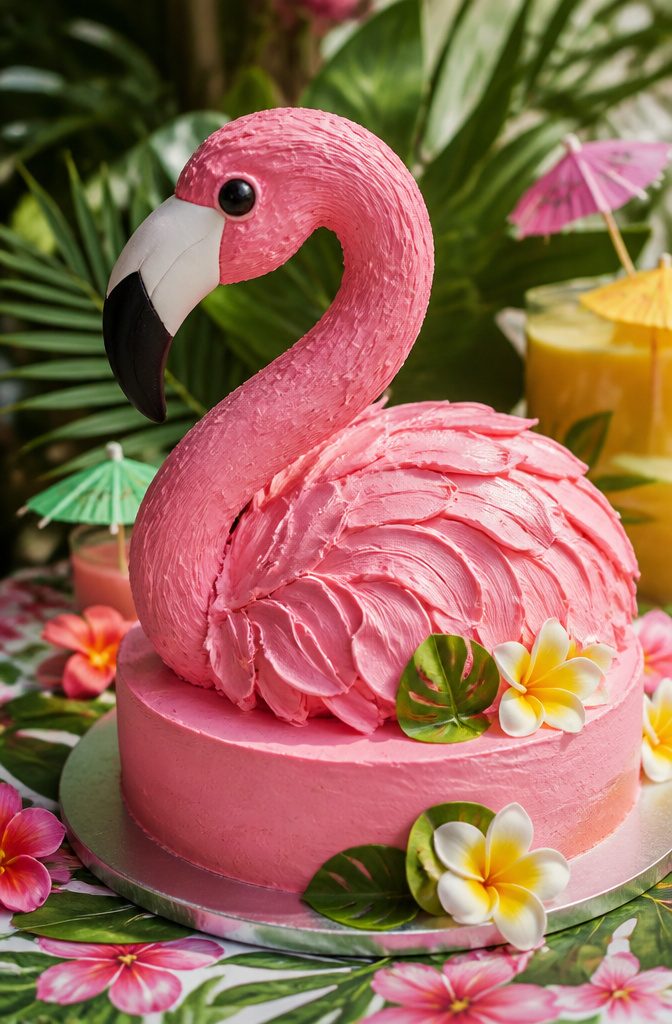
A flamingo cake lands best at summer birthdays, pool parties, or any gathering where the dessert should feel like vacation.
The body and neck come from two standard round layers: bake your usual 8-inch or 9-inch rounds, then cut one into the S-curve shape that becomes the neck and head, positioning it against the intact round that forms the body.
A little buttercream between the pieces holds them together before you ice the whole shape.
Pink buttercream covers the surface, and I think gel food coloring beats liquid here because you need a saturated tone without thinning the frosting.
The beak is a triangle of orange fondant or even a carefully cut slice of orange circus peanut pressed into place. Two chocolate jimmies for eyes finish the face.
Structure is the concern. A single round layer sliced into a neck leaves you with leftover cake scraps, so I bake a third round and cut the neck from that, saving the body rounds whole.
It means more cake, but the shape stays cleaner and you avoid the fragile seam where neck meets body.
For a smaller crowd, the two-layer version works if you freeze the assembled shape briefly before icing, which hardens the buttercream glue and keeps the neck from sagging during application.
13. Rose Cake
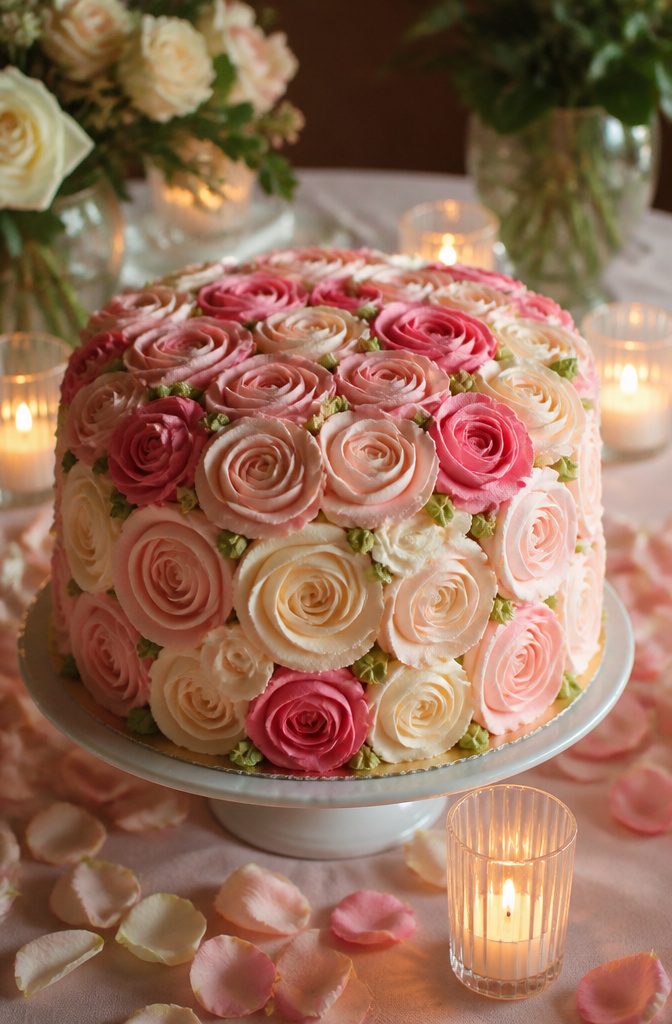
A rose cake commits fully to its namesake flower rather than scattering a few blooms among other decorations.
Piped buttercream roses clustered across the surface give the most reliable result for home bakers because you control the color and placement, and a single batch of buttercream does both the crumb coat and the flowers.
Fresh roses arranged on top look dramatic for an hour, then the petals soften and the stems risk piercing your frosting.
If you go fresh, insert them just before serving and keep a barrier of parchment or a clean cake board between the stem and the cake.
The piped version builds from a simple swirl: a round tip for the center bud, then a petal tip angled outward to layer the surrounding petals.
Start at the top center and work down so the lower roses slightly overlap the ones above, which hides any gaps and gives depth.
Three sizes of rose, small to large, keep the arrangement from looking stamped out. I use the smallest ones to fill corners where a full rose would crowd its neighbor.
Color is where this design earns its keep. Deep pink against ivory reads romantic; ombré roses fading from saturated to pale at the edges reads modern.
One color family keeps it cohesive. Two colors on the same cake, unless they are very close in value, fight for attention and the roses stop reading as roses.
14. Fruitcake
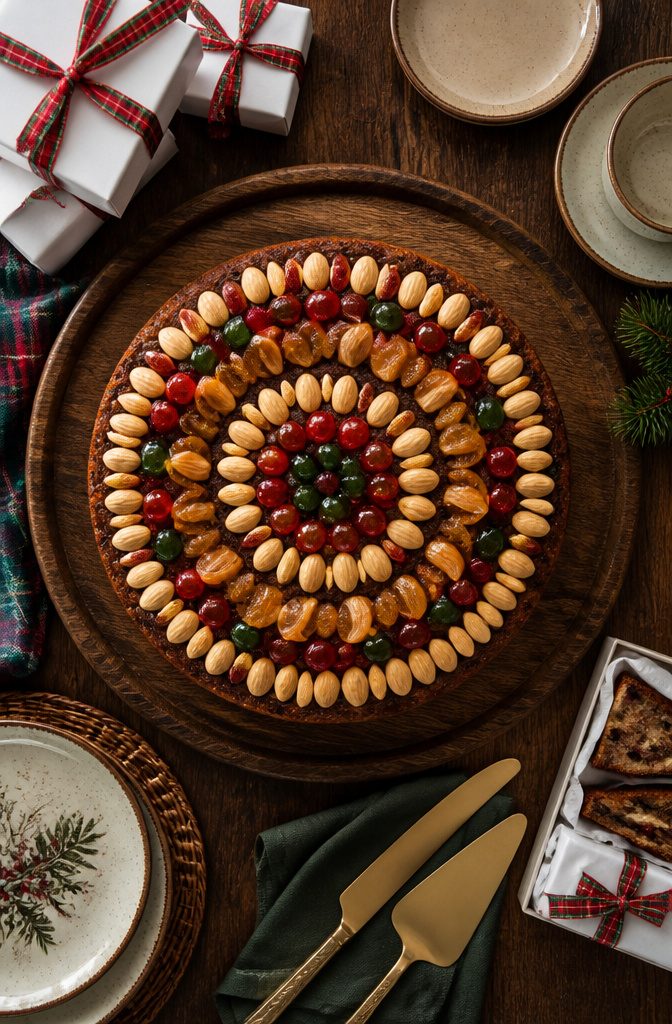
Candied cherries and citrus peel pressed into the surface of a dark fruitcake create a jeweled mosaic that catches light the way stained glass does, and whole blanched almonds radiating from the center in careful rows give the cake a geometry that reads as intentional craft rather than accident.
The color is the point: those garnet and amber tones against a chestnut-brown crumb look expensive even when the ingredients came from the baking aisle of a grocery store most readers already shop.
I know the reputation.
Fruitcake has become shorthand for holiday obligation, the block that gets passed around and never finished. But judged strictly as a visual object, it holds up.
No other cake type builds its decoration from the same materials it is made of, so the pattern on top is not frosting applied later but a preview of what slicing reveals.
That integration of inside and outside is a design principle more modern cakes borrow with less honesty.
The compromise is genuine. A fruitcake that looks this way is heavy, dense, and lasts for weeks, which is the point of the original recipe but not what most home cooks want to serve after a weeknight dinner.
For a host who needs a centerpiece that travels well and improves over time, though, the visual impact justifies the advance planning.
15. Modern Cake Design

The concrete-finish buttercream look is the one that stops me scrolling.
It reads like actual architectural concrete, matte and slightly imperfect, and it takes a steady spatula hand plus a bench scraper held at a low angle while the buttercream is cold.
A half hour in the fridge between coats keeps the texture from going mushy.
Geometric shapes and negative space work best on a tall, narrow tier where the eye travels upward.
I would skip fondant entirely here; the sharp edges come from a chilled ganache shell under thin buttercream, and the negative space is cut clean with a warm knife, nothing more specialized than that.
Exposed edges are faster than they look, but they are unforgiving. You are showing the cake layers themselves, so any doming or uneven bake reads as sloppy, not intentional.
A long serrated knife and a turning stand are the only tools, and the layers need to be level within a quarter inch or the whole thing tilts.
I reach for these styles when the celebration is adult and the venue has good daylight.
They photograph well, they slice cleanly, and they avoid the pastel overload that most party tables already have. Every flaw is visible, so the finish takes longer than a busy buttercream swirl that hides imperfections.
Flowers, Colors, and Themed Decorations

Fresh flowers, buttercream roses, and sugarpaste tulips each send a different signal on a cake, and the same flower in two mediums reads as two entirely different styles.
Real blooms lean rustic and seasonal; piped buttercream roses signal classic celebration; gum paste orchids read formal and sculptural.
Color works the same way. A blush-pink fondant tier transfers from baby shower to wedding to anniversary without changing its base, but pair it with hand-painted gold leaf and it locks into one occasion.
Themed toppers are the least forgiving element. A acrylic "Mr & Mrs" sign or fondant flamingo defines the event in a way that the cake underneath cannot override.
I keep themed pieces to removable picks or plaques so the design loosens up for reuse. Color and flower type travel across cakes; toppers and exact color palettes usually don’t.
Cake Designs by Occasion

Most recipe sites and decorating guides sort their beautiful cake designs by the event they are built for, and that sorting matters more than it might seem.
A cake that reads as festive at a birthday party can feel out of place at a funeral, and a few designs carry formal expectations you ignore at your peril.
Weddings dominate the category. Tiered white or ivory cakes with fondant draping remain the default there, though the 15 designs I reviewed show real movement toward buttercream finishes and looser floral arrangements.
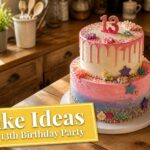
Birthdays allow the widest range: the same bold color blocking or novelty shaping that would look childish at a wedding reads correctly against balloons and candles.
Baby showers tend toward softer palettes, pale yellows and mint greens with restrained piping, while retirement or graduation cakes often borrow the celebration vocabulary of birthdays with slightly more dignified proportions.
Halloween and seasonal holidays are where tradition tightens most.
Orange and black color schemes, or autumn leaf motifs, signal the occasion before a guest reads the invitation. Cross over to a general "celebration" cake for those same colors and the design feels confused rather than versatile.
The practical value of sorting by occasion is that it narrows your ingredient and technique decisions fast.
Once you know the event, buttercream versus fondant becomes an easier call, as does the question of how far in advance you can safely decorate.
Fondant Work and Piping Techniques

Fondant gives that glass-smooth finish you see on magazine covers, but the work behind it is substantial.
Rolling it to an even thickness takes a light touch and a long pin, and once it is draped over the cake you have only minutes to smooth the surface and trim the base before it sets.
Buttercream, by contrast, forgives more: you can scrape it smooth, chill it, and scrape again.
The compromise is genuine: fondant seals moisture in and travels well, yet most guests peel it off in strips. A buttercream finish tastes better to almost everyone, but it softens in heat and never achieves that porcelain look.
Piping demands less equipment than newcomers expect. A few metal tips, a coupler, and disposable bags are enough for rosettes, shells, and lettering.
The skill builds fastest with practice on parchment; twenty minutes of piping dots and lines teaches pressure control faster than any video. Royal icing holds sharp definition and dries hard enough to stack, but it tastes like sweet chalk.
Swiss meringue buttercream pipes almost as crisply and eats much better, which is why I keep it in rotation even when fondant would photograph more cleanly.
Frequently Asked Questions
How can I decorate a cake?
You can decorate cakes with fresh flowers (wrapped in floral tape and inserted with a drinking straw barrier), piped buttercream roses using petal tips, simple grocery-store gel colors for bold shades, metallic gold leaf applied with tweezers, ganache poured for a mirror sheen, sprinkles or confetti quins for texture, and simple shapes like booties or ABC blocks piped with basic round and star tips.
For themed events, candy toppers like plastic spiders or candy corn work well without requiring advanced sculpting skills.