
A wedding cake built from scratch tastes like whatever the couple wants it to: pistachio and sour cherry, brown butter almond, champagne elderflower.
The thing that separates a memorable stack from a safe one is the condition nobody mentions until it is too late: one tier should be personal, not popular, and it should sit on top where only a few slices go.
The national default that comes back from tastings most often is vanilla bean on the bottom, lemon with lemon curd in the middle, pistachio on top.
That pistachio tier is the smallest, often saved for the couple, and it costs nothing extra to order but changes whether guests remember the cake or just agree it was good.
Ingredients
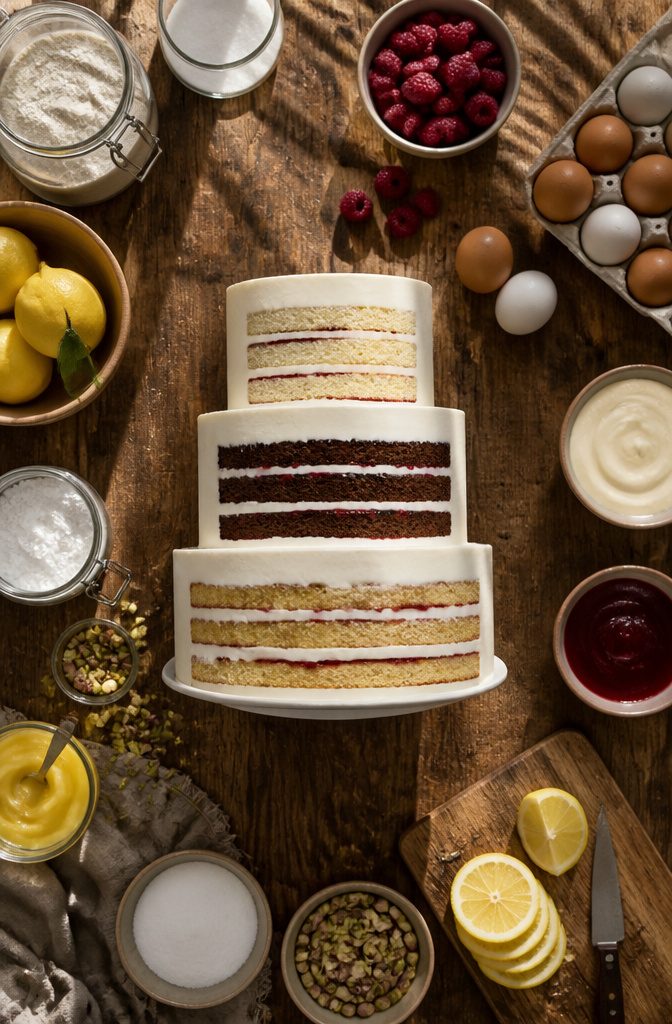
A standard three-tier cake serving 100–120 guests means roughly 10–12 cups of finished batter per tier, depending on your pans. Here is what I keep on hand when building flavor stacks from scratch.
Base cakes
- Vanilla bean: 8–10 whole beans or 4–5 tablespoons paste per recipe batch
- Chocolate: 2 cups Dutch-processed cocoa for the full three tiers
- Lemon: 1 cup fresh juice plus 4 tablespoons zest, divided across batches
- Raspberry: 12 ounces freeze-dried fruit, ground to powder
- Pistachio: 3 cups shelled nuts, finely ground
- Almond: 2 tablespoons extract or 1 cup almond flour per batch
- Red velvet: 4 tablespoons cocoa plus 2 bottles red gel coloring
- White chocolate: 12 ounces chopped, melted into batter
- Carrot: 4 pounds grated, squeezed dry
- Strawberry: 2 pounds fresh, roasted down to 2 cups puree
Fillings and frostings
- Raspberry jam: 3 cups, thinned slightly for spreading
- Lemon curd: 4 cups, chilled firm
- Cream cheese frosting: 3 pounds cream cheese to 6 cups confectioners’ sugar
- Salted caramel: 2 cups, cooled to spreadable
Seasonal accents
- Elderflower: 6 tablespoons cordial, brushed on layers
- Champagne: 1 cup reduced to ¼ cup syrup
- Brown butter: 1 pound butter, cooked to nutty and cooled
How to Build Your Wedding Cake Flavor Stack

A tiered wedding cake is the only place where six sources agree on a single starting point: vanilla bean belongs on the bottom. It is the most requested flavor nationally, and it carries enough weight to anchor the whole stack.
- Start with vanilla bean as your base tier. It pleases every guest and pairs with almost any filling.
- Add chocolate as your second tier. It is the second most popular choice, and it gives guests who want something richer an obvious place to go.
- Choose a seasonal third tier. For spring and summer, lemon raspberry reads light and fresh. For fall and winter, brown butter almond carries the warmth that fits the room.
- Pair each cake with its complementary filling. Vanilla takes raspberry jam or fresh raspberry. Chocolate takes salted caramel, or chocolate hazelnut espresso if you want the Nutella note that guests recognize immediately. Lemon doubles down with lemon curd. Red velvet goes with cream cheese mousse, the traditional match lightened enough for a tall tier.
- Book your tasting 6–9 months ahead. That lead time is standard for securing a baker who will consult on flavor logic before confirming the order.
- Select 2–3 flavors for the final cake. Most couples stop at three; more than that complicates the order without adding real variety.
- Match intensity to venue. Lighter flavors suit a beach or outdoor setting. Richer, deeper flavors hold their own in a formal ballroom.
The common three-tier arrangement that comes back from tastings most often: vanilla with raspberry on the bottom, lemon with lemon curd in the middle, pistachio on top.
The pistachio tier is the smallest, often saved, and it gives the couple something personal without asking eighty guests to agree on it.
Flavor Pairings That Work

Vanilla bean cake with raspberry jam or lemon curd remains the pairing I see requested most often. The tartness cuts through the sweetness, and the bright color against white buttercream makes for a memorable slice when the cake is cut.
Chocolate with salted caramel works on a different principle: the salt amplifies the chocolate rather than competing with it, which keeps a tall tier from reading as heavy.
Red velvet and cream cheese is the traditional match, though bakers increasingly lighten it to a mousse for stacking. For formal weddings, champagne elderflower has become the reliable choice for couples who want something festive without weight.
Brown butter almond is the pairing I am noticing more this year, toasty and rich with salted caramel or praline crunch as its natural partner.
Pistachio against sour cherry or raspberry is the 2026 favorite among bolder couples.
The savory nut needs that sharp fruit to keep the bite balanced. Earl Grey and matcha remain niche, though bergamot with honey mascarpone, or matcha with yuzu curd, reward guests who want something quieter than the usual sweetness.
Most couples choose two or three flavors, which is the practical limit for a tasting that does not overwhelm.
What Season Decides
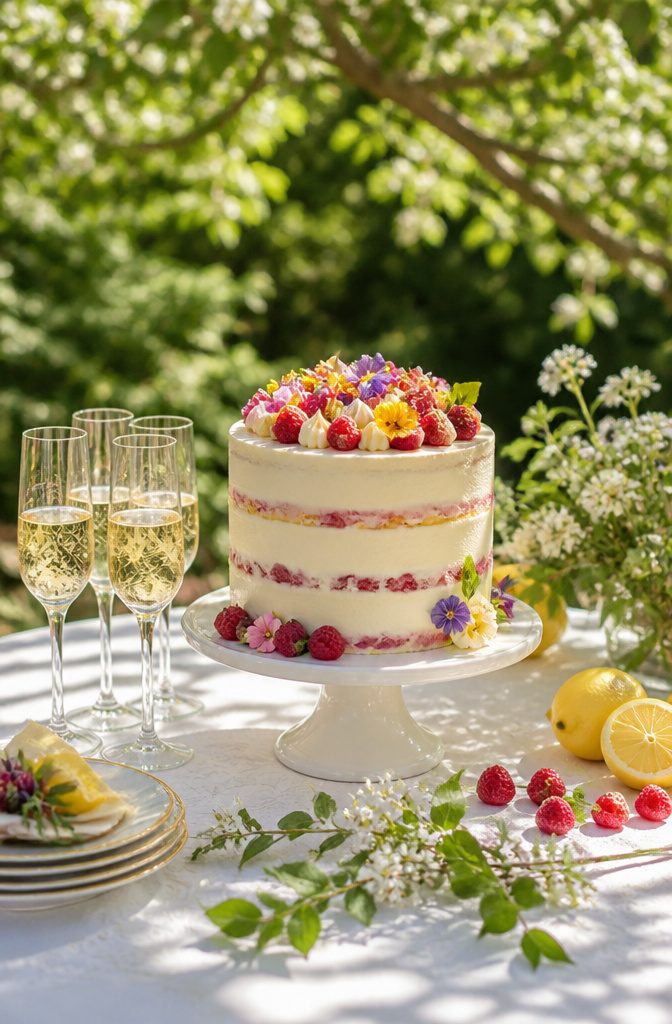
Spring and summer weddings pull the palate toward lighter, brighter flavors that hold up under warm air and long receptions.
Lemon, berry, and elderflower buttercream are the natural choices, with lemon raspberry standing out as the pairing that gets requested most often in those months. The acidity cuts through buttercream weight without leaning on artificial tartness.
For fall and winter, the shift is toward depth: chocolate, spiced cakes, and brown butter. These flavors match the heavier menus and dimmer light, and they photograph warmer against seasonal palettes.
Champagne elderflower is the exception that works year-round. It suits formal weddings in any season, though it reads lighter when the temperature rises and pairs well with outdoor receptions in late spring through early summer.
If your wedding spans a seasonal threshold, that combination keeps the cake from feeling out of place.
The Flavors Breaking Out in 2026

Pistachio is the flavor bakers keep naming first for 2026. A pale green crumb with sharp raspberry or sour cherry reads as distinctive on the plate without asking guests to guess what they are eating.
Brown butter almond runs close behind, toasty and rich against salted caramel, the kind of upgrade that feels grown-up rather than risky.
Floral notes sit further out on the same branch.
Lemon elderflower has settled near classic status for spring ceremonies; champagne elderflower dresses the same pairing up for evening. Honey lavender is quieter, though it turns up in the same conversations.
Earl Grey and matcha are smaller bets, the bergamot subtle enough to lose in a loud room, matcha less sweet than most cake batters and harder to balance at scale.
Yuzu curd helps, but the combination stays more common on boards than at Indiana receptions.
Funfetti holds its own for a different reason. It delivers nostalgia across generations, which matters when the cake has to satisfy both the couple and a table of aunts who flew in from Tampa.
The smarter move seems to be one distinctive tier, one that nobody has to think about. Every layer a talking point costs more and rarely eats as well as it photographs.
Timing Your Tasting
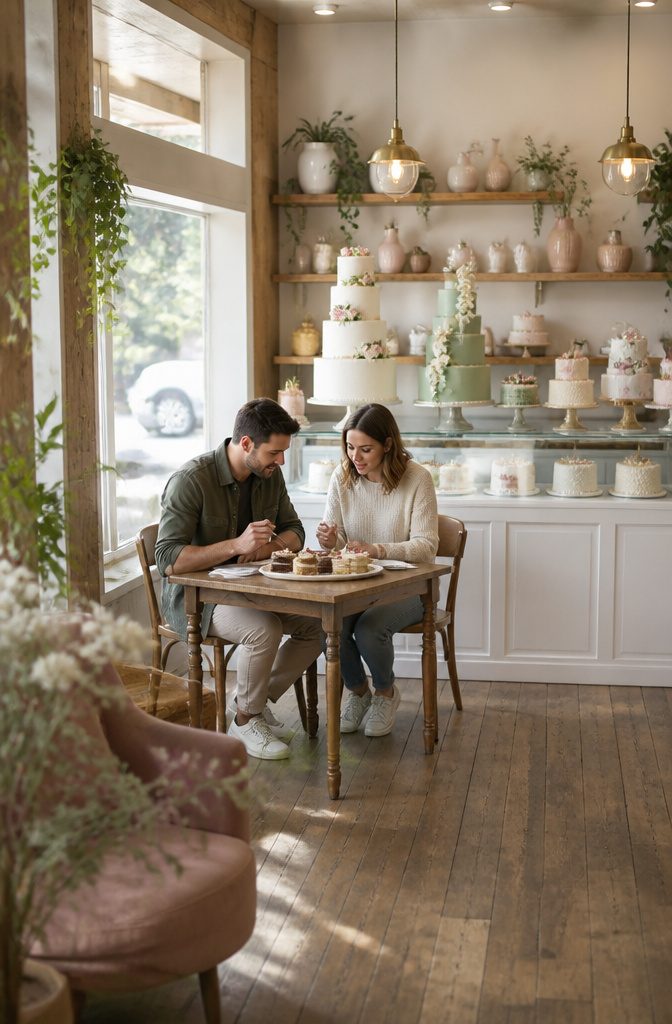
A tasting booked six to nine months out sounds early until you try to schedule a Saturday with a baker whose calendar fills a year ahead in major cities.
That lead time is not ceremonial. It lets the kitchen source seasonal ingredients and build any custom elements, and it gives you a buffer if the first date falls through.
The session itself is where a list of wedding cake flavor ideas becomes a real decision.
Most bakers ask you to bring your partner and anyone else with veto power, and they often cap attendance at three guests to keep the appointment focused and the quality controlled.
Plan to sample two or three flavors minimum, with fillings, and go in with direction rather than a locked order. Phrases like "citrus-forward" or "not too sweet" steer the baker toward combinations that actually work in their kitchen.
Before you leave, ask about delivery and setup logistics.
A flavor that wins at a table for two still has to survive transport, a warm room, and a hundred and fifty slices. Your final choice should balance what you love with what will hold up.
Frequently Asked Questions
What is the most popular wedding cake flavor?
Vanilla bean is the most requested wedding cake flavor nationally, with chocolate running second. Lemon raspberry and pistachio have also risen sharply in 2026, with pistachio moving from specialty menus to mainstream baker portfolios.
Can you have different flavors in each tier?
Yes, most couples choose different flavors for each tier.
The standard three-tier arrangement starts with vanilla bean on the bottom, adds chocolate as the middle tier, and finishes with a seasonal flavor such as lemon raspberry or brown butter almond on top.
Each tier carries its own filling, so guests get genuine variety without the order becoming too complicated.
What is the best filling for a wedding cake?
Raspberry jam and lemon curd are among the most popular fillings. Raspberry jam pairs naturally with vanilla bean cake, while lemon curd doubles down on citrus.
Chocolate tiers take salted caramel, and red velvet traditionally goes with cream cheese mousse lightened for stacking. The rule is simple: tart fruit cuts sweetness, and salt sharpens richness.
How far in advance do we need to choose our cake flavor?
Book your tasting six to nine months ahead.
That lead time is standard for securing a baker who will consult on flavor logic before confirming the order, and it gives the kitchen time to source seasonal ingredients and build any custom elements.
In major cities, Saturday calendars often fill a year out, so earlier is safer.
What are the best wedding cake flavor combinations?
The combinations that come back from tastings most often are vanilla bean with raspberry, chocolate with salted caramel, and red velvet with cream cheese mousse.
For 2026, pistachio with sour cherry or raspberry and brown butter almond with salted caramel are also breaking out. Most couples stop at two or three flavors total.
What are the top 10 cake flavors?
Fillings and frostings include raspberry jam, lemon curd, cream cheese frosting, and salted caramel, with seasonal accents like elderflower, champagne, and brown butter rounding out the list.
What flavor is a typical wedding cake?
A typical wedding cake is vanilla bean, often treated as a canvas rather than a final answer.
Couples layer in fillings and flavored buttercreams to give it personality, but the vanilla base remains the safest crowd-pleaser. Traditional runners-up include white, almond, and marble, all finished in buttercream and suited to any season or color palette.