A finished wafer paper cake tastes like whatever buttercream or fruit filling you already balanced, because the rice starch sheet itself adds almost nothing.
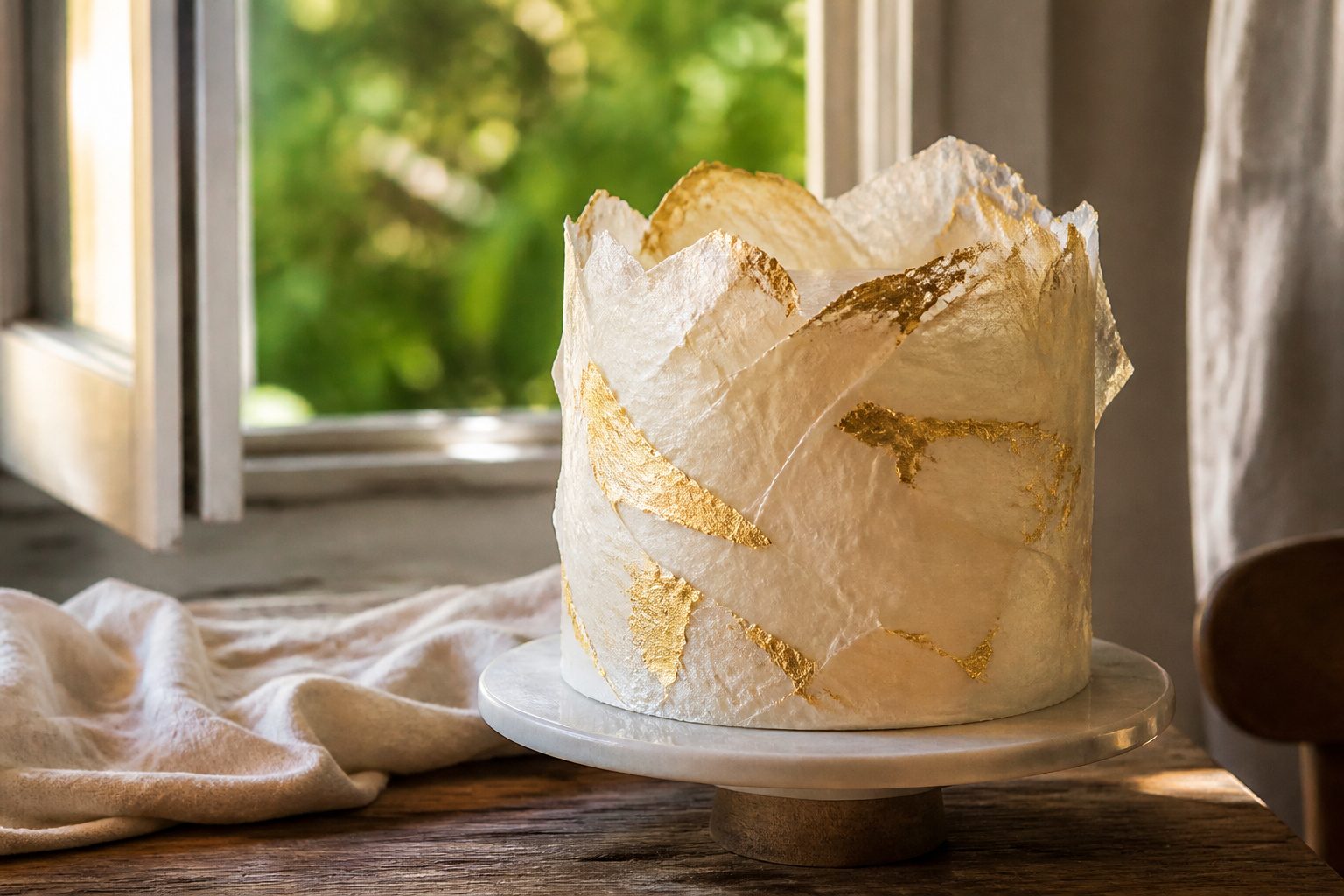
The version here gets its moment from metallic gold, painted on with FDA-approved luster dust mixed into lemon extract, not from fondant weight or extra sweetness.
That gold is where most home bakers trip up: edible gold leaf, not craft leaf, or the accent turns spotty and dull against the matte paper.
The whole project costs little more than a pack of standard sheets and a small brush, and a single tier takes under an hour once the paper is cut.
What Wafer Paper Is

Wafer paper is an edible sheet, usually made from rice starch, that sits on a cake without fighting the flavors underneath.
The taste is so faint most people won’t register it past the first bite, which is exactly what you want from a decorative layer.
The sheets stay workable long enough to cut, curl, or ruffle them into flowers, bows, or textured panels, then they set firm as they dry.
That flexibility is why decorators reach for wafer paper over thicker options like fondant or gum paste when they need something that holds a shape but doesn’t weigh it down.
Basic kitchen scissors and a clean brush are enough to start. A clean pair of scissors, a little water or edible glue, and something to curve the paper around (a dowel, a bottle, your own fingers) will handle most techniques.
The paper is thin enough to show seams if you overlap carelessly, but forgiving enough to trim or replace without ruining the finish underneath.
Ingredients

A wafer paper cake project needs just a few specialized supplies alongside your usual cake decorating basics. Most of these sit right in the baking aisle or ship quickly online.
- Wafer paper sheets (standard 8×11 inch or A4 size; white or lightly tinted)
- Piping gel, clear, for the edible adhesive
- Gold luster dust labeled FDA-approved and edible, not decorative-only
- Lemon extract or clear alcohol (vodka works) to mix the dust into paint
- Small, clean paintbrush reserved for food use
- Decorative paper punches or craft scissors for clean shapes
- Light card stock to make templates if you are cutting freehand
Skip the specialty wafer paper cutters. A standard paper punch from the craft drawer handles the thin sheets cleanly, and the shapes hold their edge better than scissor work.
Method
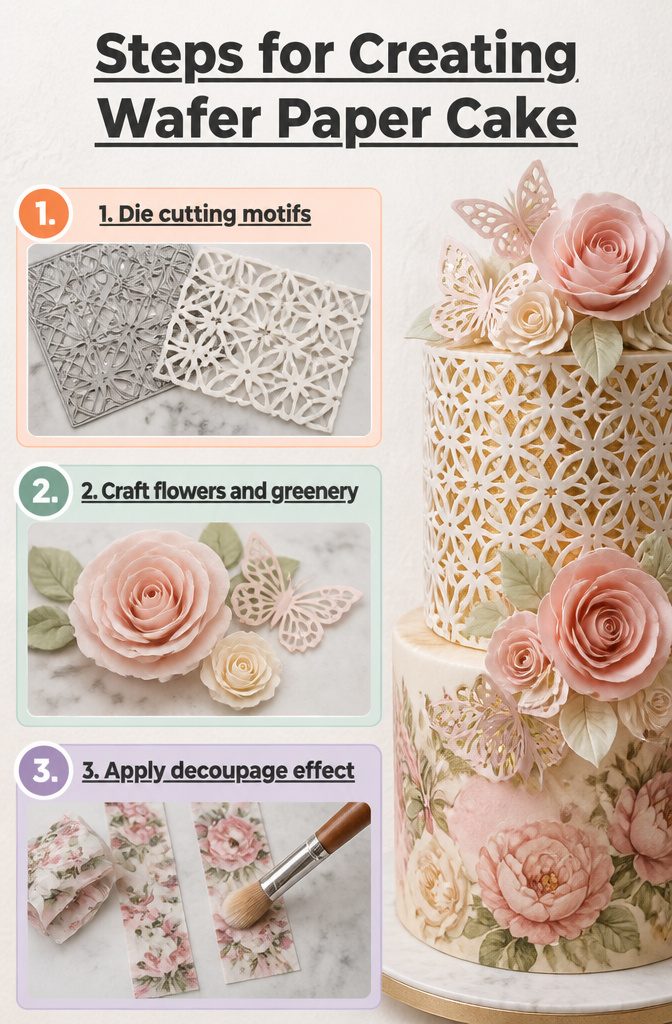
- Die cutting gives you the cleanest way to build a lattice effect across an entire tier. Decorative paper punches cut intricate wafer-paper shapes you can layer as motifs or as an all-over covering; a geometric overlay reads sleek and unexpected for a wedding cake. If you want the cutouts to hold their shape and catch light, sandwich gold leaf or silver leaf between layers. The metallic backing stiffens the paper and turns the pattern into something that actually glows under reception lighting.
- Flowers and greenery work two ways. I roll freehand-cut strips into roses and cluster them tight for impact, or I trace templates, cut individual petals, and form them with piping gel as the adhesive. Piping gel also attaches leaves and simple butterfly cutouts. Rolled roses reward grouping; single petals need careful placement to avoid looking scattered.
- Decoupage covers the cake in printed wafer-paper sheets for a collage effect. One video walkthrough shows cutting the paper into uniform strips first, then spraying lightly with water so the pieces bend without cracking. Press gently onto the frosting without sinking in, and shape as you go. The strips create texture; printed sheets give you imagery no piping bag matches.
Why Wafer Paper Works for Cake Decorating

Wafer paper earns its place in a home kitchen because it behaves like paper but dissolves on the tongue.
Made from rice starch, it carries almost no flavor, so it will not compete with whatever buttercream or fruit filling you have already decided on.
That neutrality matters: you are not layering another taste onto a cake you have already balanced.
The same sheet can be cut into strips and wrapped around a tier for a ribbed texture, or bent into petals after a quick mist of water.
In one video walkthrough, a baker shows how spraying the back of a strip lets you curve it against the cake side without sinking into the frosting.
The technique is forgiving. A turntable or offset spatula helps, but you can still get a clean result without them; the paper turns crisp again as it dries.
What makes it practical for weeknight decorators is the room for error. If a strip wrinkles or a petal tears, you cut another piece and start over.
No buttercream to scrape off, no fondant to re-knead. The cost stays low enough that experimenting feels reasonable rather than reckless.
Adding Metallic Accents

Metallic gold on wafer paper is optional, and I only reach for it when the cake already has a clean, modern shape that can carry something flashy without looking busy.
The wafer paper itself reads delicate and matte, so a thin line of gold along a petal edge or a single gilded accent on a ruffle gives exactly the contrast that makes someone lean in closer.
You need edible gold leaf, not craft gold leaf, which is the first place this goes wrong for home bakers. The edible kind is tissue-thin and sold in small books of transfer sheets.
I tear off fragments with a dry brush, then press them onto areas where I have brushed a tiny amount of piping gel or clear alcohol-based extract as adhesive.
The wafer paper should already be attached to the cake and fully dry; moisture underneath makes the gold spotty and dull.
Silver works the same way, though I find it turns slightly grey against white buttercream where gold stays warm and readable. You will spend more time and money for the metallic look.
A small accent takes five extra minutes and a few dollars of leaf. Covering an entire tier edge means buying more leaf than most grocery stores stock and working slowly enough that you do not breathe the scraps away.
For a weeknight project, skip it. For a celebration cake where someone will photograph the slices before eating, the glow is worth the patience.
Frequently Asked Questions
What is wafer paper?
Wafer paper is an edible sheet usually made from rice starch. It has a very faint flavor that most people won’t notice past the first bite, so it won’t interfere with your cake’s taste.
The sheets stay workable long enough to cut, curl, or ruffle into decorations, then set firm as they dry.
How do you use wafer paper in cake decorating?
You can use wafer paper for die cutting into shapes and lattice effects, forming flowers and greenery, or decoupage for a collage effect on the cake.
A little water or edible glue helps attach pieces, and spraying the back of strips lets you curve them against frosting without sinking in. Scissors, paper punches, and your fingers are enough to handle most techniques.
Where can I buy edible print paper for cakes?
Standard wafer paper sheets in 8×11 inch or A4 size are available in the baking aisle of many stores or ship quickly online.
For metallic accents, look for FDA-approved edible gold luster dust and edible gold leaf, not craft versions, which are not safe to eat.
How to apply edible paper on cake?
Cut wafer paper into uniform strips or shapes first, then spray lightly with water so the pieces bend without cracking.
Press gently onto the frosting without sinking in, and shape as you go. Piping gel works as an edible adhesive for attaching flowers, leaves, and other decorative elements.