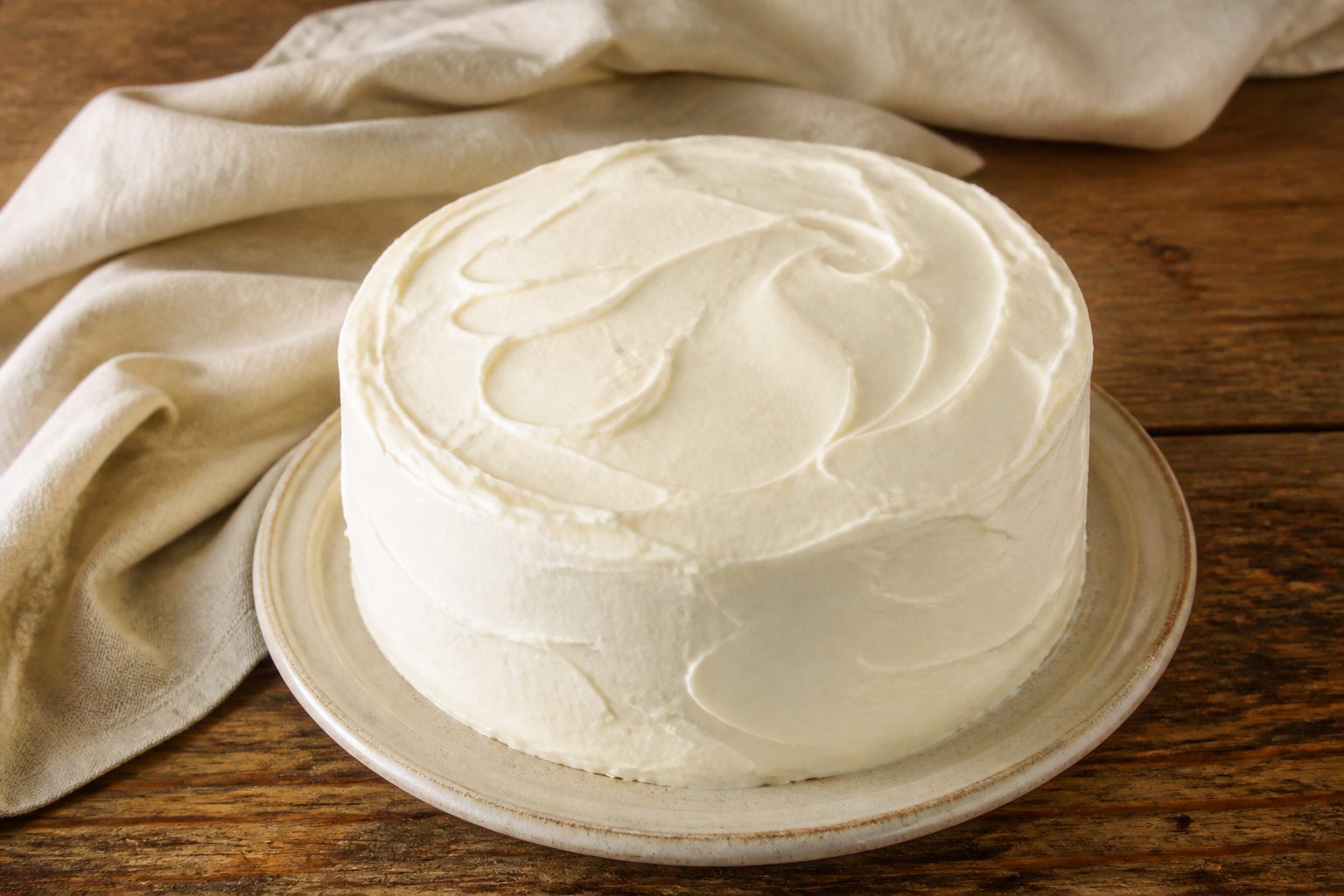
A plain white cake should taste of butter and vanilla first, with a crumb that gives way without a fight.
This one gets there with cake flour and a full four to six egg whites, no yolks, which keeps the color pale and the texture light rather than dense.
It bakes in 25 to 35 minutes depending on your pan, and the one detail that separates it from every other white cake recipe is the range built into the ingredients: 2 1/4 to 3 cups of flour, adjusted for humidity, and an optional quarter to three-quarters cup of sour cream if you need insurance against a dry crumb the next day.
Ingredients

Cake flour is the one ingredient I won’t swap out. The 2 1/4 to 3 cups called for here has less protein than all-purpose, which means a softer, more tender crumb without the chew.
The range accounts for how humid your kitchen is on baking day; start at the lower end and add the extra 3/4 cup only if the batter looks too loose after mixing.
The rest of what goes in:
- 4 to 6 large egg whites, no yolks, which keeps the crumb pale and light rather than yellow and dense
- 1 1/2 to 2 cups granulated sugar for structure and a fine, even texture
- 1/2 to 1 cup softened butter, the full stick if you want richness closer to a bakery cake
- Whole milk, measured by eye to get the batter to the right pourable consistency
- Baking powder and salt in standard proportions
- Vanilla extract, or almond if you prefer that faint marzipan note
A quarter to three-quarters cup of sour cream is worth keeping in mind if your last white cake came out dry.
I lean toward the higher amount when I’m making layers ahead of time; the extra fat buys insurance against next-day staleness.
Method
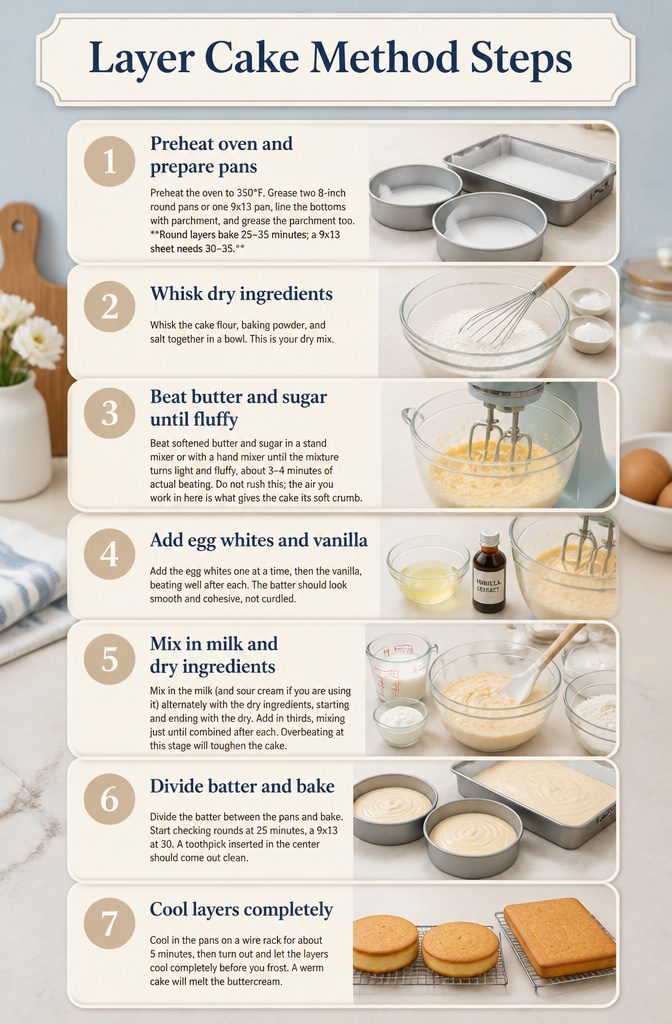
- Preheat the oven to 350°F. Grease two 8-inch round pans or one 9×13 pan, line the bottoms with parchment, and grease the parchment too. Round layers bake 25–35 minutes; a 9×13 sheet needs 30–35.
- Whisk the cake flour, baking powder, and salt together in a bowl. This is your dry mix.
- Beat softened butter and sugar in a stand mixer or with a hand mixer until the mixture turns light and fluffy, about 3–4 minutes of actual beating. Do not rush this; the air you work in here is what gives the cake its soft crumb.
- Add the egg whites one at a time, then the vanilla, beating well after each. The batter should look smooth and cohesive, not curdled.
- Mix in the milk (and sour cream if you are using it) alternately with the dry ingredients, starting and ending with the dry. Add in thirds, mixing just until combined after each. Overbeating at this stage will toughen the cake.
- Divide the batter between the pans and bake. Start checking rounds at 25 minutes, a 9×13 at 30. A toothpick inserted in the center should come out clean.
- Cool in the pans on a wire rack for about 5 minutes, then turn out and let the layers cool completely before you frost. A warm cake will melt the buttercream.
Ingredients That Make White Cake Work

Cake flour is the first detail that matters.
Its lower protein content, around 8 percent compared to 10–11 percent in all-purpose, limits gluten development and gives the crumb its characteristic softness. I keep a box on hand specifically for white cake, because the texture difference is immediate.
Egg whites are what keep the cake white rather than yellow.
Whole eggs add richness, but the yolks carry color that mutes the pale crumb. Egg whites alone are milder, so I lean on vanilla or a touch of almond extract to compensate.
Butter versus oil is where I make my preference plain. Butter delivers the flavor I want from a layer cake, the unmistakable taste that reads as homemade rather than bakery-neutral.
Oil keeps moisture longer, which is why I use both when I want the cake to stay soft into day two, as in recipes that add sour cream or yogurt.
Those two add moisture without the density that extra butter would bring, the tang also balances sweetness in a way I notice more with each bite.
Sugar does more than sweeten.
It aerates with butter during creaming and holds moisture in the baked crumb, which is why granulated sugar is standard here, not powdered or brown. The crystals cut air into fat, and that structure carries through the bake.
Baking Tips
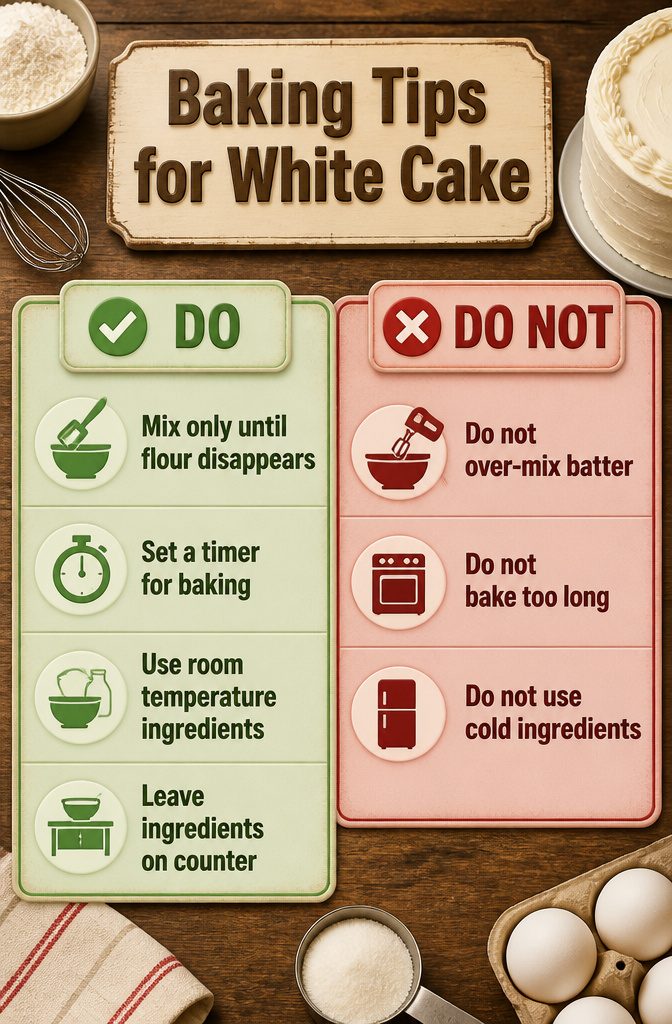
Keeping a white cake moist comes down to stopping at the right moment, twice. Once the flour goes in, mix only until it disappears; overworking the batter develops gluten that turns the crumb tough and dry.
I also set my timer for the recipe’s minimum bake time and pull the layers as soon as a toothpick shows a few moist crumbs, because an extra two minutes in a hot oven is often the difference between soft and sawdust.
Room temperature ingredients matter more here than in most cakes.
Cold butter and sugar will never cream into the pale, fluffy base this batter needs; I look for the mixture to lighten visibly and gain real volume, three to five minutes of steady beating.
Cold eggs or milk will seize that butter back into lumps, so I leave everything on the counter until it yields slightly to a gentle press.
The sour cream and whole milk should feel cool, not chilly, before they go in.
Frosting Choices

Vanilla buttercream is the pairing most people picture with a simple white cake, and for good reason.
A batch made with real butter and a splash of heavy cream spreads smooth and holds its shape well enough for basic swirls or a spatula finish.
The mild flavor of white cake leaves room for the frosting to carry subtle additions. A quarter teaspoon of almond extract in the buttercream mirrors the almond white cake variation nicely, and the combination reads as intentional rather than accidental.
Cream cheese frosting adds more tang and depth than buttercream, which some bakers prefer for layer cakes that might otherwise taste flat. Whipped cream keeps things lighter, though it demands refrigeration and a same-day serve.
Chocolate, strawberry, or caramel frostings all work against white cake’s blank-slate sweetness. The quantity you need depends on whether you are frosting a two-layer cake or building taller, and whether you plan to pipe borders or keep the sides bare.
A rough rule is one and a half batches for a fully decorated three-layer cake, one batch for a simple two-layer with no extras.
White Cake Variations

A simple white cake can go four useful directions depending on what matters most for the occasion.
- Classic White Cake keeps only the egg whites, which gives the crumb its pure white color and a slightly tighter structure. You do need extra bowls; you separate whites, then beat them to soft peaks before folding them in.
- Moist White Cake adds sour cream and oil alongside butter. The sour cream brings subtle tang and keeps the crumb soft for days, while oil adds moisture that butter alone cannot match. This is the one I reach for when I need layers that survive overnight assembly.
- Fluffy White Cake relies on whipped egg whites plus cake flour for height and airiness. Cake flour has less protein, so the crumb stays tender rather than chewy. The lift is real, but the structure is delicate; stack it carefully.
- Almond White Cake folds almond extract into the batter with or in place of vanilla. The flavor reads as fresh and bakery-like rather than plain, though I would not use it if the frosting is already heavily flavored.
King Arthur Baking Company builds their Tender White Cake on a blend of vanilla and almond for what they call "that classic, nostalgic bakery flavor: smooth, mellow, and deeply satisfying."
A blend of vanilla and almond gives it that classic, nostalgic bakery flavor: smooth, mellow, and deeply satisfying.
That combination is worth trying if your white cake has tasted flat in the past; the almond does not read as nutty, just fuller.
Substitutions
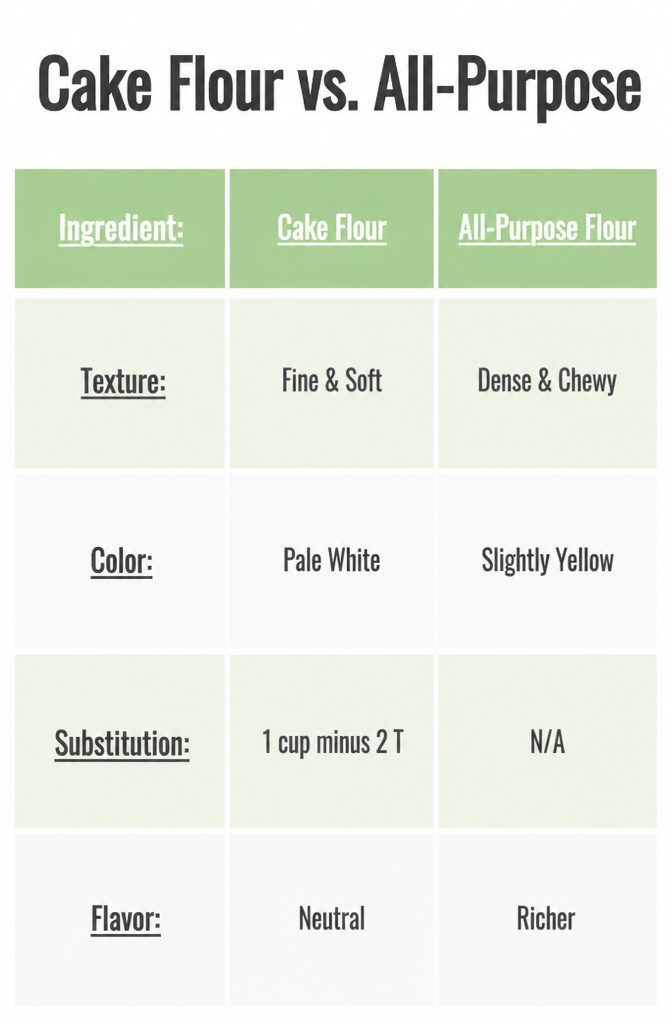
Cake flour keeps the crumb fine and soft because its lower protein means less gluten development.
If your pantry only holds all-purpose, replace each cup of cake flour with 1 cup all-purpose flour minus 2 tablespoons, then add back 2 tablespoons of cornstarch. The cornstarch dilutes the protein just enough to protect that tender texture.
Whole eggs versus egg whites is a real fork in the road. Egg whites alone keep the color pale and the crumb light, which is the classic choice.
Whole eggs trade some of that whiteness for richer flavor and a more substantial bite. The cake stays close to white, just not stark white, and I reach for whole eggs when flavor matters more than presentation.
Butter and oil pull in opposite directions here.
Butter carries flavor and helps with structure; oil adds moisture that lasts. For a simple white cake meant to stand on its own, I stay with butter.
Oil works in a pinch, especially if the cake will sit out, but it can mute the vanilla and soften the crumb more than I want in a layer cake that needs to hold up to slicing.
Yield and Storage
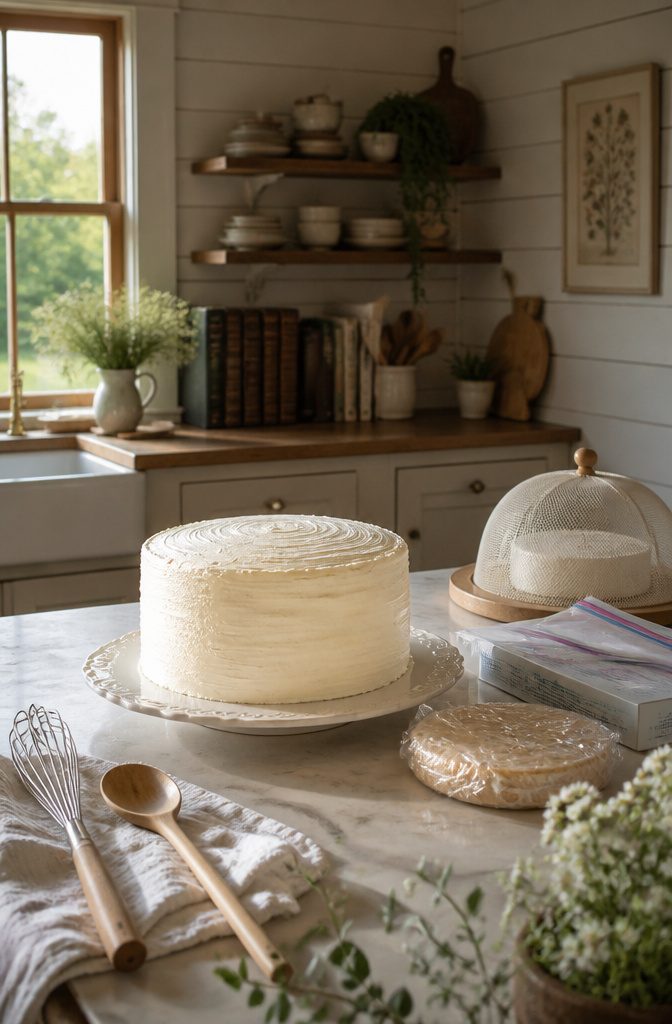
Two 8-inch rounds or one 9 by 13 sheet will feed about twenty people, which is the standard yield for a simple white cake built on this much batter.
If you are frosting the next day, the cooled unfrosted layers can sit at room temperature under a dome or tight wrap for a short stretch, but the refrigerator is safer for anything longer.
Wrap them well in plastic first; the cold air pulls moisture, and a dry white cake is a sad one. For longer storage, freezing works and works well.
Wrap each layer in plastic, then foil, and slide it into a freezer bag. It keeps for up to two months.
Thaw overnight in the refrigerator before you frost. Once frosted, buttercream holds fine at room temperature under a cover for a couple of days, but cream cheese or whipped cream frostings need the cold.
A fully frosted cake can freeze too, though you will need to let it thaw uncovered so condensation does not wreck the finish.
Frequently Asked Questions
How do you make white cake by scratch?
Cream softened butter and sugar until light and fluffy, about 3–4 minutes, then beat in egg whites one at a time with vanilla.
Alternate adding dry ingredients and milk, starting and ending with the dry mix, and bake at 350°F until a toothpick comes out clean. The full method works for two 8-inch rounds or one 9×13 sheet.
Why is my white cake dense instead of fluffy?
You are probably overmixing once the flour goes in, which develops gluten that toughens the crumb.
Mix only until the flour disappears, and pull the layers from the oven as soon as a toothpick shows a few moist crumbs rather than waiting for it to come out fully dry.
Cold ingredients are another common cause; butter, eggs, and milk all need to be at room temperature to cream properly and hold air.
What frosting goes best with white cake?
Vanilla buttercream is the classic pairing, made with real butter and a splash of heavy cream for a smooth spread that holds its shape.
Cream cheese frosting adds tang, whipped cream keeps things lighter, and chocolate or strawberry work too against the cake’s mild sweetness. A quarter teaspoon of almond extract in the buttercream mirrors the almond white cake variation nicely.
What is the difference between a vanilla cake mix and a white cake mix?
A white cake mix uses only egg whites and no yolks, which keeps the crumb pale and light rather than yellow.
Vanilla cake mixes typically include whole eggs for a richer flavor and a slightly denser, more golden crumb. Homemade white cake follows the same split: whites only for color and tenderness, whole eggs when flavor matters more than presentation.
What’s the secret to a moist cake?
Stop mixing the moment the flour disappears, and pull the cake from the oven at the minimum bake time while a toothpick still shows moist crumbs.
Adding sour cream or oil alongside butter buys extra moisture that lasts into day two, especially useful if you are assembling layers ahead.
What’s the easiest cake to make?
A simple white cake is among the easiest from-scratch layer cakes because the method is straightforward creaming with no unusual steps.
The batter comes together in one bowl plus dry ingredients, and the mild flavor forgives small errors in timing. Two 8-inch rounds or a single 9×13 sheet both work from the same batch.