
This heart-shaped layer cake tastes of deep cocoa and buttermilk tang, with a hidden red center that shows only when you cut the first slice.
The difference is the ombre buttercream, gradated from pale pink to deep rose so the color does the romantic work without relying on purchased decorations.
Set aside three hours of active work, plus cooling time, and start the morning you plan to serve it.
The part that trips most people up is the crumb coat on those inward curves at the top of the heart, where ridges collect if you rush.
Chill the buttercream until it hardens into a shell before you apply the final coat, or the silhouette will lose its clean edge under the pressure of the spatula.
Fresh strawberries and hardened candy-melt hearts finish it, pressed in while the frosting is still tacky enough to hold them.
What This Cake Is and When to Make It
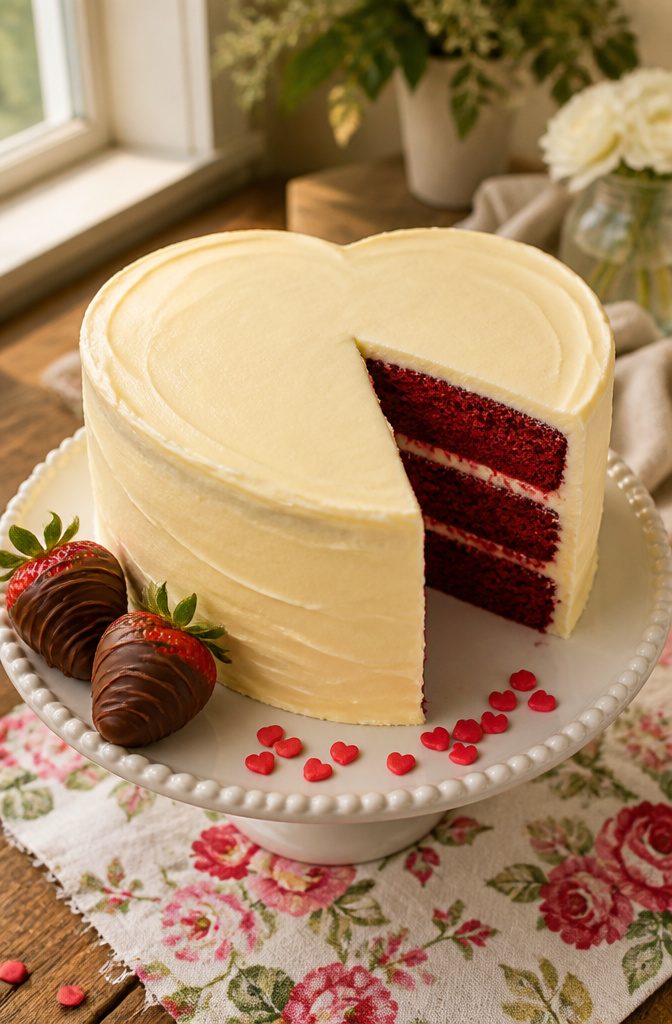
A heart-shaped layer cake in red velvet or chocolate is the dessert that signals Valentine’s Day without needing any explanation.
The stacked silhouette reads as a gift the moment you carry it to the table, and the deep red or dark brown interior against pale buttercream gives you that reveal moment when the first slice comes out.
I set aside about three hours of active work, plus cooling time, and I start the morning of the day I plan to serve it or the day before.
The cake feeds ten to twelve, which covers a family dinner with enough left for late-night seconds.
The flavor pairing works because both red velvet and chocolate carry the richness that feels appropriate for February, and neither fights the sweetness of the candy melt accents or the fresh bite of chocolate-covered strawberries you’ll add at the end.
Red velvet in particular was built for this holiday: the color is the point, and the mild cocoa keeps it from reading as everyday chocolate cake.
I think the shape matters more than we admit. A round layer cake is birthday; a heart layer cake is Valentine’s, and everyone at the table understands the distinction without being told.
Ingredients

Room temperature butter and buttermilk are non-negotiable here. Cold butter won’t cream properly, and cold buttermilk makes the batter seize.
For the heart-shaped layers:
- 1 3/4 cups (225 g) all-purpose flour, plus more for pans
- 2 cups (400 g) granulated sugar
- 3/4 cup (64 g) unsweetened natural cocoa powder
- 2 teaspoons baking soda
- 1 teaspoon baking powder
- 1 teaspoon fine sea salt
- 1 cup buttermilk, at room temperature
- 1/2 cup vegetable oil
- 2 large eggs, at cool room temperature
- 1 teaspoon pure vanilla extract
- 1 cup freshly brewed hot coffee
For the buttercream:
- 4 sticks (452 g) unsalted butter, at room temperature
- 6 cups (750 g) powdered sugar, sifted
- 2/3 cup seedless strawberry preserves
- 1/2 teaspoon fine sea salt
- 2 teaspoons pure vanilla extract
- Red gel food coloring, if desired
For finishing:
- Candy melts or chocolate for dipping strawberries
- Heavy cream for ganache drip
- Fresh strawberries
- Sprinkles or red heart-shaped candies
The coffee deepens the chocolate without making the cake taste like mocha. If you prefer, hot water works, though the flavor will be milder.
Method
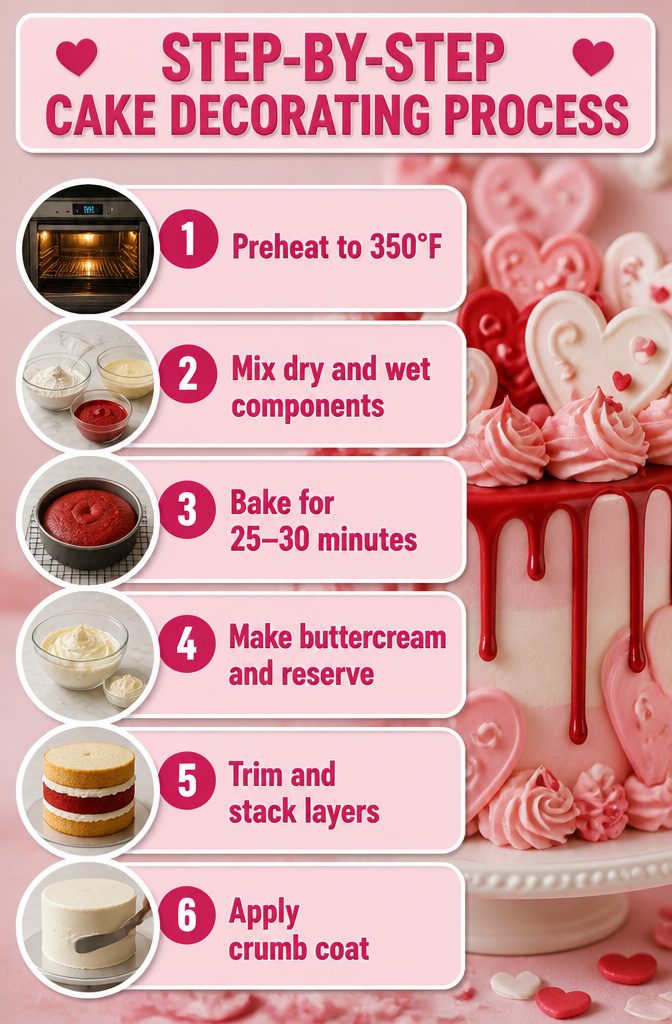
- Preheat to 350 F with the rack centered; spray three 8-inch pans with non-stick baking spray. Two pans get plain batter, the third gets the red portion.
- Mix dry and wet components separately, then combine until just blended. For the red layer, sift 1 tbsp Dutch-processed cocoa powder over the remaining third of batter and whisk in red gel coloring until the shade looks right to you.
- Bake 25–30 minutes until a tester comes out clean; cool completely on a rack under a loose kitchen towel. Warm cake will slide or sweat through the frosting.
- Make 4x a standard American buttercream batch; for bright white, swap shortening for half the butter. Reserve a half-cup for red piping or tinting.
- Trim domed tops flat with a serrated knife. Stack white, red, white with buttercream between each layer; the red center is the surprise when sliced.
- Spread a thin crumb coat over the whole cake. Chill 30 minutes so the buttercream hardens into a shell that seals the crumbs.
- Apply the final coat smooth or swirled; chill another 30 minutes. For ombre, divide buttercream into batches from white to deep pink and pipe lightest at the bottom, darkest at the top, smoothing with an offset spatula.
- Trace heart shapes onto parchment over a printed template. Pipe melted candy melts onto the parchment, let harden, then peel off and place on the cake.
- For a ganache drip, pour barely-warm ganache at the edge so it runs in controlled rivulets; too hot and it floods, too cool and it stops.
- Press chocolate-covered strawberries, red heart sprinkles, or piped red buttercream dots into the buttercream while it is still tacky. The cake keeps best refrigerated and served within two days.
Yield and Storage
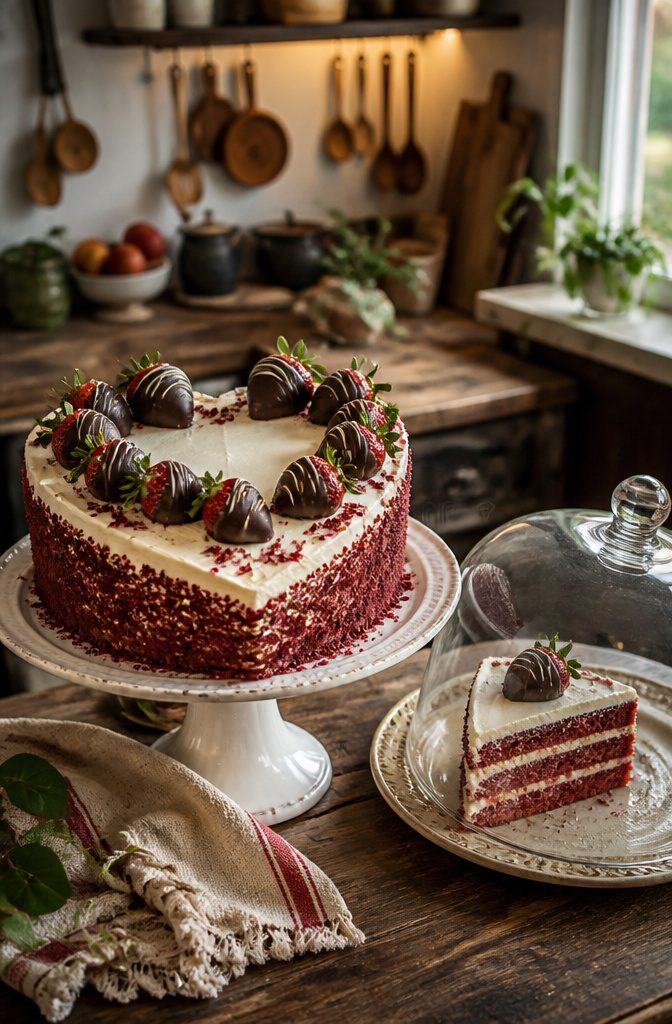
A finished heart-shaped layer cake feeds 10 to 12 people comfortably.
Left out on the counter under a cake dome or tight cover, it stays moist for two days. The buttercream will hold its shape and keep a pleasant softness at room temperature, which is how I prefer to serve it.
Push past two days and the refrigerator buys you more time. Covered well, the cake keeps for up to five days.
Cold firms the buttercream, so let sliced portions sit out for about twenty minutes before eating. The texture softens back to where it should be.
For longer storage, freeze the unfrosted layers.
Wrap each cooled layer airtight in plastic, then tuck them into a freezer bag or container. They hold for two months.
Thaw them overnight in the refrigerator, not on the counter; room-temperature thawing turns the crumb mushy. Frost once they are fully chilled through and ready to stack.
Substitutions and Variations

Cake flour will give you a finer, more tender crumb than all-purpose, though all-purpose works in a pinch if you avoid overmixing. The swap is cosmetic; the structure holds either way.
For dairy, whole milk thins to buttermilk with a tablespoon of lemon juice, and cream cheese frosting stands in for buttercream with a tangier finish that pairs well with red fruit. Flavored purees are where this cake becomes yours.
Strawberry or raspberry folded into batter or frosting adds natural color, though it softens crumb structure slightly and may lengthen baking time. Vanilla bean paste gives fuller flavor than extract without that structural cost.
If candy melts are not in your pantry, piped buttercream roses take longer but look more handmade, fresh fruit keeps the finish light and modern, and purchased sugar decorations bridge the gap for zero effort.
Only the puree and flour changes affect how the cake behaves; the rest is appearance alone.
Cake Types That Work
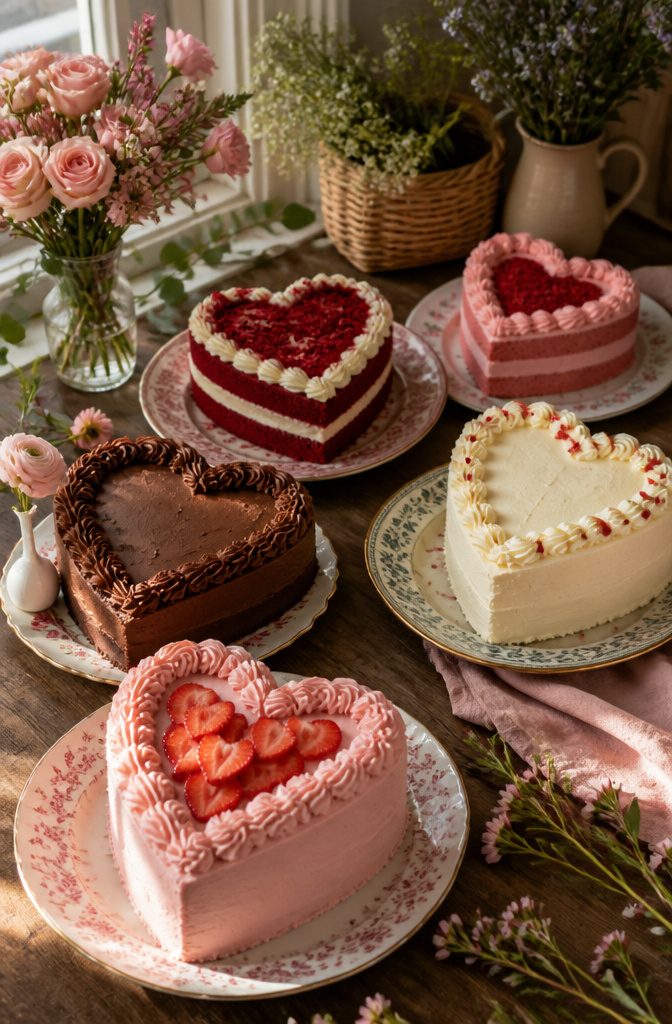
The base recipe calls for red velvet or chocolate, and either one earns its place on a Valentine’s table. Chocolate carries the weight of tradition, a dense, rich crumb that reads as indulgence without trying.
Red velvet brings the color the holiday expects, plus that faint tang from buttermilk and cocoa that keeps the sweetness from flattening out. Strawberry layers in fresh fruit and a natural pink tone that needs no dye.
Vanilla works as a blank canvas when the decoration itself is doing the romantic heavy lifting. Raspberry offers tart contrast against buttercream, a pairing that reads more sophisticated than straight sugar.
Each of these five adapts from the same formula with minor adjustments to flour or liquid. A strawberry or raspberry batter may need a spoonful less liquid to account for fruit moisture; chocolate often wants a touch more.
You are not locked into one flavor to get the heart-shaped layers the decoration depends on. Pick the profile that matches your crowd and proceed.
Decoration Techniques
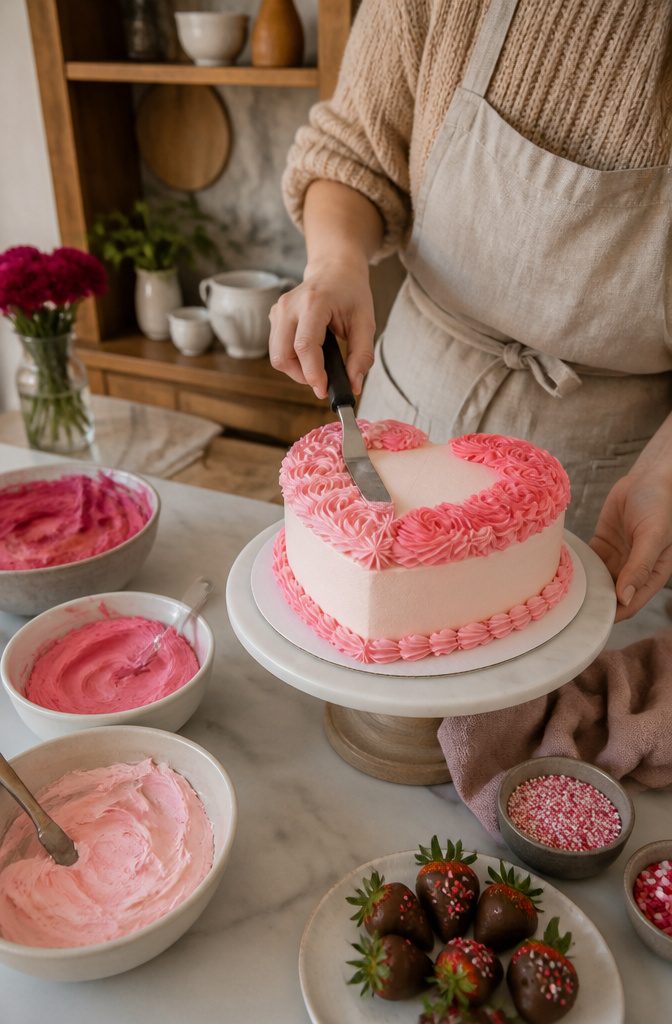
Piping buttercream onto a heart-shaped layer takes a steady hand but no special equipment.
A zip-top bag with the corner snipped works for shell borders, rosettes, and writing if you do not own metal tips; the cut determines the line weight, so start small and test on parchment before touching the cake.
An offset spatula smooths the frosting, though a butter knife pressed flat against the side will do in a pinch.
The crumb coat matters more on this shape than on a round, since the inward curves at the top of the heart collect ridges if you rush.
For an ombre finish, gradate three shades of pink or red from deep at the base to pale at the top.
Tint the frosting in separate bowls, then spread the darkest band first, the medium next, and the lightest last, blending the seams with the spatula while the buttercream is still soft.
Apply sprinkles to freshly frosted sides or the top edge before the buttercream skins over, or they will bounce instead of stick.
Strawberries add height and break up the sugar; set them at the points of the heart or cluster them off-center so the shape reads clearly from a distance.
Garnishes That Finish It

Garnishes on a heart-shaped cake have to earn their place, because the silhouette already does half the work. I think in three categories and always apply them in the same order: structural first, delicate last.
Chocolate-covered strawberries are the only garnish that reads as decoration and dessert at once. Dip clean, dry berries to about two-thirds of their height, let the excess drip off, then chill them on parchment until the coating sets hard.
Standing them stem-up at the cake’s widest curve gives height and drama; slicing them flat and fanning the halves along the base creates a lower, denser border.
Either way, the chocolate needs to be fully set before it touches buttercream or it will weep into the finish.
Fresh fruit fills the gaps. Raspberry clusters tucked where strawberries meet the cake add a different red and a softer texture.
Strawberry slices fanned into a rosette work pressed flat against the side of a layer, though they will start to weep within a few hours, so this is a last-moment move.
Themed sprinkles go on absolutely last, after every berry is placed and the buttercream has crusted slightly.
Valentine shapes, nonpareils, and sanding sugar each behave differently: shapes sit on top, nonpareils roll into crevices, and sanding sugar catches light for shimmer without bulk.
Press them in gently with a clean finger so they adhere, but stop before you smudge the finish.
Frequently Asked Questions
What are some Valentine’s cake decorating ideas?
Heart-shaped layer cakes with two-tone interiors, ombre buttercream finishes, and chocolate-covered strawberries are all strong options. Candy melt shapes piped over a parchment template add height without weight, and themed sprinkles pressed into fresh frosting catch light for shimmer.
The heart silhouette itself does half the decorative work, so garnishes should earn their place with color contrast or texture.
What types of frosting are best for Valentine’s Day cakes?
Buttercream and cream cheese frosting are the two standards. Buttercream takes color well for ombre or red piping details and crusts hard enough to seal crumbs during a 30-minute chill.
Cream cheese frosting brings a tang that pairs well with red fruit, though it is softer and less forgiving in warm kitchens.
How do you make a heart-shaped cake?
Bake two rounds and one square layer, then split the round and position the curved halves against two adjacent sides of the square to form the heart lobes.
Trim domed tops flat before stacking so the heart silhouette stays level and the layers seat evenly.