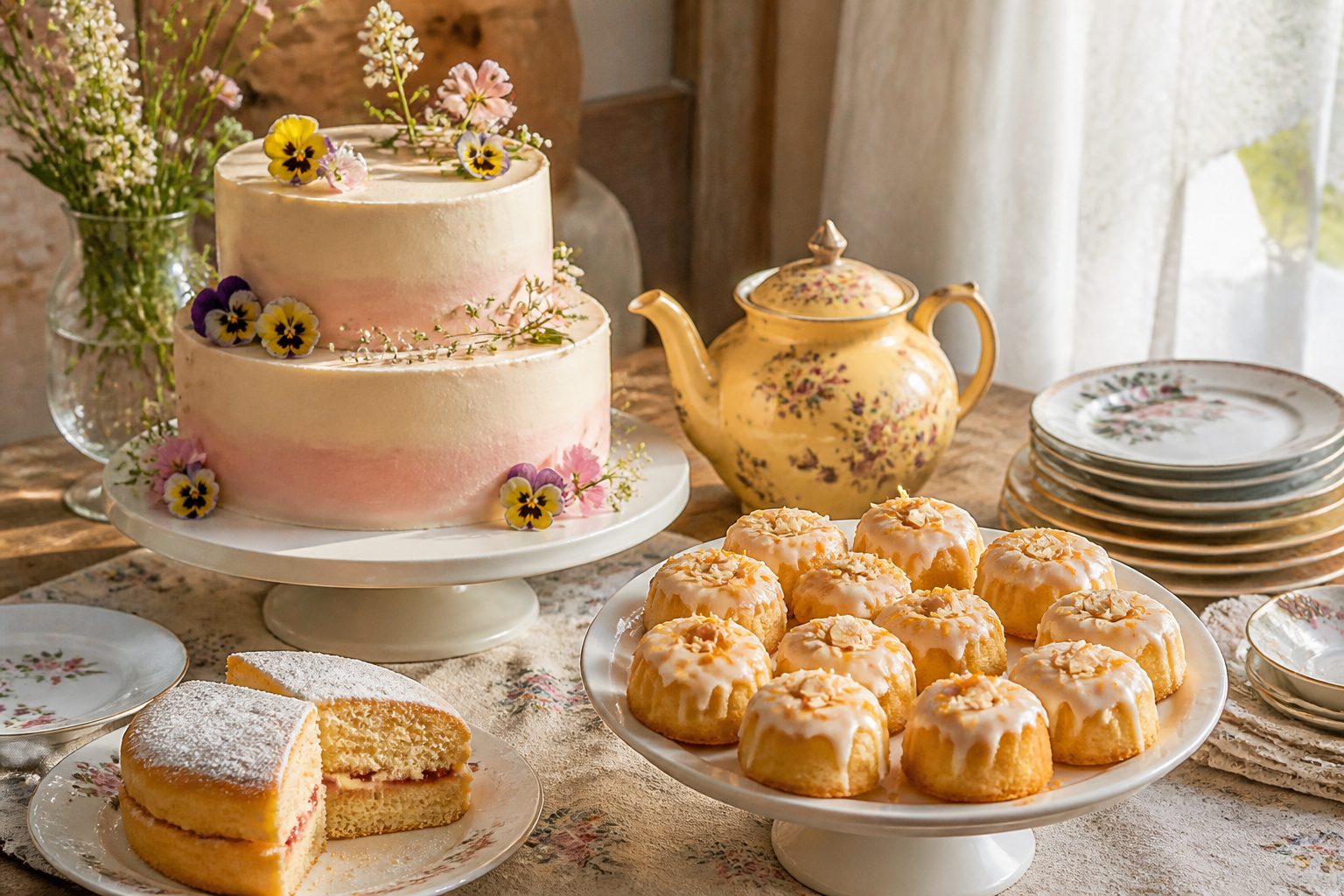
The right tea party cake depends on how much structure you can build before guests arrive.
A Victoria Sandwich needs nothing more than two layers and a dusting of sugar, while a vintage teapot cake demands dowels, carved sponge, and a day of drying time.
The 400°F almond-orange mini cakes solve the serving problem entirely: twenty-four individual portions, no knife, no crumbs on the cloth.
1. Classic Victoria Sandwich

The Victoria Sandwich is where every other tea party cake starts, whether or not bakers realize it.
Two layers of plain sponge, jam and whipped cream between them, nothing more. That spare construction is exactly why it endures: the texture of the cake itself has nowhere to hide, so it has to be right.
I think of it as the reference point you measure against.
A chocolate loaf can lean on depth of flavor, a lemon drizzle on sharp glaze, but a Victoria Sandwich asks the sponge to carry the whole thing on air and crumbs.
If it comes out dense or damp, the cake fails outright. If it works, you understand why this combination became the standard in the first place.
For decorating, the top gets a dusting of confectioners’ sugar, nothing elaborate.
The visual appeal comes from the split between pale cake and dark jam when you cut a slice, which is why I prefer a bright raspberry or strawberry preserve over something muted.
The cream should be softly whipped, spreadable but not stiff; it needs to compress slightly under the weight of the top layer rather than squeezing out the sides.
Cleanup is minimal, which matters for a weeknight baker. One bowl for the sponge, one pan used twice, no frosting to smooth or crumb coat to set.
2. Almond-Orange Mini Tea Cakes

Almond-orange mini tea cakes solve the one problem every host quietly dreads: the sliced cake that crumbles, the knife that drags frosting across the cloth, the guest waiting for the plate to come around.
These bake at 400°F (204°C) and yield 24 individual cakes from a single batch, which means they arrive at the table already portioned and ready to pass hand to hand. No slicing, no serving utensils, no pause in the conversation.
The flavor leans on almond and orange with brown butter behind it, a combination that reads as special without demanding specialty ingredients.
The 24-count fills a standard mini-muffin tin in two batches or a pair of tins at once if you own them, and the 30-minute total time keeps the oven from dominating your afternoon.
I would not bother with variations the first time through, the blueberry or pistachio options are there once you know the base behaves, but the plain almond-orange holds its own against any tea on the table.
3. Chocolate Loaf Cake

A chocolate loaf cake brings the richness you’d expect from a dense, fudgy crumb that stays moist through the second day of serving, something I rarely get from a layer cake left out during a long afternoon of tea.
The single loaf shape slices into neat, portable pieces without the sliding layers or frosting smudges that make transporting round cakes an exercise in anxiety.
I find guests reach for a second slice more often when the portion feels like an indulgent finger cake rather than a plated dessert.
For a tea party, that practicality matters: you can bake it the night before, wrap it well, and focus your morning on the sandwiches and scones rather than assembling components.
The loaf format also forgives a simpler garnish, a light glaze or dusting of cocoa does the job without the structural demands of frosting a layer cake demands.
4. Lemon Drizzle Cake
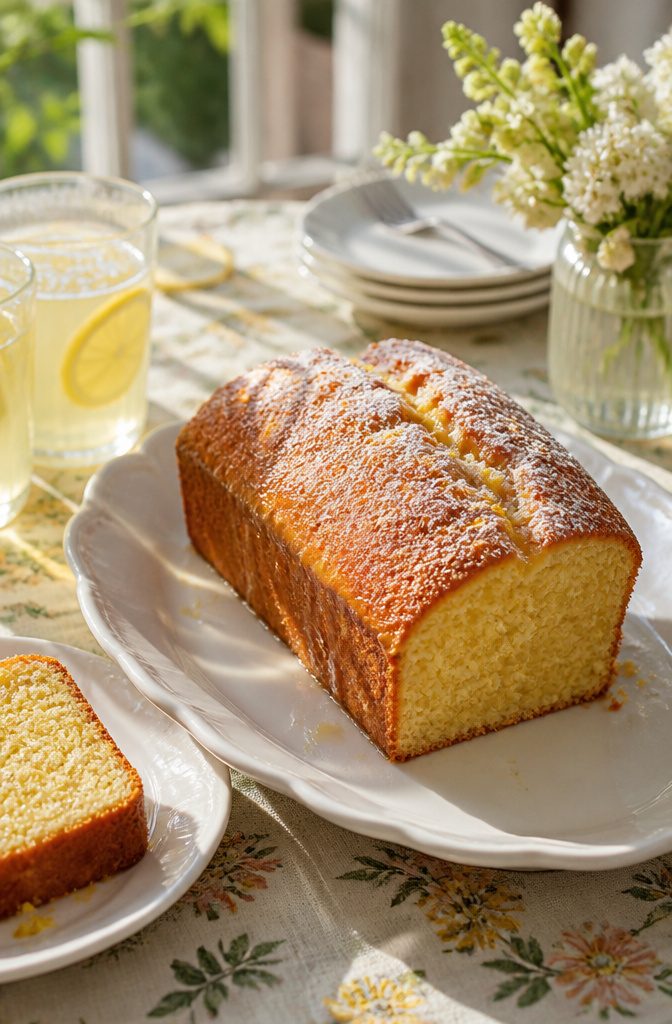
A lemon drizzle cake earns its place on the table by doing what the chocolate and cream cannot: it wakes you up.
The sharp, clean hit of citrus cuts through the fog of a mid-afternoon slump, and the poured syrup, still warm from the oven, seeps into the crumb and keeps it damp for days.
I think of it as the palate cleanser between cups, not a showpiece but a workhorse that happens to look pretty under a light dusting of confectioners’ sugar.
The method is straightforward. You bake a modest loaf or round, then puncture the top with a skewer while it is still hot and pour over a mixture of lemon juice and sugar that crystallizes into a thin, crackling glaze.
The acid in the juice does double duty, tenderizing the crumb and sharpening the flavor so the sweetness does not flatten out into something cloying.
For a tea party, I slice it thin. The pieces are small enough that a guest can eat one without abandoning their Earl Grey, and the bright yellow crumb against a white plate needs no further decoration.
It is the cake I set out when I want people to linger and talk rather than pause for a photograph.
5. Coconut and Chai Cake
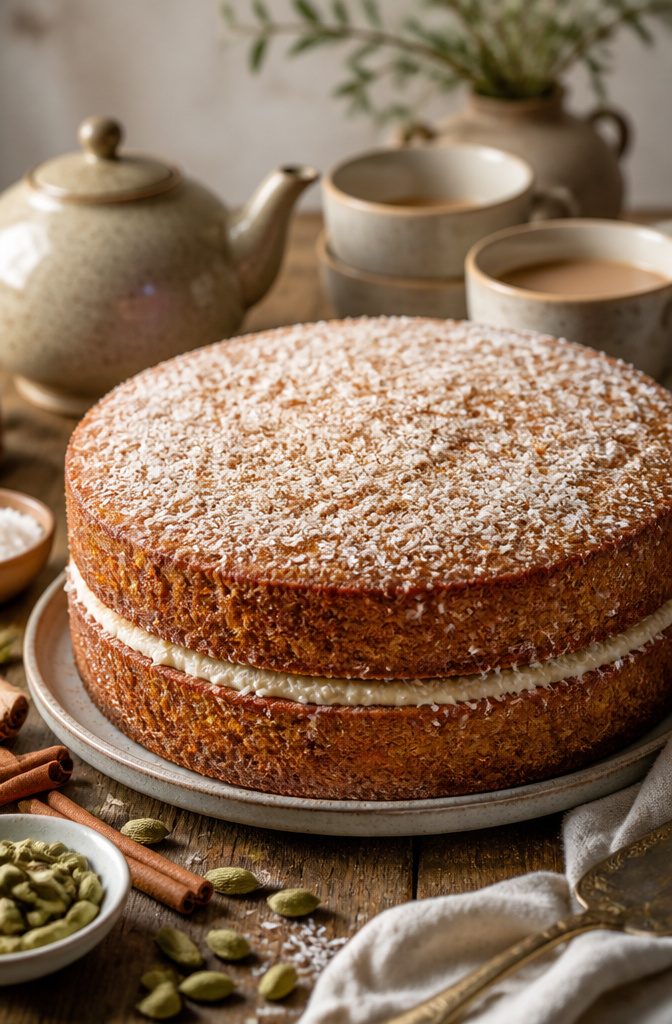
Desiccated coconut and chai spices build a cake that tastes like the tea party it is meant for.
The spice blend, heavy on ginger and the warm notes you would find in a strong mug of masala chai, echoes the actual cup sitting on the saucer beside the slice.
That makes the flavor thematic, not just flavored, which matters when you want the cake to belong to the table rather than feel like a random dessert that wandered in.
Oats lighten the crumb alongside the coconut, and the batter needs no eggs.
The result is a moist, fragrant layer cake with color from the steeped spices and texture from the coconut throughout. For decorating, a simple dusting of spiced sugar or a thin glaze keeps the focus on the scent.
Anything fussier competes with the tea itself, and this cake is at its best when it invites the same calm pace as the pour.
6. Strawberry Cake
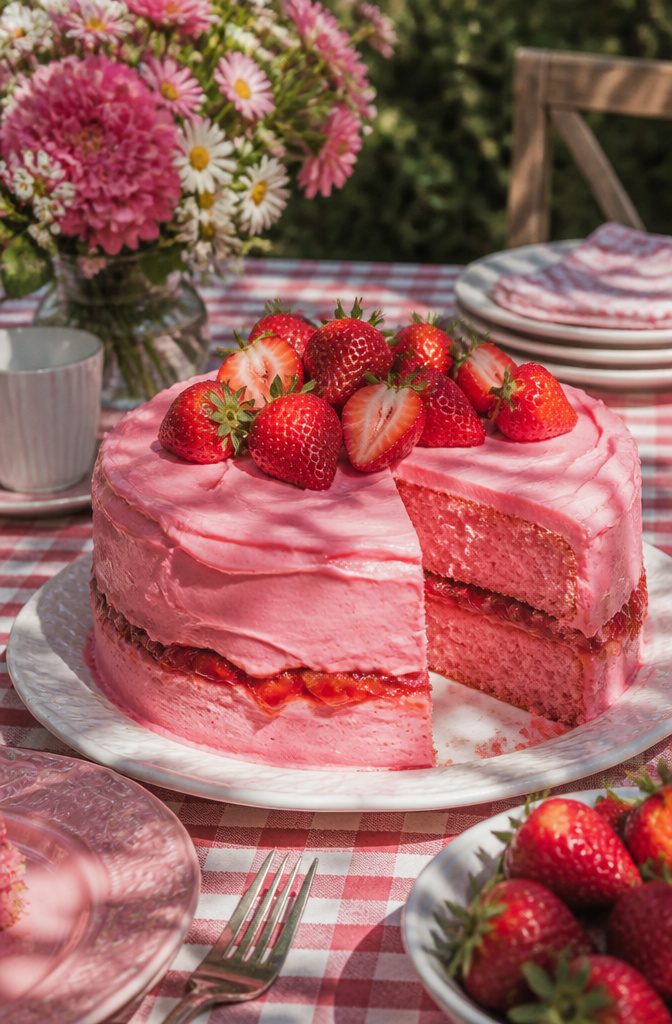
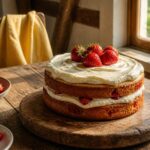
Strawberry cake lands on a tea party table with immediate color impact, the pink crumb practically announcing spring before anyone takes a bite.
Fresh strawberries folded into batter only work when they are truly sweet and juicy enough to eat on their own. When they are not, the fruit weeps into the crumb and leaves damp pockets where the texture should be even.
Strawberry compote between layers is the more reliable choice for most of the year.
It carries concentrated flavor without the water content that disrupts structure, and it lets you build clean, sliceable layers that hold up from first cut to last.
Fresh fruit belongs in the batter during peak season, roughly late May through July when the berries actually taste like themselves.
Outside that window, compote wins without question, and even at peak season, I would rather use it between layers and save a few perfect slices for the top where their appearance earns its keep.
7. Tea Time Orange Cake
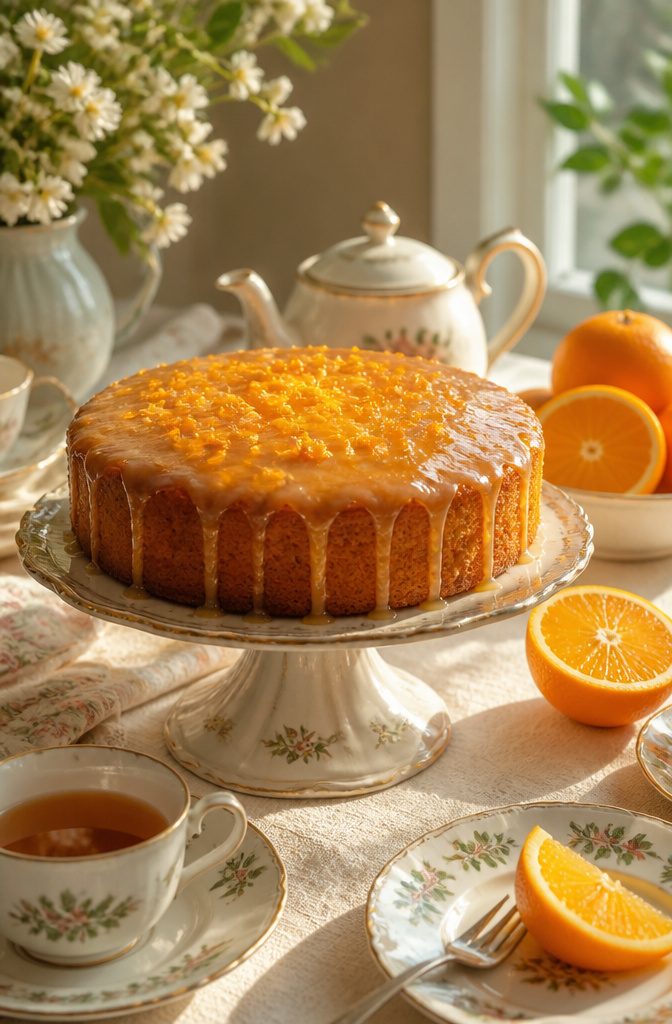
A full-size orange cake belongs in a different spot on the table than the almond-orange mini cakes. This one is built for slicing, not popping whole, and it carries a glaze or icing that sets it apart from anything bite-sized.
The keeping quality is what makes this cake practical for a tea party.
It actually improves after a day or two, as the orange flavor settles and the crumb tightens into something more moist. Bake it Friday for a Sunday gathering and it will be at its best.
Kinnow oranges from the mountains of North India are the traditional choice, though any juicy orange from the grocery store works.
The ingredient list stays short and pantry-based: flour, sugar, butter, eggs, and the zest and juice that carry the flavor. No specialty equipment, no stand mixer required.
The glaze is what seals the moisture in, so don’t skip it thinking the cake is sweet enough already.
A thin icing of confectioners’ sugar and orange juice, poured while the cake is still slightly warm, sets into a crackly shell that keeps the crumb soft underneath.
For a thicker finish, wait until the cake is fully cool and spread a proper frosting, though that moves it closer to dessert than to teatime.
The choice between glaze and frosting is a choice between keeping and presentation.
Glaze wins if you want the cake to last and travel. Frosting wins if you’re serving immediately and want height on the platter.
8. Novelty Tea Party Cakes

A teapot or teacup cake is the first thing guests photograph, and that is exactly why the shape has to work before the frosting goes on.
These builds need internal structure: dowels, a shaped or carved base, and often a separate piece for a spout or handle that dries hard before it meets the cake.
Teapot cakes with matching cups and tray-shaped bases covered in miniature treats need assembly planned backwards from the display angle.
Where novelty cakes lose people is flavor that tries to compete with the look. Intricate piping and delicate pastel hues are the decorative draw, not the crumb.
A simple vanilla or light sponge underneath holds up better to carving than something dense or finicky, and it keeps the project manageable for a weeknight baker who still has dinner to make.
Vintage tea-set styling gets its charm from soft color and careful detail, not from reinventing the cake itself. Pick a reliable flavor, build the structure first, and let the teapot shape do the work it was made for.
9. Floral-Inspired Cakes
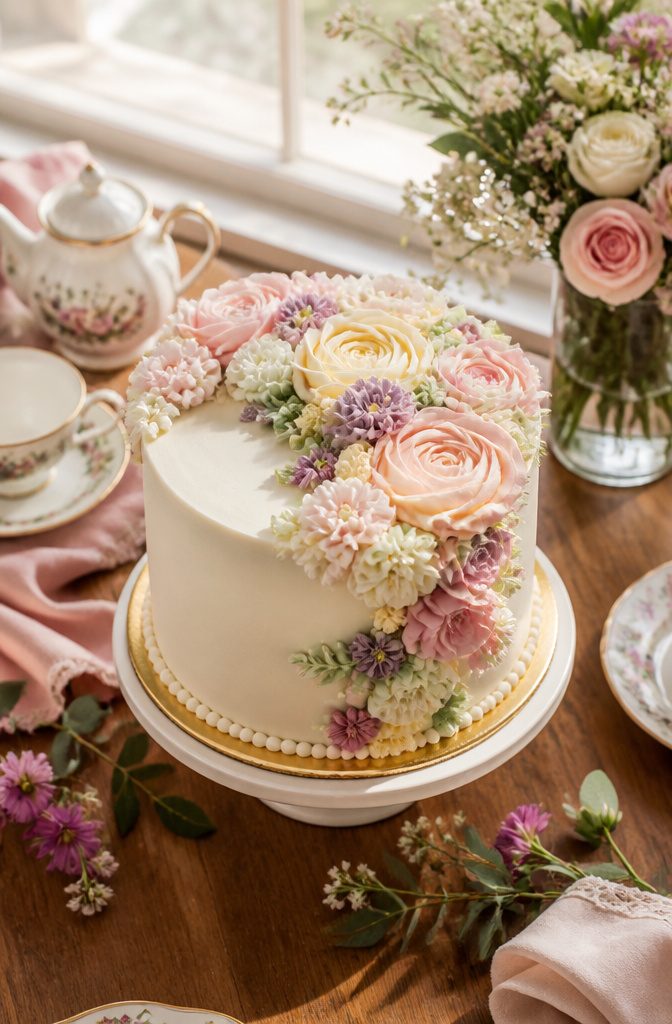
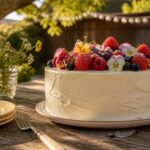
A floral cake is defined by its decoration, not what is underneath.
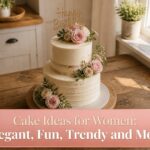
The sponge itself can be vanilla, chocolate, lemon, or whatever flavor suits the party. Finish with sugar roses, fondant flowers, or piped buttercream blooms arranged across the surface or cascading down the tiers.
Fondant gives the cleanest base for this work. Rolled thin and draped over the cake, it creates a smooth canvas that holds molded roses and lace patterns without cracking.
Buttercream piping is more forgiving for home bakers. A petal tip and a steady hand produce daisies or chrysanthemums that look soft and natural, and the technique hides imperfections in the frosting underneath.
Edible pearls pressed along the base of each tier or scattered between blooms add the formality that tea parties call for. I prefer them in small clusters rather than rows; they read as dewdrops rather than costume jewelry.
Lace patterns, pressed from fondant molds or piped in royal icing, do the same work as a tablecloth under the cake: they signal that this is an occasion.
This takes time. A single sugar rose takes twenty minutes or more once you account for drying between steps.
For a Saturday afternoon party, buttercream flowers piped directly onto the cake are the practical choice. They set as they sit and transport without the fragility of gum paste.
10. Vintage Tea Pot Cakes

A teapot-shaped cake becomes vintage when the styling choices point backward rather than sideways. Novelty cakes play for surprise; vintage teapot cakes aim for the specific hush of a porcelain piece your grandmother might have owned.
That difference shows in the palette and the piping. Pastel hues rather than primaries signal the era, and intricate piping details read as hand-worked in a way that printed fondant patterns do not.
I would skip anything too glossy. A vintage tea set carries the soft bloom of age, and a satin-finish buttercream catches light more believably than mirror-smooth fondant.
The shape itself is straightforward: a round cake for the pot body, a smaller cylinder or carved dome for the lid, with a spout and handle added in modeling chocolate or firm buttercream.
The real work is in the surface treatment.
Delicate piping along the rim and foot of the pot, maybe a small rose cluster where a real teapot would have its maker’s mark, gives the cake the specific nostalgia that separates it from generic novelty shapes.
This style suits tea parties with a deliberate period theme, the kind where the cups actually match and the linens are pressed rather than casual.
The cake becomes a centerpiece because it extends the room’s mood rather than breaking it for a joke.
Why the Cake Matters at a Tea Party

The cake at a tea party does more than end the meal. It sits at the center of the table as the visual anchor that sets the tone for the whole afternoon, and that role changes what you bake.
Guests see it before they taste it, so height, color, and decoration carry weight you can ignore at a birthday party but not here.
Indulgence is part of the point. Tea party tradition treats the cake as a small luxury, a signal that this afternoon is out of the ordinary.
That means a dense, modest loaf can feel apologetic next to a tall layer cake with frosting that catches the light. I reach for recipes that look like they took effort even when they did not.
The cutting itself matters. Slicing and passing cake around the table gives guests something to do together, a pause that turns strangers into people who laughed over crumbs.
A cake built for easy portioning, one that holds its shape on a small plate, earns its place faster than something that collapses into a mess.
What you prioritize shifts with that knowledge.
Stability and sliceability rise on my list. So does a presentation that photographs well under afternoon window light, because those are the cakes people remember long after the last crumb is gone.
How to Choose

The theme of your event decides almost everything else. An elegant afternoon calls for delicate flavors and refined decoration, while a whimsical garden party opens the door to bolder colors and playful motifs.
A cake covered in edible flowers and foliage suits the garden setting; lace patterns and soft pastels fit a vintage-inspired gathering.
Flavor should stay light and delicate. Vanilla, lemon, and Earl Grey are the traditional choices that pair naturally with tea.
That said, orange and vanilla with pistachio or blueberry works well for mini cakes, and lemon with ginger brings an unexpected but balanced zing that still feels right for the occasion.
Dietary restrictions need addressing early. Offering gluten-free or vegan options keeps the table inclusive, and collaborating with a baker pays for itself when restrictions multiply.
A home baker can manage one substitution; beyond that, the cost of specialty ingredients and the risk of cross-contamination tilt the math toward hiring someone who handles those requests daily.
What Holds a Design Together
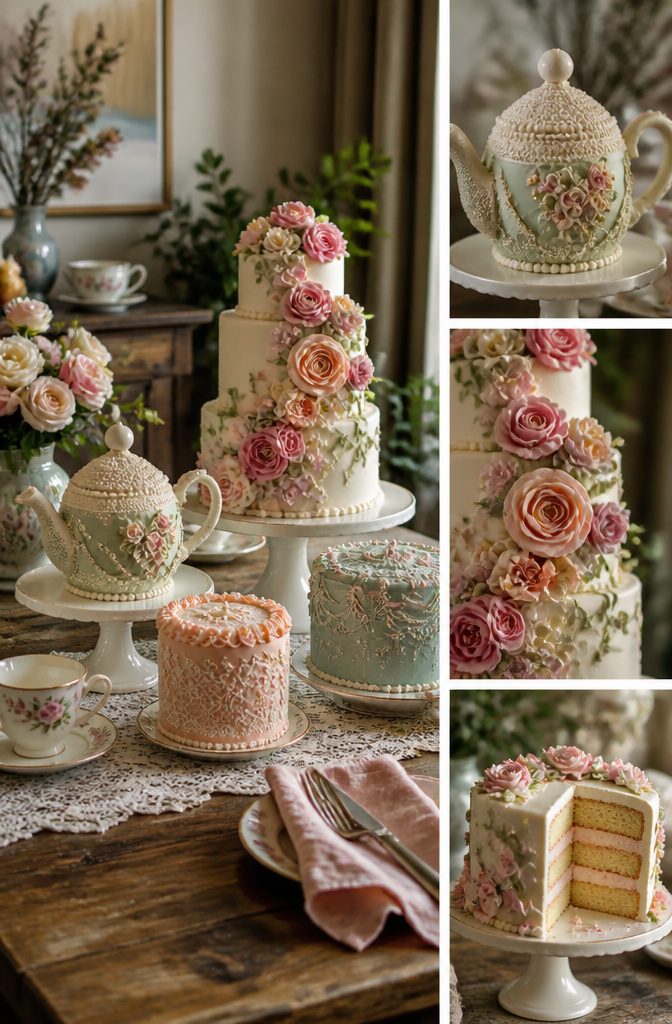
Floral designs give you the most forgiving starting point.
A cascading bouquet of sugar roses or dainty blossoms spaced across each layer hides small imperfections in frosting, and the natural irregularity of real flowers transfers well to piped buttercream if fondant work feels too precise.
Piped lace patterns or edible pearls demand steadier hands but need less time than they look; the repetition creates its own rhythm once you find the pressure.
Vintage teapot shapes ask more of your structure. The curved spout and handle need internal support, and the silhouette has to read instantly or it collapses into generic lump.
I would not attempt one without a day to spare and some practice with carved cake, but the coherence is real: every element reinforces the same era.
Novelty cakes sit at the far end, where whimsy risks becoming clutter. Choose one gesture, not three.
A single sugar clock face or stacked macaron tier carries the theme without demanding architectural engineering. Match the design to the hours you actually have, because a half-finished ambitious cake looks accidental where a simple finished one looks intentional.
Before You Frost

A tea party cake lives or dies on what happens before the frosting touches it. Real butter and fresh eggs give the crumb its flavor and tenderness, and natural extracts build character that imitation versions flatten out.
But technique matters just as much as quality: overmixed batter turns dense, and an oven thermometer saves you from the temperature swings most home ovens hide.
Cooling completely is non-negotiable.
A warm cake melts buttercream on contact, turning a smooth finish into streaks and slides that no amount of patching fixes. The surface traps condensation under fresh icing, and that damp layer eventually weeps through.
I have learned to let layers sit until they feel room-temperature to the touch, then give them another ten minutes. The wait is the difference between a cake that photographs cleanly and one that looks like a rushed Tuesday project.
Frequently Asked Questions
What are some good tea party cake ideas?
Classic Victoria Sandwich, almond-orange mini tea cakes, chocolate loaf cake, lemon drizzle cake, coconut and chai cake, strawberry cake, and tea time orange cake are all solid choices.
For something more dramatic, novelty teapot or teacup cakes and floral-inspired designs with sugar roses or piped buttercream blooms make a strong visual impact.
How do I choose the right cake for a tea party?
Match the cake to your event’s theme, keep flavors light and delicate, and account for dietary restrictions early.
Vanilla, lemon, and Earl Grey pair naturally with tea, while bolder combinations like orange-vanilla or lemon-ginger work for mini cakes. If restrictions multiply past what one substitution can handle, hiring a baker is worth the cost.
What are some creative designs for tea party cakes?
Floral designs with cascading sugar roses or piped buttercream hide frosting imperfections and suit most skill levels. Vintage teapot shapes need internal support and a day to spare but create strong period coherence.
Novelty cakes work best with one bold gesture rather than three competing ideas. Piped lace and edible pearls add formality without demanding architectural engineering.
How to make a moist tea cake?
Use real butter and fresh eggs, avoid overmixing the batter, and verify your oven temperature with a thermometer.
Pouring syrup into a warm cake, as with lemon drizzle, or sealing the crumb with a thin glaze, as with orange cake, traps moisture for days.
Cooling completely before frosting is non-negotiable; warm cake melts buttercream and traps condensation that eventually weeps through.
Why are tea cakes so expensive?
Elaborate designs like sugar roses take twenty minutes or more each with drying time between steps, and vintage teapot cakes require structural supports and practice with carved cake.