

This sour cream vanilla cake bakes into a dense, plush crumb with a depth vanilla rarely reaches on its own, and it needs no filling to stand as a full dessert.
The full-fat sour cream is what separates it from every standard butter cake: the fat coats the flour proteins and limits gluten development, so the texture turns velvety rather than springy.
From mixing to cooled layers, plan on about an hour and a half, plus another hour to cool before you frost.
Sour Cream Vanilla Cake

A sour cream vanilla cake recipe earns its place in your rotation because the sour cream does something butter and milk cannot on their own.
The acid tenderizes the crumb, and the fat carries vanilla’s flavor without drying out the bake. The result is dense and moist enough to carve cleanly, with a richness that needs no filling to stand on its own.
I reach for this when I need a reliable layer cake for a birthday, a 9 by 13-inch sheet cake for a potluck, or a simple Bundt to slice at the counter.
It adapts to the pan you have and the schedule you are living.
The base takes frosting in any direction, chocolate buttercream or berry jam or a plain coat of vanilla, but it is balanced enough to serve barely sweet if you are out of time or out of confectioners’ sugar.
Ingredients

Full-fat sour cream gives the best texture here. Lower-fat versions contain more water and less fat, which throws off the moisture balance and leaves the crumb slightly gummy rather than tender.
Here is what you will need:
- 2 1/4 sticks (18 Tbsp) butter, room temperature
- 2 1/2 cups sugar
- 3 large eggs
- 2 1/2 tsp vanilla extract
- 3/4 cup milk
- 1 cup sour cream, room temperature
- 3 cups all-purpose flour
- 3 tsp baking powder
- 1 tsp sea or kosher salt
The butter and sour cream both need to be at room temperature before you start.
Cold dairy will seize the batter and leave lumps of fat that never fully incorporate, so pull them from the refrigerator at least an hour ahead, or cut the butter into thin pats to speed things up.
Method
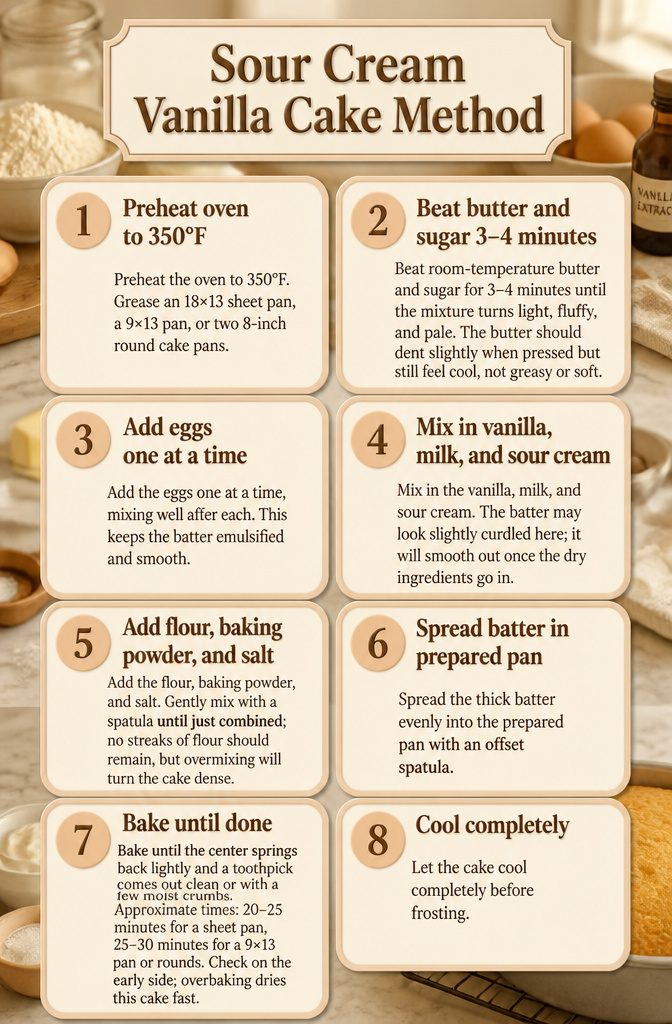
- Preheat the oven to 350°F. Grease an 18×13 sheet pan, a 9×13 pan, or two 8-inch round cake pans.
- Beat room-temperature butter and sugar for 3–4 minutes until the mixture turns light, fluffy, and pale. The butter should dent slightly when pressed but still feel cool, not greasy or soft.
- Add the eggs one at a time, mixing well after each. This keeps the batter emulsified and smooth.
- Mix in the vanilla, milk, and sour cream. The batter may look slightly curdled here; it will smooth out once the dry ingredients go in.
- Add the flour, baking powder, and salt. Gently mix with a spatula until just combined; no streaks of flour should remain, but overmixing will turn the cake dense.
- Spread the thick batter evenly into the prepared pan with an offset spatula.
- Bake until the center springs back lightly and a toothpick comes out clean or with a few moist crumbs. Approximate times: 20–25 minutes for a sheet pan, 25–30 minutes for a 9×13 pan or rounds. Check on the early side; overbaking dries this cake fast.
- Let the cake cool completely before frosting.
Frosting Options

The three frostings that pair best with this cake each bring a different balance of tang and sweetness.
- Strawberry frosting uses the boldest fruit flavor of the bunch. Beat 3 sticks of room-temperature butter until fluffy, then gradually add 6–7 cups powdered sugar, 1 tsp vanilla, and a purée of 1 cup thawed frozen strawberries. Frozen fruit wins here: it is picked at peak ripeness and carries more concentrated flavor than fresh, which can turn watery and dull the taste.
- Sour cream buttercream keeps the cake’s tang going in the same direction. Beat room-temperature butter smooth, add vanilla and sifted powdered sugar, then mix in sour cream at low speed until the frosting comes together creamy and lump-free. The sour cream replaces the usual milk or cream, so the finish is thicker and less sweet than a standard buttercream.
- Cream cheese frosting splits the difference between tangy and rich. The version paired with strawberry in one source uses 1 stick butter, one 8-oz block of cream cheese, 1/2 cup thawed frozen strawberries, 1 lb powdered sugar, 1/2 tsp kosher salt, and 1 tsp vanilla. It sets up firmer than buttercream and holds its shape well for layer cakes.
I reach for the strawberry frosting when I want the cake to read as a complete dessert, the sour cream buttercream for a more restrained, old-fashioned finish, and cream cheese only when I need the extra structure for a tall layer cake.
Why Sour Cream Works

Sour cream does three things in a vanilla cake batter, and the difference between full-fat and low-fat is the detail that decides whether the crumb turns tender or merely wet.
The fat in full-fat sour cream coats flour proteins and limits gluten development. That fat barrier is what gives the crumb its soft, yielding texture rather than a springy chew.
Without it, the batter still gains moisture from low-fat sour cream, but the crumb structure tightens and the cake eats closer to a standard butter cake than to the plush, velvety result most people are after when they reach for this ingredient.
Sour cream also brings acidity, which reacts with baking powder to open the crumb slightly and adds a subtle tang that deepens the vanilla rather than competing with it.
Greek yogurt can stand in if necessary, but only the full-fat kind; the fat-free versions lack the richness that carries the flavor through a long bake.
For a from-scratch cake, full-fat sour cream is the one to reach for. The 15-oz box-mix route works too, though the dry mix gets combined with sour cream and the other add-ins rather than following the package directions.
Either way, the batter will look unusually thick going into the pan, and that thickness is correct.
Room Temperature Ingredients

Room-temperature ingredients emulsify into batter far more easily than cold ones, and that uniform emulsion is what gives sour cream vanilla cake its even, tender crumb.
Cold butter refuses to cream no matter how long you beat it; it stays in hard flecks that leave streaks and dense patches in the finished layers.
I look for butter that is cool yet pliable, around 68°F, soft enough to indent with a finger but not so warm that it turns greasy.
Eggs straight from the refrigerator add less volume and can cause the batter to curdle when they hit the creamed mixture.
Sour cream follows the same rule: cold dairy tightens up in the oven and fights the fat instead of blending with it.
If I forget to pull everything ahead of time, I set eggs in a glass of warm water for 10 minutes and warm the sour cream briefly on the stove or in the microwave.
Mixing and Baking Cues

The batter changes in stages, and each one tells you when to stop. Creamed butter and sugar should turn pale and fluffy, almost like a thick frosting.
Add the eggs one at a time, and the mixture stays smooth. **When sour cream and vanilla go in, the batter will look curdled and slightly broken.
That is normal.** The fat in the sour cream separates briefly before the flour brings it back together, so resist the urge to keep mixing until it looks pretty.
Once you add the flour, baking powder, and salt, stir only until the streaks disappear.
Overmixed batter tightens up and bakes into a dense, tough crumb. The finished batter should be thick enough to hold its shape when you spread it into the pans.
Bake at 350°F. In two 8-inch rounds, that runs 35 to 40 minutes; a 9 x 13 pan needs 25 to 30. A toothpick inserted in the center is the test that matters.
A few moist crumbs clinging to the pick means the cake is done. Wet batter means more time; a completely dry pick means you may have overshot and dried the edges.
Cooling Before Frosting

A warm cake will turn buttercream into a puddle, so the layers need to cool completely before you frost.
In my kitchen, that means letting them sit in their pans for about ten minutes, then turning them out onto a wire rack to finish.
The whole process usually takes somewhere between one and two hours, depending on how thick your layers are and whether your kitchen runs warm.
If you try to rush it, the frosting slides right off the sides and soaks into the crumb instead of sitting on top.
You will know the cake is ready when the bottom of each layer feels room temperature to your palm, not slightly cool or damp.
Press a fingertip gently into the flat side: it should spring back without leaving a soft impression. Once it passes that test, you are clear to start building.
Substitutions

Greek yogurt and sour cream are close enough in fat and acidity that I swap them without hesitation. The cake stays moist and the crumb opens the same way.
A few other substitutions worth knowing:
- Greek yogurt for sour cream — Use the same weight, full-fat preferred. The tang reads almost identical once baked, and I reach for it more often than I keep sour cream on hand.
- Cocoa powder for a chocolate version — Replace two tablespoons of the flour with Dutch-processed cocoa. The sour cream keeps the crumb tender even with the extra dry ingredient.
- Buttermilk if both are missing — Thinner than sour cream, so reduce it slightly or the batter spreads too much.
I have not found a dairy-free swap that carries the same richness. Oat yogurt works in a pinch, but the texture turns spongier and the flavor flattens.
Storage

An airtight container keeps this sour cream vanilla cake good for about four days at room temperature. After that, the refrigerator buys you another two days, though the cake does dry out some.
Cold air pulls moisture from the crumb faster than room-temperature storage, so the texture firms up and the cake loses that soft, plush bite sour cream gives it.
If you do refrigerate, let the slice sit out for twenty to thirty minutes before eating, or give it a quick ten-second pass in the microwave.
The crumb relaxes, the flavor opens back up, and you get closer to the cake you baked.
My preference lines up with the room-temperature camp: store the unfrosted layers in a sealed container on the counter, and frost only when you are ready to serve.
The sour cream in the batter is baked, so it is stable enough; it is the fresh sour cream in the frosting that pushes some toward the fridge.
For maximum life, keep the cake and the frosting separate until the last minute.
Frequently Asked Questions
Can I use Greek yogurt instead of sour cream?
Yes.
Full-fat Greek yogurt swaps in at the same weight and gives almost identical tang and tenderness once baked. Fat-free versions lack the richness that carries flavor through the oven, so skip those.
How do I store sour cream vanilla cake?
Keep it in an airtight container at room temperature for about four days.
The refrigerator adds two more days but firms the crumb and dulls the soft texture sour cream provides. If you chill it, let slices sit out 20–30 minutes or microwave ten seconds before eating.
What is the best way to frost a cake?
Wait until the layers are completely cool, which takes one to two hours on a wire rack.
A warm cake melts buttercream and soaks up frosting instead of letting it sit on top. The bottom of each layer should feel room temperature to your palm and spring back when pressed.
What does putting sour cream in a cake do?
It tenderizes the crumb through acidity, carries vanilla flavor with its fat without drying the bake, and reacts with baking powder to open the texture slightly.
Full-fat sour cream coats flour proteins to limit gluten development, giving a plush, velvety result rather than a springy chew.
Can I use sour cream in box cake mix?
Yes.
Combine a 15-ounce box mix with sour cream and other add-ins rather than following the package directions. The batter will look unusually thick going into the pan, and that thickness is correct.
What is the most moist vanilla cake recipe?
A sour cream vanilla cake recipe ranks among the moistest because the fat in full-fat sour cream coats flour proteins and limits gluten development, while the acid tenderizes the crumb.
The result stays plush and dense enough to carve cleanly without drying out, even without filling.